Telling the Truth

connecting the dots of my life

Tag: Christian Faith

Strange Visitors


Unplanned events
Crash into my life
Force change and create confusion

Chaos
Leers at me
Foils attempts to ‘sort things out’

Indecision
Haunts my behavior
Especially on days without sunshine

Lethargy
Creeps from head to toe
Lulls me into dreary gray oblivion

Dare I welcome
These strangers in
For tea and conversation?

I fight the urge
To show them the door
As though they didn’t exist

I want them to disappear
Like the unrealities
I want them to be

***

As a girl child I was instructed at home, in school and in church to avoid or get rid of all things negative. That included lying, cheating, pouting, complaining to my parents or fighting with my sisters.

Though this was supposed to make me good and happy, this negative approach seemed to border on magical thinking.

Avoid this or stop doing that, and you’ll win the Good Girl Lottery! It might not always be fun right now, but it will be spectacular later on—especially after you die and wake up in heaven.

And yet, with all that goodness drummed into me, I wasn’t protected then or now from difficult situations. Instead, my upbringing instilled voices and unhelpful habits that drive my behavior more than I like to admit. They kept me from exploring and celebrating my voice, and the woman I was becoming then and now.

I’m just beginning to recognize the way these drivers work in me, and let them go. They’re named in the litany I wrote about here:

  • My desire for security and survival
  • My desire for esteem and affection
  • My desire for power and control
  • My desire to change the situation

Saying I’m letting go is relatively easy. Living it out is difficult. It’s difficult to let go of what I’m not willing to understand. I want to welcome these desires as the realities they are, capable of supporting life or of putting it at risk. I don’t want to slam the door in their faces. They might be my best coaches—or at least helpful visitors I dare not silence or ignore.

So how do I welcome these strangers and listen to them? How and why did they become powerful and controlling in me? Who put their insistent, insinuating voices in me, and why? And how does this affect my responses to unplanned events, chaos, indecision and lethargy?

More fodder for self-reflection during and beyond this Lent season. Thanks for reading!

Elouise

© Elouise Renich Fraser, 18 March 2017
Photo found at islamforchristians.com

What I’m giving up

I didn’t grow up in a church tradition that required me to give things up for Lent. Yet today I’m asking what I’m giving up for Lent.

Why now? I think it’s related to my health, my age, my ability to live as an independent woman, my need to have things go my way at this time in my life.

I feel quite well most of the time. Perhaps weary and a bit stressed out now and then, but not awful. Yet sometimes I fall over the edge–into anger or fear. It’s usually triggered when something doesn’t go the way I anticipated it would. It’s like throwing a lighted match into a dry haystack. Or going over a cliff. Too late to step back and do something different.

So what to do? I don’t have a magic formula. However, I’ve been reading a wonderful book about prayer. It’s Cynthia Bourgeault’s book called Centering Prayer and Inner Awakening. It seems connected to what’s happening.

Her book is helping me reconsider these episodes. They flare up when I hit moments of extreme frustration. Sometimes they’re about my health and wellbeing. Other times they’re triggered by memories of things that happened to me as a professional woman.

The goal I’m after is this: to learn ways of interrupting what’s about to happen before I go over the cliff. I know I won’t learn this overnight. Still, I want to recognize, welcome and listen to those small signs before I go over the cliff or say things I’ll regret. Sometimes that’s not possible. Other times, it is.

As part of this discipline, Cynthia offers a litany written by a friend. It’s a prayer to be offered as often as needed, without having to make it up myself. It’s for the moment I realize my frustration and anger are escalating, ready to overflow. It won’t work if I’ve already exploded.

I grew up believing everything unwelcome in me needed to be  ‘fixed’ if not denounced and forsaken. Slam the door in its face! Send it packing! Or at least keep it hidden in a closet. It’s not the ‘real me.’

This, however, is about the real me. The person I am in God’s presence. Just as I am. Especially when I’m unhappy about the way things are going. What’s happening in me has something to tell me. Instead of slamming the door in its face or denying its presence, perhaps I could welcome it. Listen, and learn from it. After all, it’s part of me whether I like it or not.

So here’s the litany, an active giving up of something. Not just for Lent.

I let go my desire for security and survival.
I let go my desire for esteem and affection.
I let go my desire for power and control.
I let go my desire to change the situation.

Quoted by Cynthia Bourgeault in Centering Prayer and Inner Awakening, p. 147 (Cowley Publications 2004)

I long to stay fully present to God and, so far as possible, to the truth about myself. No matter what rises to the surface or comes at me without warning. Whether it’s anger, fear, pain or death itself.

© Elouise Renich Fraser, 11 March 2017
Image found at kairosjourney.org

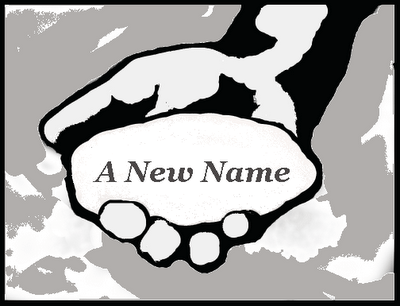
The White Stone

To each who overcomes,
I will …give a white stone with a new name written on it,
known only to the one who receives it. (Revelation 2:17, NIV)

Imagine you’ve come to the end of your life. What are you expecting? I was brought up to expect judgment. The kind that points out how much I’ve failed, and assigns demerits for failures.

Will my failures outweigh the good? According to my childhood theology, that would be entirely in God’s hands. Woe to me if I fail to live up to expectations.

This made for a peculiarly nervous mode of life. Like nervous tics my failures sometimes seemed to have gained eternal life. Poking at me, cropping up at the most vulnerable moments, shadowing me like bad dreams. Casting a pall of loneliness around me and my closely guarded secrets.

I’ve been reading short excerpts from George MacDonald in the last few weeks. His comments about the white stone are nothing like my childhood theology.

The white stone and the new name are indeed God’s judgment. But with a difference. This is a judgment of grace. One white stone with a new name for each son and each daughter.

The stone with the new name makes visible what has already come into being. Not a hideous monster, but a breathtakingly beautiful daughter or son of the Creator. In fact, to receive the white stone with one’s own new name is the equivalent of ‘well done, good and faithful servant.’

It is only when the person becomes his or her name that God gives the stone with the name upon it. (George MacDonald: An Anthology: 365 Readings; C. S. Lewis, ed. (Harper One)

The secret name given only to me will capture perfectly what God saw in me from the moment I was created. Especially when I or others don’t or can’t see this. The name sums up the woman I will have become—through many dangers, toils and snares.

I can relax, take each day as it comes without a clear roadmap. When I get there, my Creator who kept faith with me will give me my white stone with my new secret name. One of a kind. I don’t need to keep asking “Am I there yet?” I’m already in good hands.

© Elouise Renich Fraser, 8 March 2017
Image found at ahnsahnghong.blogspot.com

Quotation  from the NIV
Response to WordPress Daily Prompt: Nervous

God rolls the dice

wu-spring-in-linz-austria-haggiaustria-on-28-feb-2017

God rolls the dice
with each new birth
A gamble taken
in good faith

If you cherish this little one
might not my beloved earth
be visited come spring
with lavender from sea to sea?

A roll of the dice and
the Master’s plan
Lift up your eyes
and feast on beauty

Persistent repetitive
tenacious beauty
bursting with fragile joy
upon giving birth

***

I know. Sadly, not all the little ones make it, and not all little ones are conceived in good faith. Yet God keeps faith with us each spring, in each season of life. Always giving us another opportunity to nurture the ground, the good earth, the vulnerable child who may become a link in this fragile chain we call life.

Which brings three questions to mind. Am I willing to bet on God? And beyond that, do I realize God is betting on me? Not on me alone, yet on me as one part of the whole. Finally, do I know how to nurture the vulnerable child in you or in me? Food for thought.

© Elouise Renich Fraser, 4 March 2017
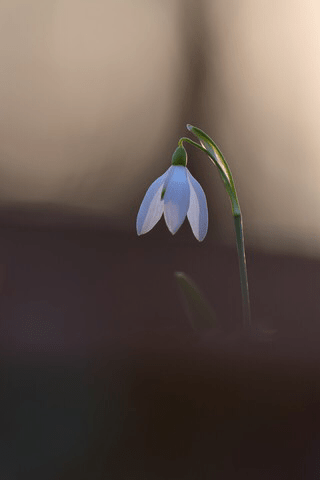
Photo found at the Weather Underground App
Spring crocus in Linz, Austria taken by haggiaustria, 28 Feb 2017

Response to WordPress Daily Prompt: Parlay

Still Learning to Pray

learning-to-pray-by-talking-less

Today is a quiet day. Not because I’m sick, but because I need to take care of myself. So I’m revisiting several books on prayer. Why? Because current events in the USA tug me this way and that way. Sometimes I feel as though I’m wandering, lost in the trees. Uncertain how to pray or how that might help my focus from one day to the next.

Here’s what I’m certain of today.

  • The human confusion into which I was born multiples daily, and isn’t going away of its own accord. Ever. There are things I’d like to undo and re-do in this world and in myself. I want us to sort things out and be good neighbors. Yet I fear it isn’t going to happen, even though we’re all part of God’s good if not perfect creation, and need each other to survive.
  • Human confusion seems to have a life of its own. It feeds on itself, creating ever-more-shocking statements, behaviors, attitudes and reactions. It thrives when we’re fearful and distracted. On guard. Looking over our shoulders as we try to figure out what just happened, and miss what’s already brewing for tomorrow.
  • In my small world, confusion shows up in anguish about what I’m to do from one day to the next. I’m not utterly lost or clueless; yet I don’t feel grounded in a clear approach to what’s happening around me. I don’t have a clear goal for each day that calms my heart and helps shape my actions. I often feel uncertain and lost, especially when I start checking out tantalizing, infuriating headlines that pop up every minute of the day.

For the last few weeks I’ve been thinking about prayer. Granted, our pastor is preaching about it every Sunday, so it’s difficult not to think about it! At the same time, I wonder how I am to pray, given confusion around and within me.

I used to think once I learned to pray, I’d have it all figured out. As though it were like theology. I think about theology as dialogue with Scripture, traditional documents, other conversation partners, the newspaper and my experience as a woman. It works!

However, when I consider prayer, my major dialogue partners have been God or Scripture or what my parents or the church told me to do. The newspaper has been a secondary partner. And though I’m aware of myself as this woman (not just any woman), I haven’t figured out how that shapes my approach to prayer. Sometimes I fear there’s something wrong with me–even though I know there is not.

So I’ve decided to look into this and begin writing about it from time to time. I want to live boldly with the courage of my convictions, as this follower of Jesus Christ who is this woman living in these troubled times. Somehow, I believe my dilemma about prayer lies at the center of my anguish about who I am and how that shapes my prayers from day to day. Especially now.

© Elouise Renich Fraser, 25 February 2017
Photo found at parentingupstream.com

evensong

wu-look-to-the-stars-bayshore-ny

no two alike
nature’s stately rhythms
offer evensong

***

stars and clouds emerge
against warm rays of a dying day
wind currents crisscross the heavens
swaying trees and fence genuflect
nature listens alert
dry grassy ground waits,
invites me into
the presence of my Maker

 © Elouise Renich Fraser, 22 February 2017
Photo found at Weather Underground – taken in Bayshore, New York
Response to WordPress Daily Prompt: Rhythmic

A personal letter

fraser_s_0238b

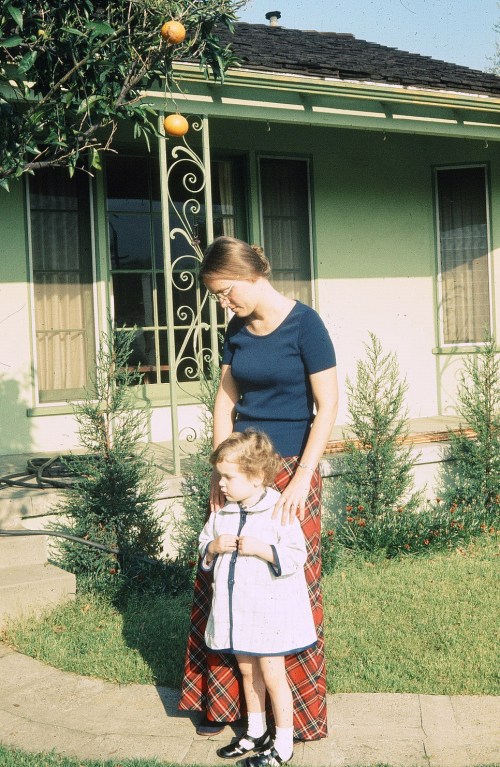
~~Mom Elouise and Daughter, 1974, Altadena, California on a Sunday morning

Dear Blogging Friends,

I tried to put together a post for Sunday morning. Alas, it went nowhere except in circles! So I’m trying something totally different this week. A personal letter about personal stuff.

Today was our adult daughter’s last full day visiting us. Tomorrow she flies back to the West Coast. I’m teary, lethargic, achy, sad, and already lonely.

I’m also feeling the certainty of death these days. Nothing in particular. Just the awareness that every time I see our daughter it might be for the last time. So what do I want to say to her before she leaves?

I lay awake a bit last night thinking about this. Whatever I say, I don’t want to pretend I’m taking life for granted. As though neither of us is going to die just yet. I also don’t want to say simply, “I love you.” Even though I will and I do!

Here’s what I want her to know.

  • I want you to know how honored I am to be your mother, and how much I admire you as a woman. You’re a fighter. A brook-no-nonsense human being. An artist in every way, especially as a musician.
  • You’re an intelligent, gifted woman who knows how to engage others, and when to disengage. An astute political observer. A woman who knows how and when to get help. A survivor of trials and tribulations. A wise observer of human nature and of yourself. A faithful ally and friend.
  • I’m grateful you’re in my life. You’re a touchstone. Sensible and funny. Kind and clear. And you’re my daughter! I still don’t understand how you became the woman you are today. I do know it was “through many dangers, toils and snares….”
  • I gave you to God decades ago, knowing I would never have the answers to all the challenges you would meet. Instead, I pray for you regularly, that God’s grace that has kept you so far will lead you home. No matter whether you go first or I do.

One more thing. I feel old age coming on. Not like a flood, but with slow certainty, accompanied by a number of health issues that challenge me. I don’t want to give up. I want to be fully alive, and alert enough to enjoy my family and friends as long as I can.

Not so many years ago I was afraid to let my heart show to my family members. I was afraid to let them know how much I’ll miss them if they die before I die. Better to stay cool and calm than show my feelings. That way maybe the pain of loss won’t be so great. But that’s another topic.

Thanks for reading and listening with your hearts.
Elouise

© Elouise Renich Fraser, 18 February 2017
Photo credit: DAFraser, 1974, Altadena, California

Awareness of pain

Awareness of pain
Life-shaping yet elusive
Lodges deep
In bones and sinews
Erupts without warning
Bleeding over pages
Of my life
Softening my heart
Longing for tenderness
Squandered in the past
Foolishly given away
To dull my pain

***

I don’t live in this awareness every day. I wouldn’t survive if I did. I’m grateful for God’s grace every day of my life. Still, moments of grief arrive, often taking me by storm. They don’t destroy me. Instead, they soften and connect me not just to my pain, but to that of others.

I used to think these waves of emotional and spiritual pain would fade. They haven’t. In fact, the more willing I am to live with grief, the more I find myself grieving and growing.

This past week I listened to Beethoven’s Sonata 8 (“Pathetique) and found myself right where this poem is. In the middle of a teary eruption. The kind that fosters life, not death, when I’m willing to live through it.

You can listen to a brilliant performance by Daniel Barenboim here.

© Elouise Renich Fraser, 11 February 2017
Response to WordPress Daily Prompt: Aware

Resistance is Never Futile

Never. What’s at stake isn’t a predetermined outcome, and death is always a possibility. Yet resistance is never futile. It’s about our character. Not simply as individuals, but as communities and nations.

I have a theological hero. He wasn’t the most well-behaved man on the face of the earth. He was human just as I am. Some of his theological ideas still irritate me. That’s an understatement.

Yet he’s a theological hero. From him I learned to listen to myself, to Christian scripture, and to what’s happening around me. With a newspaper in one hand and my Bible in the other.

Actually, it’s more than listening. I call it looking in the mirror and discovering painful reflections of myself. Too often as a collaborator, not as a member of the faithful resistance.

Karl Barth came of age as a theologian during the early years of Hitler’s reign. Though he was a citizen of Switzerland, he spent most of his professional life as a professor of theology in Germany.

Barth cut his theological teeth on Hitler’s final solution for Jews. He became one of a surprisingly small number of resisting theologians, and an influential member of the so-named ‘confessing’ churches that refused to support Hitler.

His theological work is, in part, a critique of Hitler’s brutal treatment of Jews and a vision for something different. There were several parts to Barth’s vision for humanity.

  1. First, absolute allegiance to following Jesus Christ as witnessed to in Christian scripture. Jesus of Nazareth—a practicing Jew whose total allegiance lay with Yahweh. No matter what the cost.
  2. Second, a careful reading of Hebrew and Christian scripture in which he discerned a simple theme that brought every theological idea down to earth. Hospitality toward strangers. This theme challenges all human interactions including Hitler’s treatment of Jews and the churches’ treatment of Jews and others strangers.
  3. Finally, who is this stranger? (Or, who is my neighbor?) According to Barth, the stranger is that person or group of persons you’d rather not see or meet today. Maybe he or she gives you a mortal headache. On the other hand, that person might beat you up and leave you lying on the side of the road to die. You never know. It’s easy to wish you could banish ‘these people’ who annoy, threaten or terrify you.

Hospitality toward strangers has a sweet sound about it. However, as developed by Barth, it’s not sweet and harmless. True hospitality toward strangers is a life-changer for the hostess or host, not just the stranger. It can lead to life; it can also lead to death. As it did for Jesus Christ.

We can already see the USA becoming polarized into stranger groups. It’s happening in churches, between religions, in public and private institutions, news media and families. Many groups vet members formally and informally by political or religious tests of various kinds.

It seems a good time to think about what it would take to show hospitality toward strangers today. Especially, but not only if we’re followers of Jesus Christ.

I’m not naïve. All strangers aren’t safe. Neither is every friend or family member. Wisdom and discernment are necessary. But not political or religious tests. We need each other now more than ever. No matter what the cost. It’s about the content of our character.

© Elouise Renich Fraser, 9 February 2017
Response to WordPress Daily Prompt: Criticize

Trembling Heart | for Diane

Trembling heart sits on edge
waiting.

Unseen by human eyes
she calculates in vain
the cost of knowing
or not knowing
looking for solace
if not release.

Piece by painful piece
mortal heaviness
strips proud bravado
as bare as truth standing defenseless
in the dock of human finitude,
calm, grieving and grateful.

***

Today I had a checkup with my electro-physiologist. I sat waiting, trembling inside, wondering what the doctor might discover in the data from Lucy, my pacemaker.

I toyed with the possibility of not keeping these appointments. After all, for generations before me there weren’t gadgets that could make visible the rhythms of our beating hearts. Maybe there are things it’s better not to know.

When I got home, I was still teary and pondering all this. I was also aware that February marks the death anniversary of Diane, my Sister #2. She lived ten years with ALS, enduring the loss of almost everything we take for granted as human beings. I’ve posted multiple pieces about and from Diane. You can read them by clicking on the category Dear Diane, at the bottom of this post.

I wrote this poem based on my experience today at the doctor’s office. However, it also applies to Diane’s situation. I’m proud to offer it in honor of her courage, good humor, honest emotions and struggles with God and with herself. Though she lost almost all voluntary capacities (such as speech and voluntary muscle movement), she never lost her mind or her great heart.

© Elouise Renich Fraser, 7 February 2017
Response to WordPress Daily Prompt:
Tremble