Telling the Truth

connecting the dots of my life

Tag: Christian Faith

Flowers of Hope | from Amy

P1060217

Amy Carmichael wrote this delightful poem for children whose lives and wellbeing were at risk. Amy’s major life work was to rescue or receive these children and offer them an alternative. They lived together with staff members at the Dohnavur Compound in South India. Over the years, scores of children found safety and hope for a different future. Read the rest of this entry »

A Book We Never Outgrow | from Diane

Libary Welcome Poster

Just for you: Diane’s children’s sermon from 2 June 1991. The topic fits all stages of life–those we expect and those that take us by surprise, if not shock. In any scenario, there’s something we can all count on.

See this funny looking thing?  Read the rest of this entry »

Strange creatures | From an Old Soul

In this sonnet, George MacDonald is in a state of terror. The moans and screams are more than enough to keep his imagination working overtime. He seems lost in one of his fairy tales for children, uncertain what’s going on.

July 2

It must be, somewhere in my fluttering tent,
Strange creatures, half tamed only yet, are pent—
Dragons, lop-winged birds, and large-eyed snakes!
Hark! through the storm the saddest howling breaks!
Or are they loose, roaming about the bent,
The darkness dire deepening with moan and scream?—
My Morning, rise, and all shall be a dream.

George MacDonald, Diary of an Old Soul
© 1994 Augsburg Fortress Press

Before I comment, here are a few terms that may not be familiar to everyone.

  • pent – a verb used with an object (here the strange creatures). Normally it means confined for safekeeping.
  • lop-winged birds – birds with large floppy wings, especially those that have long, skinny legs that flop around in the air as they fly. Think, for example, of herons and cranes.
  • large-eyed snakes – snakes with eyes (sometimes heads, as well) larger than their long, thin bodies, able to see you in the dark perhaps?
  • the bent – stiff grass, a moor, or grassy land used as a pasture.

Though MacDonald seems to be lost in one of his fairy tales, he’s also praying. These sonnets are addressed to God. The fairy tales aren’t irrelevant, but hearing this as a prayer may be a good place to start. I hear him expressing something like this:

Don’t You hear these horrific beasts in my tent? That would be the ‘tent’ that’s already torn to shreds and flapping around in the wind! It seems someone has locked them up in here with me. What a nightmare! Then again, they could very well be lurking out there in the fields, just waiting to devour me! 

No, I’m not making this up! Even with that wretched wind storm, I still hear them howling their heads off. 

Can’t You do something? You’re the Morning Star! All You need to do is just show up. That’s all! They’ll be gone in a heartbeat! Hello? Are You still there?

I hear something like that—a mix of terror and faith. Here are a few observations and questions.

  • In MacDonald’s fairy tales for children, strange, even enemy-like creatures often appear. Sometimes the challenge is to befriend them. But not always. Discernment is important.
  • The ‘strange creatures’ here are as yet ‘half-tamed only.’ Does this suggest they could be or are on their way to being fully tamed? Right now they seem untameable. But….? I don’t know.
  • MacDonald sometimes tames the strange creatures in his fairy tales by coming to understand them, not by magic. What are their strengths? Their personalities? What does their shape and behavior suggest about them? For what might they have been created—if, that is, they aren’t manufactured by our fear and aren’t evil creatures.

MacDonald doesn’t have answers. He seems to be flailing around without a narrative or direction that would make sense of what he’s experiencing.

He also seems perfectly willing to have these strange creatures disappear into thin air when he wakes up in the morning and realizes his terror was ‘all a dream.’ But was it?

What does MacDonald mean by ‘My Morning’? Perhaps it’s as simple as a new day that will bring light, and relief from night terrors and fears. On the other hand, perhaps ‘My Morning’ refers to God.

In either case, what will happen with the strange creatures? Will they be banished? Or will he learn something about himself by learning about them? Especially those parts of his life that seem too scary to face, even though they may be half-tamed.

Like the July 1 sonnet, this seems also to end with a question that only God can answer. In that case, it’s right to pound on the door, insisting that God attend to him as one of God’s beloved sons and daughters.

One thing is clear: MacDonald isn’t going to figure this out on his own.

© Elouise Renich Fraser, 15 July 2015 

Framing Freedom

re-framing freedom, seedquote

I’m writing this on July 4, Independence Day in the USA. A day that’s all about freedom. That intangible, inalienable ‘right’ highly valued in our national rhetoric.

When I was teaching theology I couldn’t help noticing how many seminarians defined Christian freedom as free will. The kind that makes choices—yes or no. As some said with fervor, ‘You can take away my house, and even my life, but don’t you dare try to take away my free will!’

I understand what they want to protect—their own freedom of choice, as a kind of inalienable right. Something God gave them that needs to be protected at all costs. The freedom to choose right or wrong, this church or that church, to believe and live this way or that way.

The ability for human beings to makes choices of any kind comes from our Creator. Yet I wonder. Do we understand the meaning of Christian freedom?

Even if I’m speaking of generic freedom, I’m not free to choose just anything. If I think I am, I’m overlooking most of my history.

  • I didn’t choose to be born in this country.
  • I didn’t choose my gender, my race, my parents, the color of my hair or my eyes, my sisters or my extended families.
  • Nor did I choose the way I was received into this world.
  • Or the genes I carry that shape the kind of person I am and the illnesses I might one day suffer.

In fact, I didn’t get to choose much of anything when I entered this world.

On the other hand, I don’t believe everything about me and the course of my life was or is chosen by a higher power or some shadowy political system.

My decisions count, though not every decision is equally weighty. What I wear today isn’t nearly as life-changing as choosing to marry this person instead of that person.

Still, I can choose to live in what I’d call false or make-believe freedom—as though I were God. Or the Queen of the Universe. But I am neither of these, and acting as though I were wouldn’t make it so.

My freedom as a Christian is about one thing.
It’s about freedom to choose life as defined by the Holy One
who created life and chose Jesus Christ (not me)
to be the person who shows us what a free and faithful life looks like.

My Creator doesn’t force this on me. Yet as a follower of Jesus, it’s the only truly free choice. Anything else would be pledging allegiance to some other god — to myself, or to some other human being or system of thought.

I’ve chosen to frame my life choices with reference to the narrative that runs through Hebrew and Christian Scriptures. That doesn’t mean it’s easy to negotiate relationships or the moral and ethical dilemmas that face all of us daily.

It does, however, mean I’m committed to being guided by (1) the life of Jesus Christ who shows us what freedom looks like, and (2) by the reality that I serve but one God—my Creator, Redeemer, and Sustaining Spirit.

It also means I’m free to be who I am—one of God’s beloved daughters and sons. Nothing more and nothing less.

I’m free to choose to love and serve God with all my heart, follow Jesus, and love my neighbor as myself. I’m also free to return home to God as often as needed—as the prodigal daughter I am, or as the self-righteous stay-at-home daughter I also recognize in myself.

Finally, I’m free to say No to others who demand my unswerving allegiance, or pretend to be my King or Queen for a day or a lifetime. In the end, saying No might mean my death–as it did for Jesus Christ and still does for many of his followers.

© Elouise Renich Fraser, 4 July 2015
Image found on internet at seedquote.jpg

Sabbath Pretense

In the presence of my enemies 2, img114df52ebfcc1f5

When I was growing up, my parents and teachers sometimes made us say we were sorry for hurting or disobeying someone. Sometimes I pretended to be sorry. That’s because the way I saw it, it didn’t really matter whether we were truly sorry, or who was really in the wrong.

What mattered most Read the rest of this entry »

What Kind of Tree Are You?

My blogging friend Bill was diagnosed with ALS in 1996, the same year my sister Diane was. His journey is different, yet his spirit has the same razor-sharp focus on what’s really important. This recent post is for all of us. Enjoy it! Then go to About Bill and read his story. You won’t be disappointed.

Bill Sweeney's avatarUnshakable Hope

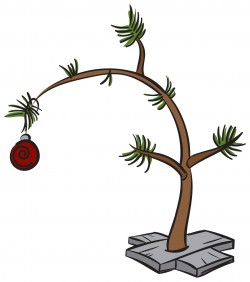
Some might be disappointed, but this is not one of those quizzes like I see posted on Facebook. (There actually is one of those quizzes with this same title, but I didn’t take it because I was afraid that the results would show that I was Charlie Brown’s Christmas Tree).
tree-onlyTen or twelve years ago, let’s just say eleven, Mary and I were shopping at Home Depot. After finishing our shopping in the store, we wandered out to the garden department to look for some small trees. It was November, and most of the plants were marked down because they were making room for Christmas trees.

Mary got hung up looking at wreathes and other boring items, so I cruised my wheelchair over to go look at trees. As it turned out, there were not many trees left, and I didn’t see anything I was interested in. Just when I was…

View original post 542 more words

brushed lightly

IMG_5218

brushed lightly
on canvas with
love from God

*  *  *

I can’t help thinking about Howard Finster and his bold paintings
sent to us and all creation with enthusiastic love. Read the rest of this entry »

Music Fit for Thee

Orazio_Gentileschi_-_Saint_Cecilia_with_an_Angel

Saint Cecilia with an Angel, Orazio Gentileschi (1563-1693)

Amy Carmichael’s life might be summarized by one word: Interruptions. Here’s her poetic internal dialogue about this daily dilemma. My comments follow. Read the rest of this entry »

Sabbath Sloth

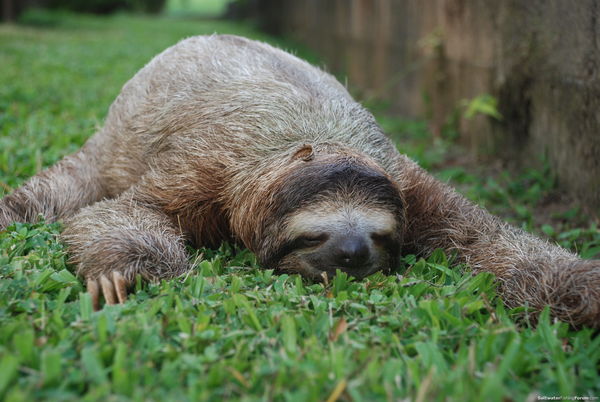
Sloth from imgsoup.com

When I was studying theology in the late 1970s, I got excited about Karl Barth’s descriptions of sin. Weird? Maybe. At any rate, I’ve been thinking about one sin in particular—sloth. It’s one of the seven deadly sins. Often understood as laziness, as aptly demonstrated in the photo above.

It all started with my post about the mouth of a labyrinth. Read the rest of this entry »

the mouth of a labyrinth | Simone Weil

Labyrinth mosaic, pintrestcom, bf2fc531911eaeff68e36f2a566bd032

I’ve read this striking quote from philosopher Simone Weil many times, but haven’t known how to describe what it looks like. Here’s the quote, reformatted for easier reading, and edited with feminine pronouns. I think this could be about me. Maybe about you, too? Read the rest of this entry »