Telling the Truth

connecting the dots of my life

Tag: Interpretation of Poetry

Faith — is the Pierless Bridge 2

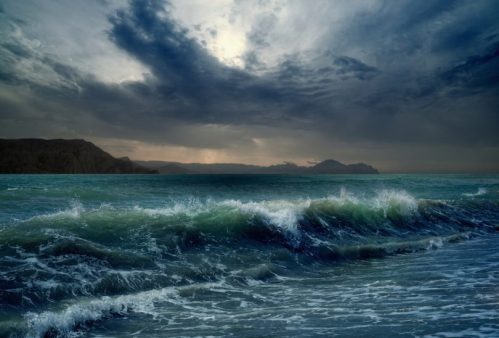
Pierless Bridge - pinterest

Two months after breaking my jaw in 2016, I posted Emily Dickinson’s lovely poem. Given today’s troubles, I’m as uncertain now as I was then. How am I to live my life? My comments follow, lightly edited.

Faith – is the Pierless Bridge
Supporting what We see
Unto the Scene that We do not –
Too slender for the eye

It bears the Soul as bold
As it were rocked in Steel
With Arms of Steel at either side –
It joins – behind the Veil

To what, could We presume
The Bridge would cease to be
To Our far, vacillating Feet
A first Necessity.

c. 1864

Emily Dickinson Poems, Edited by Brenda Hillman
Shambhala Pocket Classics, Shambhala 1995

Emily describes an impossible Pierless Bridge stretching out, with no horizon in sight but the sky and water. It doesn’t seem to have visible supports or buttresses. Instead, it seems to stretch out not in front of me, but with me, step by step, as I make my pierless way across the water.

My feet vacillate, uncertain where to go. I’m far from the shore, maybe not far to go. But I don’t know how much farther, or what I’ll find when I reach the goal.

Boldness and courage seem paramount. Closing my eyes, I feel my way along. Not with my hands, but through the bare soles of my feet connecting with what must surely be a mammoth construction of steel, boulders and cement. How could there not be a pier?

I open my eyes, hoping for a glimpse of the goal, but see nothing ahead and nothing behind. Even more distressing, what’s supporting me is no larger and no more visible than one slender, fragile thread of a spider web.

Closing my eyes, I grope along, too far out to turn back. I don’t feel bold or courageous. The way is precarious. I’m full of questions  and more than a bit of doubt.

I don’t have a map or a friendly GPS system to tell me when to leave one foot behind and shift my weight onto the other foot. I just know I’m being drawn and supported by something or someone greater than myself.

Is this journey about strengthening my faith? Perhaps the point isn’t my faith, weak or bold. In fact, I can’t believe that by the time I’ve arrived at the goal, my faith will be strong.

Before my faith and before my birth there was someone or something else. I imagine the Source of my life greeting me from within the Veil to which Faith leads me. Here is the One who birthed me. The One who boldly and courageously watches for me from the other side of my human life, spinning out as needed a fragile yet steel-buttressed thread of Faith—my Creator’s Faith in me. Faith that leads me home, just as I am and yet will be.

© Elouise Renich Fraser, 24 June 2016, reposted 29 July 2020
Image found at pinterest.com

From This River, When I Was a Child | Mary Oliver

Photo of the dock and river; taken by DAFraser in July 2010

A Mary Oliver poem for all of us. My comments follow.

From This River, When I Was a Child, I Used to Drink

But when I came back I found

that the body of the river was dying.

“Did it speak?”

Yes, it sang out the old songs, but faintly.

“What will you do?”

I will grieve of course, but that’s nothing.

“What, precisely, will you grieve for?”

For the river. For myself, my lost
joyfulness. For the children who will not
know what a river can be—a friend, a
companion, a hint of heaven.

“Isn’t this somewhat overplayed?”

I said: it can be a friend. A companion. A
hint of heaven.

© 2008 Mary Oliver
Poem found in Red Bird, p. 44
Published by Beacon Press

When I read this poem, I tear up. It takes me back to my childhood in the South. We lived on a branch of the Savannah River. Our smaller yet substantial river was named the Vernon River, part of the Intracoastal Waterway.

Vernon River spoke to me multiple times. Especially when I was feeling sad, misunderstood or inundated by the noise of four daughters living in one house with two parents. Plus small pets, parakeets, and the occasional baby flying squirrels rescued from certain death when they fell or were pushed out of their nests.

We lived in rural Chatham County, at the end of a narrow country road, 15 miles from Savannah, Georgia. I had three younger sisters. Frequently I needed a companion. A hint of heaven that was there for me, night and day.

The Vernon River did all that for me. No, I didn’t drink the salt water. But I swam in it. Better than a bath on a hot, humid day! Plus miraculous skin-healing properties of salt water free for the taking. Crabs to be caught, boiled, picked and eaten. Salt-water breezes to soothe my sad, sometimes lonely soul. The soft splash of tides coming and going like clockwork. The sound of seagulls chasing shrimp boats early in the morning and late in the afternoon.

When I read Mary’s poem, I’m out on the dock again. Alone. Sitting on top of the picnic table. Feeling the goodness of earth and heaven come together in one grand moment of peace.

Am I “somewhat” overplaying what I’ve lost? Or what the children of today may never experience?

I said: it can be a friend. A companion. A
hint of heaven.

Elouise

© Elouise Renich Fraser, 27 July 2020
Photo of dock and river taken by DAFraser, July 2010

Everything isn’t always beautiful

This morning I’ve been thinking about Mary Oliver’s poem, Everlasting. On first reading, it may seem Mary is accepting and putting a positive spin on everything. Making things pretty.

Yes, there’s always hope for something better. Nonetheless, Mary focuses intently on what’s in front of her. Nothing is too fleeting or small to notice.

Much, if not most of her poetry captures the small details and stories of nature’s wonders. Yet she also describes the horror and ugliness of human behavior. Some of it shows up in nature as well, putting beauty at risk.

I picture her with a ‘camera’ (her ever-present writing notebook), in which she records everything she observes. The good, the beautiful, the bad, the unexpected and the ugly. She doesn’t flinch or soften the blow of reality.

Mary challenges me most when she lets her unvarnished truth go public. Truth about herself, her family, her father (A Bitterness), and small scenarios playing out in predatory behaviors in the non-human world (Small Bodies).

Beginning with me, there’s so much we humans hide, or carefully dress up to mask our neediness. Mary invites us to find ourselves in the midst of whatever we’re dealing with or see in the mirror. Sometimes it’s a real mirror. Other times, it can be the mirror of Mary’s poetry. Or the morning news. Or an unplanned trip to the doctor.

Hoping your day is thoughtful and rewarding, no matter the cost.

Elouise

© Elouise Renich Fraser, 13 July 2020
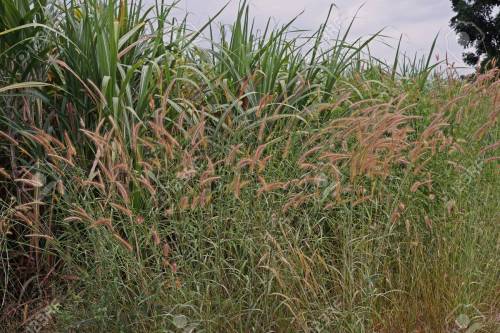
Invasive Mission Grass image found at 123RF.com

Invitation | Mary Oliver

This morning I’m tempted to rush into battle mode. So many things are going so wrong. This poem from Mary Oliver helped restart my day–though I’m still not sure what will come of it. My comments follow.

Invitation

Oh do you have time
to linger
for just a little while
out of your busy

and very important day
for the goldfinches
that have gathered
in a field of thistles

for a musical battle,
to see who can sing
the highest note,
or the lowest,

or the most expressive of mirth,
or the most tender?
Their strong, blunt beaks
drink the air

as they strive
melodiously
not for your sake
and not for mine

and not for the sake  of winning
but for sheer delight and gratitude—
believe us, they say,
it is a serious thing

just to be alive
on this fresh morning
in this broken world.
I beg of you,

do not walk by
without pausing
to attend to this
rather ridiculous performance.

It could mean something.
It could mean everything.
It could be what Rilke meant, when he wrote:
You must change your life.

© 2008 by Mary Oliver; poem found on pp. 18-19 of Red Bird
Published by Beacon Press

The line from Rainer Maria Rilke is found at the end of his poem, Archaic Torso of Apollo. There, as here in Mary Oliver’s poem, we’re offered no clear interpretation of “You must change your life.”

Here’s how I’m thinking about it today:

This shared world, filled with beauty, seems intent on self-destruction. Would we throw it all away by refusing to act, just once, with beauty and courage? Do the unexpected? Change the conversation, or our knee-jerk reactions to things that annoy and offend us?

Perhaps the most courageous thing I can do today is as simple as a smile. Especially in tense or fearful situations. We say a smile is worth a thousand words. It’s what most of us are starving for every day. True, smiles won’t heal or resolve every problem. Nor are all smiles to be trusted.

Still, Mary Oliver challenges us to stop, listen and (I think) smile at these crazy beautiful goldfinches. They just can’t stop singing for sheer delight and gratitude! Trying, perhaps, to tell us something we desperately need to hear from each other?

Thanks for stopping by!
Elouise

© Elouise Renich Fraser, 7 July 2020
American Goldfinch songs found on YouTube

In the Evening, in the Pinewoods | Mary Oliver

http://https://www.youtube.com/watch?v=jrmxlez2cAg

Who knows the sorrows of the heart?
God, of course, and the private self.
But who else? Anyone or anything else?
Not the trees, in their windy independence.
Not the roving clouds, nor, even, the dearest of friends.

Yet maybe the thrush, who sings
by himself, at the edge of the green woods,
to each of us
out of his mortal body, his own feathered limits,
of every estrangement, exile, rejection—their
death-dealing weight.

And then, so sweetly, of every goodness also to be remembered.

© 2008 by Mary Oliver
Published by Beacon Press in Red Bird: Poems by Mary Oliver, p. 63

A few weeks ago, out walking in the evening, I heard a wood thrush. One of the most haunting, beautiful sounds on earth. It was singing in the woods behind a nearby church and graveyard.

So many deaths right now. So many regrets, angers, crushing sorrow and disbelief.

I’ll never forget the cries of a mother Canadian Goose nesting just outside my office at the seminary. A noisy raptor had been circling and screaming for too many minutes. Father Goose was sitting nearby, clearly agitated, watching the sky from time to time.

Yes, the inevitable happened. The raptor stole the baby from the nest, unmoved by the parents’ frantic, furious cries and attempts to save their newly-hatched chick.

When I arrived at the seminary early the next morning, Mama Goose was sitting immobile, holding silent vigil on grass in the back courtyard of the seminary. Her loyal partner sat nearby, watching her and waiting. It looked and felt like a mourning ritual. They were there for most of the day before they flew away.

So much sorrow and anguish right now. That’s why I need to hear a wood thrush from time to time, along with its many neighbors calling out to me: There’s more to life than meets the eye. Mourn, have faith, and carry on.

Written a few days after the loss of one of my forty-nine first cousins, and in view of my own mortality and the current situation in this world.

Thanks for visiting.
Elouise

© Elouise Renich Fraser, 23 June 2020
Video found on YouTube

The human shadow revisited

P1060580

                            Mature Dawn Redwood at Longwood Gardens

Five years ago I posted comments on George MacDonald’s sonnet for June 9. Today I rediscovered it, right on time. It helps me think about my actions during this tumultuous uprising through which we must go together, or die. My lightly edited comments from five years ago follow.

June 9

Faith is the human shadow of thy might.
Thou art the one self-perfect life, and we
Who trust thy life, therein join on to thee,
Taking our part in self-creating light.
To trust is to step forward out of the night—
To be—to share in the outgoing Will
That lives and is, because outgoing still.

George MacDonald, Diary of an Old Soul,
© 1994 Augsburg Fortress Press

What does MacDonald’s opening line mean? “Faith is the human shadow of thy might.”

I can’t help thinking about the grand trees I saw yesterday. It was a hot, humid day begging for shade and breezes. We found it beneath huge trees reaching toward the sky. Could their welcome shade be like faith? An earthly shadow of God’s creative reach?

I imagine myself stepping out of burning sun (MacDonald’s ‘night’), into the shade. Into faith that exists only because of ‘thee’ and ‘thy might.’ I didn’t create the shade. I can’t touch it. I feel it in every part of me. It calms the boiling molecules in my body. It gives me energy to move forward and outward.

Imagine this. Perhaps the Creator’s towering tree-like presence reaches out large limbs that support a leafy umbrella offering respite and relief. I’m not the tree. Yet by standing within the tree’s shadow, I join myself to its life. To my true home. Unlike the tree, I can’t see this with my eyes, yet I know it by faith. Faith that dwells within the shadows of the Creator’s presence.

This means stepping forward “out of the night” is like stepping into the shade of a majestic tree. It’s a way of sharing in the life of the tree, of gaining strength and energy found only within its life, its ‘will,’ its outgoing nature.

The Creator’s will, like the tree, is outgoing. Reaching away from itself to create and recreate all nature including human nature. To become part of the Creator’s life is to ‘join on’ by stepping forward ‘out of the night’ (or out of the burning heat).

Only then do I exist truly and share fully as a human participant in the life of this world with all its upheavals and joys. Not because of my own great ideas, but as a participant in this strangely beautiful and demanding partnership with our Creator.

© Elouise Renich Fraser, 10 June 2015, lightly edited and reposted on 9 June 2020
Photo credit: DAFraser, 9 June 2015, Longwood Gardens

Still I Rise | Maya Angelou

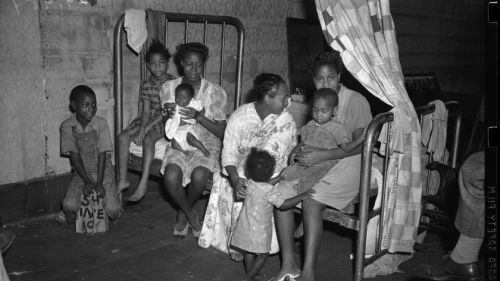
A family of African American war workers in a makeshift bedroom in Little Toyko, Los Angeles in the 1940s. (Los Angeles Daily News/UCLA Archive)

“Still I Rise” is Maya Angelou’s tribute to the courage and endurance of African American women. It’s also the title of one of her books of poetry. My brief comments follow.

Still I Rise

You may write me down in history
With your bitter, twisted lies,
You may trod me in the very dirt
But still, like dust, I’ll rise.

Does my sassiness upset you?
Why are you beset with gloom?
‘Cause I walk like I’ve got oil wells
Pumping in my living room.

Just like moons and like suns,
With the certainty of tides,
Just like hopes springing high,
Still I’ll rise.

Did you want to see me broken?
Bowed head and lowered eyes?
Shoulders falling down like teardrops,
Weakened by my soulful cries?

Does my haughtiness offend you?
Don’t you take it awful hard
‘Cause I laugh like I’ve got gold mines
Diggin’ in my own backyard.

You may shoot me with your words,
You may cut me with your eyes,
You may kill me with your hatefulness,
But still, like air, I’ll rise.

Out of the huts of history’s shame
I rise
Up from a past that’s rooted in pain
I rise
I’m a black ocean, leaping and wide,
Welling and swelling I bear in the tide.

Leaving behind nights of terror and fear
I rise
Into a daybreak that’s wondrously clear
I rise
Bringing the gifts that my ancestors gave,
I am the dream and the hope of the slave.
I rise
I rise
I rise.

Maya Angelou, poet; found in Sterling’s Poetry for Young People series, page 30.
Published in 2013 by Sterling Children’s Books, New York, an imprint of Sterling Publishing Co., Inc.
Editorial material © 2007 by Edwin Graves Wilson; Illustrations © 2007 by Jerome Lagarrigue|

Maya Angelou’s poem is worth reading out loud and slowly, using every ounce of imagination to join her. Not necessarily as a sister, but as a beginner or better yet, a follower.

I struggle over what I can and cannot do to join her in these closing days of my life. For now I’m reading poetry, watching documentaries, reading news articles and editorials, and listening online to black friends and strangers talk about what’s happening.

For centuries, racial injustice has bled into today’s mega-epidemic of prisons, soaring rates of Covid-19 deaths among African Americans, closed or understaffed medical facilities, corporate greed, random killings, modern-day enslavements, distrust, fear and weeping rage. Unaddressed, this blatant, calculated and habitual injustice also stokes our current epidemic of unleashed white supremacy.

As noted above, try reading Angelou’s poem out loud and slowly. What do you hear?

Praying for discernment, courage and peace,
Elouise

© Elouise Renich Fraser, 8 June 2020
Photo found at http://www.latimes.com

Acid | Mary Oliver

When I first read this poem, I shuddered. I didn’t like it. Then I discovered “Of the Empire,” which seems cut from similar cloth. My comments follow.

Acid

In Jakarta,
among the venders
of flowers and soft drinks,
I saw a child
with a hideous mouth,
begging,
and I knew the wound was made
for a way to stay alive.
What I gave him
wouldn’t keep a dog alive.
What he gave me
from the brown coin
of his sweating face
was a look of cunning.
I carry it
like a bead of acid
to remember how,
once in a while,
you can creep out of your own life
and become someone else—
an explosion
in that nest of wires
we call the imagination.
I will never see him
again, I suppose.
But what of this rag,
this shadow
flung like a boy’s body
into the walls
of my mind, bleeding
their sour taste—
insult and anger,
the great movers?

© 1992 by Mary Oliver
Found in New and Selected Poems, Volume One, pp. 130-131
Published by Beacon Press

I don’t think Mary’s intent was for us to like this poem. Instead, she describes an incident in Jakarta, and what happened to and within her. It’s so disturbing that she can’t forget it. As she puts it, she carries this image “like a bead of acid” so real that for a moment she’s able to become this child.

Mary puts her own experience in Jakarta out there like a mirror, and invites us to ponder her closing question. What am I going to do with this “shadow” flung into the walls of my mind? This image that bleeds  a “sour taste—insult and anger, the great movers.”

It doesn’t matter how I feel about the person in front of me. What matters is the blatantly visible truth, and how I choose to respond to it.

None of us can change the world single-handedly. Perhaps we could begin by noticing encounters that distress us, and go from there.

We don’t have to go abroad to understand this poem. It’s alive and well right now. The perfect storm is upon us here in the USA. Covid-19 plus yet another brutal murder of a black man.

Am I prepared to take this storm seriously? Or am I going to keep trying to get back to business as usual, distract myself to death, or worse–give up all hope of something better?

© Elouise Renich Fraser, 31 May 2020
Flower Market in Jakarta found at TripAdvisor.com

Exercise in concentration | Dorothee Soelle

It’s relatively easy to say I’m committed to resisting Mr. Trump. This includes resisting the noise that comes from and around him.

Like many Americans, I like to think we can ‘get things done’ if only we persist, act up, sound off, form a committee, create a ministry with a mission, advertise a lot, or pound the street recruiting foot soldiers.

In some senses, we can get things done. Yet there are moments in history when we need more than committees and ministries. This isn’t about organization. It’s about the content of our character.

Dorothee Soelle understood how difficult it is to resist without it being all about me and my ideas. Her exercise in concentration offers a more difficult starting point.

Exercise in concentration

If I’m absolutely still
I can hear the surge of the sea
from my bed
but it isn’t enough to be absolutely still
I also have to draw my thoughts away from the land

It isn’t enough to draw one’s thoughts away from the land
I also have to attune my breathing to the sea
because I hear less when I breathe in

It isn’t enough to attune one’s breath to the sea
I also have to ban impatience from my hands and feet

It isn’t enough to calm hands and feet
I also have to give up images

It isn’t enough to give up images
I have to rid myself of striving

It isn’t enough to be rid of striving
if I don’t relinquish my ego

It isn’t enough to relinquish the ego
I’m learning to fall

It isn’t enough to fall
but as I fall
and drop away from myself
I no longer
seek the sea
because the sea
has come up from the coast now
has entered my room
surrounds me

If I’m absolutely still

Dorothee Soelle, in Revolutionary Patience, pp. 42-43
Third printing, May 1984
© 1969 and 1974 by Wolfgang Fietkau Verlag, Berlin
English translation © 1977 by Orbis Books

A worthy challenge. Otherwise, I’m lost in a forest of my own making.

© Elouise Renich Fraser, 26 May 2020
Photo found at macmillandictionaryblog.com

Small Bodies | Mary Oliver

Here’s a small parable for today. What do you think it’s about? My comments follow.

Small Bodies

It is almost summer. In the pond
The pickerel leap,
and the delicate teal have brought forth
their many charming young,
and the turtle is ravenous.
It is hard sometimes, oh Lord,
to be faithful.
I am more boldly made
than the little ducks, paddling and laughing.
But not so bold
as the turtle
with his greasy mouth.
I know you know everything—
I rely on this.
Still, there are so many small bodies in the world,
for which I am afraid.

© 2008 by Mary Oliver
From her 2008 collection, Red Bird, p. 31
Published by Beacon Press 2008

Without top-dog animal predators, the natural world would cease to function efficiently. Without judicious pruning, trees wouldn’t develop strong, healthy branches or fruit.

But what about this ravenous, bold turtle with his greasy mouth? And what small bodies does Mary have in mind? Is this only about the pickerel, young teal and little ducks?

Mary Oliver opened her heart to nature – observing, describing and pondering what it might be telling or showing her. I imagine she discerns allegories or sees mirrors of what she experiences in human nature, including herself.

Given our current situation here in the USA, Mary might make connections between our pandemic world and the pond. We, too, have ‘so many small bodies’ vulnerable to predators and greasy-mouthed turtles. So many that, like Mary, I don’t know what to do or say except this:

I know you know everything—
I rely on this.

To be small and needy today is as dangerous as being a small duck in a ravenous turtle’s pond. Predatory behavior thrives at every level of governmental, public and private life. Especially when the pond is well-stocked with small bodies unable to fend for themselves, the number of ponds is drying up, and greasy-mouthed turtles grow ever larger and more ravenous.

Mary’s poem wasn’t meant to be a sermon. Still, it asks me to consider how I’m looking out (or not) for small bodies in our USA-style shrinking pond with its ravenous turtles.

© Elouise Renich Fraser, 21 May 2020
Photo of baby Wood Ducks found at pinterest