Telling the Truth

connecting the dots of my life

Tag: National Politics

A Day! Help! Help! | Take 2

Emily Dickinson’s short poem came to mind this morning. I first commented on it in March 2017, after the 2016 election and January 2017 inauguration of Mr. Trump as POTUS.

Tomorrow we get to vote again, though not for another president. My comments follow in the form of a letter to Mr. Trump.

A Day! Help! Help! Another Day!
Your prayers, oh Passer by!
From such a common ball as this
Might date a Victory!
From marshallings as simple
The flags of nations swang.
Steady – my soul: What issues
Upon thine arrow hang!

c. 1858

Emily Dickinson Poems, Edited by Brenda Hillman
Shambhala Pocket Classics, Shambhala 1995

Dear Mr. Trump,

I am not one of your fans. I am, however, a believer in more than chance happenings.

First, a confession. For months, I’ve been captive to the anti-Trump approach to daily happenings. I didn’t think about you all the time. Nonetheless, following your election and inauguration, my days seemed governed by what you did and what I thought and felt about it. Usually it felt like going from one bad scene to an even worse scene.

Looking  back, I don’t regret thinking all that through, or writing about some of it. In fact, I rather enjoy going back to see my small trail of contributions to what’s been a national preoccupation and discussion. Trying to figure you out.

There isn’t, of course, any figuring that will balance things out nicely. Especially for those whose lives are in disarray thanks to your words and deeds. Plus the words and deeds of others you’ve enabled, if not unleashed.

And so I’ve moved on. I still believe each day contains the possibility of Victory, no matter how tomorrow’s midterm elections turn out. I also imagine Emily Dickinson’s “common ball” as our planet, which I would describe as this grand terrestrial ball. A dance, open to anyone who wants to accept the invitation. There’s only one hitch. Our Creator presides over this dance. Not any human leader, billionaire or organization.

So I’m taking dance lessons again. My neighbors and their pets are teaching me to lighten up. Women and men of color are teaching me to listen deeply to what’s happening. Children of all colors are teaching me to forget about how I look and how old I am. Friends of many years are helping me reconsider my dance partners. I’m tired of the same old rhetoric, the same old hopes for tomorrow, the same old anxiety about whether I’ll be asked to the dance.

I’m already in the dance! Stumbling along, sometimes gifted with a bit of insight, scraping together my courage, and showing up in the grand ballroom of life. You might like to try it yourself, if you dare.

From one voter among millions,
Elouise Renich Fraser

© Elouise Renich Fraser, 5 November 2018

white affirmative action

Think of it when you go to sleep at night
Think of it when you walk or drive to the polls
Think of it when you go to church on Sunday
Think of it when you walk freely to the store
Think of it early and often and examine yourself
White gentile woman man or child that you are

By whose decree was this white affirmation
Heaped upon me and those who like me
Had no choice in the color or pedigree of our skin
Yet are heralded welcomed and protected
As the keepers and the color of purity
Angels in the making if not god almighty

Baby steps.
We need baby steps.
We need leaders who don’t look like us
Who don’t mind if our grammar isn’t perfect
Leaders who know the lay of the land
Because they’ve been there and ache
To show and tell the look of life on the other side
The toll exacted by border walls projected willy-nilly
To enhance the purity of so-called whiteness
That never existed in the first place

Humans exist in the first place
And hopefully in the last place
But only if we tend to these tiny shoots
Struggling to breathe and find sustenance
In a stingy, greedy, heads in the sand
Make-believe-we’re-OK land of no return
For this we are called
Out of ourselves and into a great
Mixed company dying to live
Before it’s too late

Thoughts on the eve of our mid-term elections. Can we find our way through this wilderness? It won’t happen overnight or without skilled leaders. Leaders who know about life because they’re already living it from the inside out. Against all odds and upstream.

Here’s how I see it. As a ‘white’ (actually German-Swiss-French) woman who is a citizen of the USA, I benefit every day from affirmative action. I’m on the lookout for skilled women, men and children who already model ways to live in a society at war with itself, without giving up hope and without being naive.

© Elouise Renich Fraser, 3 November 2018

After scanning today’s headlines —

A rude and rootless nation
Sits in the seat of scoffers
Indignant and outraged
Lock her up!
Lock him up!
Lock them up!
And throw away the key!

Chaff tossed on winds
Of overwrought words
Ruthless and homeless
We drift toward destruction
Lost in the wilderness
Of our own undoing

I’ve almost always read Psalm 1 with my life in mind. It’s a Psalm about choosing the way of wisdom, rather than the way of folly. I still think that’s a fair way of reading it.

Nonetheless, it’s also a Psalm directed to a nation of human beings with human leaders who make choices both wise and foolish. Not that everyone agrees to go one way or the other. There’s more than enough folly and wisdom to share on all sides.

It seems our nation is drifting down the path of folly. Often following in the footsteps of leaders who say and do foolish things. Or who respond to one kind of foolishness with another kind. Equally unrestrained and destructive.

Hence this reading of Psalm 1 as a cautionary tale. If we aren’t part of the wise resistance, we’re in danger of finding ourselves headed downhill along the destructive path of fools. Also known as the wicked who are like chaff driven by the wind. Drifting toward our demise. Full of sound and fury, signifying nothing.

© Elouise Renich Fraser, 23 October 2018
Photo of winnowing wheat taken in Iran by David Murphy, fineartamerica.com

The morning after the week before

Dancing in aisles around subjects
We wish we could avoid
Drunk with lust for power
Or sidelined as spectators
We are the worst circus in town
At war with ourselves in a script
Written in the heat of battle
Directed from the top down
Delivered on time or die the death
Of a thousand retributions

When did we become what we have become? Or has it always been this way?

In either case, we’ll get nowhere until we commit ourselves to listening and responding appropriately to the voices of survivors and to those who care deeply for their well-being.

As for survivors, we are many. Telling our stories matters. Listening to our stories matters. Working with us instead of against us makes a difference. So does ignoring, belittling or taunting us.

Recently I’ve been reading Intoxicated by My Illness, by Anatole Broyard. It’s about life and death. It’s also about his own approaching death. He’s brutally honest, funny, sad, thought-provoking and more. I highly recommend it, especially if you’re dealing with your own mortality.

Here’s a quote from page 68, revised to fit my gender. I don’t think Anatole Broyard would mind.

The dying woman has to decide how tactful she will be.

Anatole Broyard, Intoxicated by My Illness, p. 68
Compiled and edited by Alexandra Broyard
Published by Ballantine Books
© 1992 by the Estate of Anatole Broyard

Yes, this is about the way I deal with myself and others. I’m dying a bit each day. It doesn’t matter whether I have a diagnosed terminal illness. I don’t have time to beat around the bush or hide behind polite niceties. Or promise to do things I know I cannot do.

This also has to do with this moment in our nation’s history, and the importance of survivors speaking out against all odds. I still have a few things I’d like to add to the conversation. How about you?

© Elouise Renich Fraser, 7 October 2018

Memo to White Women in the USA

While the iron is still hot, I have a few things to say.

Yesterday I watched most of Dr. Ford’s and Judge Kavanaugh’s testimonies before the Senate Judiciary Committee. Like Dr. Anita Hill years ago, Dr. Christine Ford stepped up to the microphone and told her truth. I couldn’t help thinking about my experience giving my ‘testimony’ before my father and my mother. Then, as now, it didn’t seem to end well.

Nonetheless, as white women, we have work to do with each other and with men and other women of good will. However, we must immediately consider NOT doing at least one or more of the following:

  • covering for white men who abuse us to our faces and behind our backs
  • believing lies about ourselves as incapable, weak, over-emotional or intruders
  • endorsing candidates for political office because it will keep the family ‘peace’
  • playing our childish popularity playground games
  • settling for lives put on hold until it’s too late
  • looking the other way or shading the truth to protect ourselves
  • going along to get along in politically or emotionally charged situations

Instead, we might try one of these instead:

  • Pick up the phone and dial 911 for ourselves, not just for others
  • Begin describing what life is and is not like for us as white women in the USA
  • Consider who really benefits from our white male loyalty
  • Speak for ourselves, especially when we hope someone else will say it first
  • Refuse to go along to get along in politically or emotionally charged situations

I wonder why, in this age of so-called ‘liberation’, many white women in the USA are still in bondage to the need for White Male Approval? What do we fear? Perhaps we’re so hooked on the power and prestige we get standing by our man that we can’t even imagine living without them.

The demographics of our country have changed dramatically, yet we’re still governed at the highest levels by a huge majority of white men, with occasional token ‘others’ that include white women.

I wonder what might happen if more of us step up to the microphone and begin telling the truth about our white female lives? Or, even more miraculous, when more white men in positions of power begin listening to white women, black women, tan women, mixed-race women, Jewish women, Muslim women, refugee women, little girls and big girls, teenage women and elderly women. To name just a few possibilities.

I don’t think most men know what they’re missing. More’s the pity, since women have things that need to be both said AND heard. Not with a dismissive nod or a patronizing pat on the back, but with resolve to become partners in change for the good of this country and those who inherit the messes we’ve made.

© Elouise Renich Fraser, 28 September 2018

Voter Fraud

One Vote plus One Vote
doesn’t equal Two
in this world of One plus
What We deign to throw your way
or not

One plus a Big Wall visible or invisible
One plus Ill-gotten Gains hidden on offshore islands
One plus your Votes, your Loyalty, your Obeisance
At the altar of Our Superior Greatness

One plus the Privilege of sleeping and waking
surrounded by guards and lackeys
who do Our Bidding

One plus the heavy Duty of carrying lightly
Our Noblesse Oblige as we tip Our top hats
and wave Our smooth hands
from platforms of coming elections
begging for your alms

To address voter fraud, we must begin at the top. All the re-counts or investigations in the world will not solve the problem of fraud being committed daily in high places.

I salute politicians who live in ‘the real world’ with those they serve, who listen without going into automatic stump-speech mode, are seen ‘among the people’ as we like to say, and inspire by example.

Yet no investigation into past elections can take the place of investigations into voter fraud perpetrated in the highest offices and levels of government in the USA. Every day. Not just on, before or after Voting Day.

©Elouise Renich Fraser, 10 September 2018
Image found at nytimes.com

green fields

green fields wave
the valley beckons
a warm welcome

life in full heat
rises with a rush
toward summer sky

Yesterday I drove through Valley Forge National Park on my way to a doctor’s appointment. The sky was cloudless and the sun was blistering hot. No problem. Driving through VF is always a delight and a feast for the eyes. Coming home it was almost ten degrees hotter, yet just as beautiful, uncrowded and peaceful. Like a green, tree-blessed island in the middle of a hot stormy sea.

I’m tempted to feel voiceless these days. Yes, I write, and I post. I often wonder what becomes of the verbiage generated by me and by thousands of others writing about our current situation in the USA. Yet I can’t keep silent. It only makes things worse.

There’s precious life in this country waiting for release, along with buckets of pain. Fractured relationships need healing. Anger about injustice and betrayal still need a full hearing. And no one can be all things to all people.

So I’m counting on being one of the small things that matter. Like a blade of grass, a grain of wheat or even a grain of sand. Or how about a wild flower of the field?

Elouise

©Elouise Renich Fraser, 20 July 2018
Photo of Valley Forge National Park found at flickr.com, Paris Images

The art of the deal goes South

I’m not against deal-making. It can be wonderful. I also know that fruitful deal-making takes time, patience, compromise, and loads of good will and transparency between all parties involved.

It could also be good that we now have in the White House a President who claims expertise in the art of the deal. I would also guess every President I’ve had since I was born knew how to make deals. It comes with the territory.

And yet there’s more than one way to make a deal. Though I’m not an expert on this, it seems Mr. Trump believes in one kind only. That would be the kind in which the winner takes all or most of the ‘loot.’ So that, in the end, he or she can say “I won!” And the other party will know that she or he lost, or came out with less than they had going in.

Sidebar: Mr. Trump’s imposing of tariffs on countries that don’t please him for various reasons seems to be backfiring. Witness their refusal to cave in and give him the victory he seeks.

Now I’m going to make a leap here and suggest that the pattern of Mr. Trump’s most recent tariff pronouncements look like the I win/You lose logic that’s driving our treatment of migrants along the Southern border. It may also help us understand our current treatment of immigrants who are not citizens of the USA.

Think of a tug-of-war. Clear winner; clear loser. I’m great! You’re not.

Yet there’s more than one way of making a deal. The best deals often end up with winners on all sides. We may not get everything we thought we wanted or needed. Nonetheless, we may get some beneficial things we’d never anticipated.

The Chinese Exclusion Act is a sad and sorry example of the I win/You lose style of making a deal. So are housing and employment laws and processes put in place or twisted around to keep certain groups of people in their places. Not overrunning ‘our’ protected places. We win/You lose.

I’m no historian and I’m not a financial expert. I just know that what I see isn’t adding up to success on the Southern border OR success for our country. Not here and not abroad.

The images I posted yesterday suggest an ill-conceived I win/You lose setup for migrants and for all of us. The first moves have already been made at the border. Appropriate quality of life and family supports have all but vanished. Plans for what comes next are vague or nonexistent. And there’s an air of secrecy about what’s happening now with migrants, and what will happen next.

Tom Kiefer’s remarkable photographs have given my eyes something else to look at and ponder, without looking away. Which is another way of saying I’ll be doing at least one more post on this topic.

What about you? Have you found ways to engage?

©Elouise Renich Fraser, 5 July 2018
Photo of toy cars found at the New York Times and on Tom Kiefer’s website
Toy cars are sometimes carried as mementos or gifts for loved ones; considered non-essential and discarded at the border

Images I can’t get out of my mind

It’s July 4th. Our nation’s great big birthday party day. Yet as much as there is to love about our nation, right now there’s way too much of the other stuff happening. Whatever happened to the American dream?

On 2 July 2018, The New York Times featured an article by Laura M. Holson about Tom Kiefer and his collection of photographs, “El Sueño Americano” (The American Dream). Now retired, Mr. Kiefer worked as a janitor at a border crossing between Mexico and the USA. Holson writes,

There, he collected tens of thousands of items that were confiscated and thrown in the trash by Border Patrol agents from undocumented migrants crossing the border from Mexico into the United States. He began photographing the items in 2007.

“I couldn’t leave them,” he said.

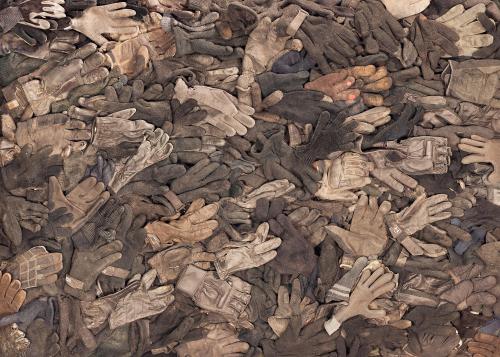
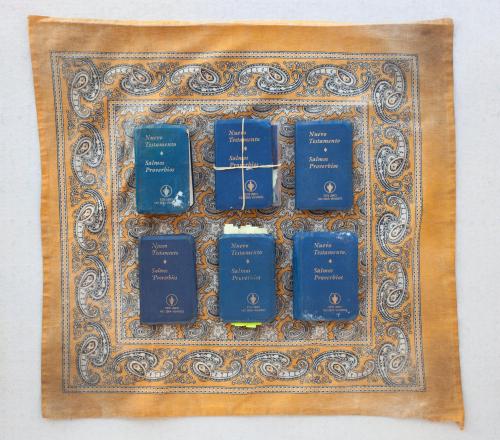
Below is a small selection from his collection of over 600 photographs. Each photo includes Kiefer’s explanation about why these items were routinely confiscated. On one level, they document the stripping away of life-sustaining items from women, children and men crossing the border. They also say something (what is it?) about our nation’s ongoing obsession about ‘them’ and ‘us.’

You can find scores more at Tom Kiefer’s website. I find his contribution to our current conversation about immigrants seeking asylum invaluable. Worth more than written commentaries or debates about the fine points of the law. If you live in Michigan, over 100 of Mr. Kiefer’s photos will go on exhibit in October at the Saugatuck Center for the Arts.

Each photo includes Kiefer’s brief explanation about why these items were confiscated. The small toothpaste tubes and toothbrushes at the top were considered potentially lethal non-essential personal property, and disposed of during intake. Mr. Kiefer notes that “while in custody, most migrants will not have access to toothpaste and toothbrushes.”

Here are four other examples. The first two were considered personal items and non-essential. In addition, the combs and brushes were considered potentially lethal.

Next we have cans of tuna. Along with other food items confiscated such as beef jerky, granola bars, dehydrated soup and powdered milk, they were considered contraband and disposed of during intake. Mr. Kiefer notes that tuna is an efficient, compact source of protein, and that this particular brand had a pull-top lid.

Next we have heavy-duty gloves used for many purposes. However, given the desert and mountain terrain of the border, plus sometimes below-freezing winter temperatures, they were invaluable. Yet they, too, were considered non-essential personal property and discarded at intake.

Finally, a photo of an item migrants carried in their bandanas. Non-essential personal property. Discarded.

What’s going on here? I don’t know. But I’ll make my comments in another post, and would love to hear from you as well.

©Elouise Renich Fraser, 4 July 2018
Photos found at the New York Times and on Tom Kiefer’s website (see links above)

White Supremacy

I’ve lived in majority White neighborhoods most of my life. I’ve also lived through the drama of early desegregation, beginning with the 1960s. Back then the drama was chiefly about Black and White Americans. However, it now includes other immigrant and refugee populations. Especially those without financial security or steady jobs with decent wages and health benefits.

Despite the dreams and goodwill of many US citizens, things don’t seem to have changed that much. Especially in our cities. But also, increasingly, in the suburbs. Not in the shopping malls, but in our neighborhoods. It’s good to attend a church that’s visibly open to all comers. But even this doesn’t take the place of neighborhoods.

It’s simple. If I don’t have daily contact in my neighborhood with people who don’t look or act like I do, I won’t get very far on my own. I know this, because I now have Muslim, Roman Catholic, and Jewish neighbors. Plus other White Protestant neighbors. I have no Black neighbors.

My attitudes and behaviors are important. Nonetheless, I can’t solve this alone. This a national problem and disgrace, especially given decades-old legislation against discriminatory practices in the housing industry. The problem began early in this nation’s history, and has only become more deeply entrenched as we’ve made ‘progress’ toward what I would call semi-integration (sometimes takes good pictures, but it isn’t real).

Here’s a fact I heard this weekend on a reputable radio station. With the exception of President Obama, none of our recent Presidents took housing discrimination on as the monster it is. In addition, Mr. Trump has further weakened these efforts with his choice of staff, his tweets, his attitudes, and his macho White Supremacy approach to governing.

In other words, we have great legislation and ineffective or nonexistent follow-through. Neighborhoods don’t happen on maps; they happen in hearts and everyday lives. On streets, porches and sidewalks. In back yards and corner grocery stores. We need to rub elbows with each other. Share the news; help with the snow shoveling; watch the kids from time to time. Talk about the weather and then maybe about something more important than that.

Over the weekend I heard an interview that gave me a starting point. A place and way to begin writing about this. So here’s the deal for today. I bring you a quote. That’s all. It gives me a chill every time I read it.

The Anglo Saxon planted civilization on this continent and wherever this race has been in conflict with another race, it has asserted its supremacy and either conquered or exterminated the foe. This great race has carried the Bible in one hand and the sword [in the other]. Resist our march of progress and civilization and we will wipe you off the face of the earth.

Major William A. Guthrie, 28 Oct 1898, in Goldsboro, NC, speaking to a crowd of 8,000 at what was called “A White Supremacy Convention.” From Raleigh News and Observer, 29 Oct 1898. Quotation excerpted from Wikipedia article on The Wilmington (NC) Insurrection of 1989. 

Nuanced for the year 2018, versions of this quote are still filling the airwaves and social media. The question is how to combat this assault on our common humanity and on our increasingly isolated neighborhoods.

©Elouise Renich Fraser, 23 April 2018
Photo found at whqr.org