Telling the Truth

connecting the dots of my life

Tag: Self-reflection

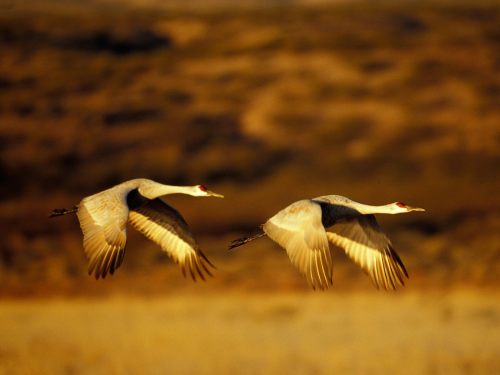
elegant feathers

elegant feathers
grace wings beating in tandem
faces resolute
a matched pair of cranes flies south
through autumn’s glowing colors

Yesterday morning this gorgeous photo of migrating Sandhill Cranes came up on my screen saver. Though everything about it caught my eye, I couldn’t stop staring at the Cranes’ faces. Birds of the air on a mission. Lending their beauty for just a few short seconds to the background of the sun and autumn flaming out. Chased by shadows, resolutely flying south guided by an inner compass.

I think I’d like to be a Sandhill Crane when I fly away. Which brings to mind this old song.

Today I’m grateful to be alive, well and kicking now and then. I’m also grateful for the way people and events come together unexpectedly, moving me ahead whether I’m ready or not. Always at the right time.

© Elouise Renich Fraser, 26 October 2018
Photo of Sandhill Cranes in flight, New Mexico; found at ayay.uk.co
Recording of I’ll Fly Away found on YouTube

After scanning today’s headlines —

A rude and rootless nation
Sits in the seat of scoffers
Indignant and outraged
Lock her up!
Lock him up!
Lock them up!
And throw away the key!

Chaff tossed on winds
Of overwrought words
Ruthless and homeless
We drift toward destruction
Lost in the wilderness
Of our own undoing

I’ve almost always read Psalm 1 with my life in mind. It’s a Psalm about choosing the way of wisdom, rather than the way of folly. I still think that’s a fair way of reading it.

Nonetheless, it’s also a Psalm directed to a nation of human beings with human leaders who make choices both wise and foolish. Not that everyone agrees to go one way or the other. There’s more than enough folly and wisdom to share on all sides.

It seems our nation is drifting down the path of folly. Often following in the footsteps of leaders who say and do foolish things. Or who respond to one kind of foolishness with another kind. Equally unrestrained and destructive.

Hence this reading of Psalm 1 as a cautionary tale. If we aren’t part of the wise resistance, we’re in danger of finding ourselves headed downhill along the destructive path of fools. Also known as the wicked who are like chaff driven by the wind. Drifting toward our demise. Full of sound and fury, signifying nothing.

© Elouise Renich Fraser, 23 October 2018
Photo of winnowing wheat taken in Iran by David Murphy, fineartamerica.com

A rambling tribute to my feet

A rambling tribute to my feet
and farewell to stubborn internal
voices calling out to entice me
into showing up at all costs –
the sign of honored membership in a
mythical club of the elderly who
never seem to weary or grow faint

Though yesterday’s good girl has
long since faded into the sunset
I’m torn by desire to ‘be there!’ with
a smile on my face and tormented
feet in my shoes faithfully trying
to catch me up or stop me cold
in my tracks before it’s over and done
lost in a confusion of days and years
of showing up now gone forever

Or how about this? I think I’m finally learning to listen to my feet. Not just my heart, gut or kidneys. I emphatically don’t like having to do this. For years I haven’t given more than a passing thought to my feet.

Showing up (on my feet) is something I’ve done habitually most of my life. My feet made sure I was on time and prepared. On time and energized. On time and ready to work hard. On time and ready to push that boulder or climb that trail to the top of the hill.

If there’s an up-side to this, it’s relief that my feet aren’t scolding me. They’re begging me to pay attention to them. Suggesting I might stop and rest after that glorious walk through the meadow, or that trip to the grocery store. Or I might even give them special treatment the way I give Smudge the cat special treatment every day.

Here’s my bottom line: ‘I don’t want to run my feet into the ground before it’s time for me to join them.’

If that sounds morbid, so be it. It’s my informal mantra for this coming week. What’s yours?

© Elouise Renich Fraser, 20 October 2018
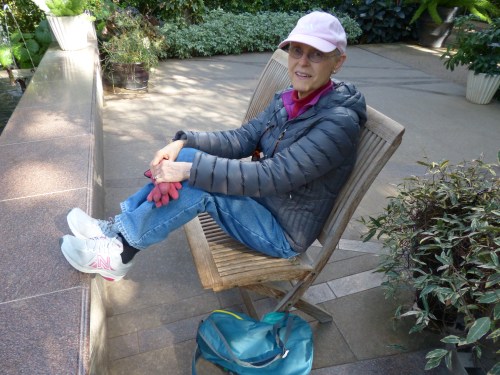
Photo taken by DAFraser, February 2018 in the Longwood Gardens Conservatory

Conversations that matter

On 21 April 2016, I broke my jaw and my wings were clipped. Not just by the broken jaw, but by a string of unanticipated health events that followed. Today it takes time to attend to my aging body.

So I often wonder what the meaning of my life is now. Why am I here? I know I’m going to die. So what about the meantime, in whatever time I have left on this earth? Is blogging it? I love blogging, but….

A couple of weeks ago I got an email from a friend and former colleague at the seminary. Would I be willing to interview a seminarian working on her MA degree? The answer was Yes! Of course! Big smiles and happiness! A high point in my life!

So this last week I spent time on the phone with her. Lots of time. We didn’t talk about the fine points of my life as a pastor (which I am not). Instead, we talked about the not-so-fine points of my life as a survivor of childhood abuse. Especially what it took in my late 40s to begin the long process of healing while I was professor and then dean at the seminary.

Why was this conversation a high point for me? Because it let me know I still have something to say. Especially, but not only to women and men preparing for ministry in churches, or for leadership in religious organizations.

Blogging about my experience has been and still is part of my healing. Yet nothing beats a one-on-one conversation, or a small group discussion in which I’m able to talk about what it took for me to begin healing.

We’re all dealt cards we didn’t ask for, even before the moment we’re born. Going into a professional position or a new job doesn’t magically make all that disappear. In fact, it often triggers it. Understanding how trauma shaped and still shapes us is worthy of our best efforts. Not alone, but together.

I don’t know how this will play out. Nonetheless, I’m hoping for more informal opportunities in which my personal and professional experiences come together in surprising ways.

Cheers!
Elouise

© Elouise Renich Fraser, 14 October 2018

when women refuse to be silenced

#MeToo backlash
a tsunami of contempt
contorted faces
taunting voice of POTUS
how dare they call us out?
crocodile tears for victims
rage at their own undoing
fear writ large
caught in headlights
frozen with disbelief
resorting to the game of boys
bullying their way to the top

All this and more
when women refuse to be silenced

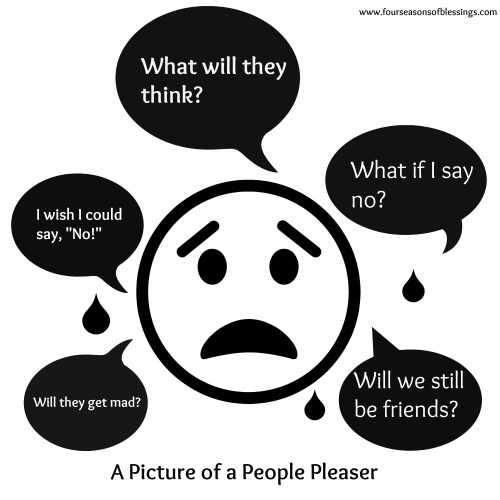
The most powerful force that silences me is NOT what others say out loud or even to me about ‘these women.’ It’s my own deeply ingrained people-pleasing habit.

Though it isn’t as strong as it was several years ago, it’s still a powerful force. A forked tongue that keeps whispering I’m a hair’s breadth from being ruled out of order, or losing all my friends.

Some women and men in my life don’t struggle with this. I admire them. Watching them makes me keenly aware I wasn’t born or raised to this level of direct personal honesty. In particular, I didn’t learn to stand up for myself, and I’m still paying for it.

So here I am today dealing with demons of the past, though in a new key.

Thanks to recent events and our national history, I still have opportunities to speak up and act differently than in the past. Not as a child, and not as an outsider. I’ve more than paid my dues. I’m in the last chapter of my life, faced with opportunities to make a difference. Not just for others, but for myself. First, however, I have to negotiate just one piece of business:

“The dying woman has to decide how tactful she wants to be.”
With thanks to Anatole Broyard, Intoxicated by My Illness, p. 62

It isn’t over until it’s over. I’m staying tuned.

© Elouise Renich Fraser, 12 October 2018
Image found at luckyottershaven.com

Inconvenient truth

Bad timing
The look on your face
The tone of your voice
Your choice of words
What you said
How you said it
And a thousand other
Inconveniences
Called upon as evidence
Against you and your kind
Will never withstand
The strength of truth
Spoken out loud
By just one survivor
With nothing to gain
And everything to lose
Including false shame

If I had to name my greatest achievements in life they are, in order:

  1. Seeking help from a psychotherapist for unrelenting IBS, depression, shame, anxiety attacks and more. I was in my late 40s.
  2. Setting up a meeting with my parents and reading to my father my two-page statement. In short, I did not deserve to be shamed, humiliated or silenced by his beatings. This meeting took place on the eve of my 50th birthday.

The poem acknowledges the excruciating reality that there will never be just the right moment to tell inconvenient truth. Or just the right way. Or with just the right looks on our faces.

I applaud survivors of life-changing events, endured at the hands of others, who do their ‘homework’ and then speak out. As many times as needed.

We are an inconvenient truth in this nation.

We’re everywhere, in sight and out of sight. We want freedom from false shame, debilitating depression, anxiety attacks, and lies we tell ourselves about ourselves.

Many of us were violated as children or babies, before we were old enough to know what was being done to us. Often violation against us preceded our own violation of others. That doesn’t get us off the hook. It just clarifies the lay of the land and what we must do to make sense of what seems senseless.

We can’t change the people who victimized us. We can, however, give ourselves the gift of facing what happened to us, getting professional help, and learning to do what we think we can’t do to make amends to ourselves and others. No matter what the consequences.

A liberated voice doesn’t come cheap.

© Elouise Renich Fraser, 10 Oct 2018

Small gifts

Small gifts grace my eyes
Bursting with life and color
They command the scene
Announcing their calm presence
in the garden of my life

It’s difficult to think of my life as a garden. But that’s just what it is, isn’t it? A small patch of earth populated by new growth, the occasional stunning blossom, weeds, trampling of feet, the stench of manure, and all the rest that goes into the pot.

It seems nature, aided and abetted by a Master Gardener, combines the good, the bad and the ugly within one spectacular display. Seen from afar the garden glimmers almost like a desert mirage.

The photos above are from Chanticleer Garden. It’s a magical place. Even so, weather happens. People happen. Bird poop, poison ivy, weeds, and predatory mosquitoes happen. It takes a team of gardeners to keep up with pests, damage and overgrowth on the ground.

As for my life, I’m at peace with my past. Still, I can’t dispense with a team of gardeners, much less the Master Gardener. There’s work yet to be done beyond my limited eyesight and capacities.

Above all else, I want to keep the ability to see and appreciate small gifts sent via nature. Gifts that arrive unannounced, just when I need them. Like the photos in this post.

Happy Monday!
Elouise

© Elouise Renich Fraser, 8 October 2018
Photos taken by DAFraser, July 2017, at Chanticleer Garden.

The morning after the week before

Dancing in aisles around subjects
We wish we could avoid
Drunk with lust for power
Or sidelined as spectators
We are the worst circus in town
At war with ourselves in a script
Written in the heat of battle
Directed from the top down
Delivered on time or die the death
Of a thousand retributions

When did we become what we have become? Or has it always been this way?

In either case, we’ll get nowhere until we commit ourselves to listening and responding appropriately to the voices of survivors and to those who care deeply for their well-being.

As for survivors, we are many. Telling our stories matters. Listening to our stories matters. Working with us instead of against us makes a difference. So does ignoring, belittling or taunting us.

Recently I’ve been reading Intoxicated by My Illness, by Anatole Broyard. It’s about life and death. It’s also about his own approaching death. He’s brutally honest, funny, sad, thought-provoking and more. I highly recommend it, especially if you’re dealing with your own mortality.

Here’s a quote from page 68, revised to fit my gender. I don’t think Anatole Broyard would mind.

The dying woman has to decide how tactful she will be.

Anatole Broyard, Intoxicated by My Illness, p. 68
Compiled and edited by Alexandra Broyard
Published by Ballantine Books
© 1992 by the Estate of Anatole Broyard

Yes, this is about the way I deal with myself and others. I’m dying a bit each day. It doesn’t matter whether I have a diagnosed terminal illness. I don’t have time to beat around the bush or hide behind polite niceties. Or promise to do things I know I cannot do.

This also has to do with this moment in our nation’s history, and the importance of survivors speaking out against all odds. I still have a few things I’d like to add to the conversation. How about you?

© Elouise Renich Fraser, 7 October 2018

What next?

Standing alone
Holding what’s left
Of a lovely old body
Weary and dependent
She now begs for mercy
And justice from me
Her semi-absent keeper
Of too many years

What now?
Where now?
What next?
I haven’t a clue.
Have you?

The dilemma of each day. I don’t feel sorry; I feel sad. Last night I had a plan. Then I woke up this morning and my body begged for mercy and justice. My plan changed.

I want to save the world. Or at least what’s left of it. Now. Not later. My body stands there staring at me in the mirror. And what about me? Don’t I count for something?

The responsibility to take care of myself, not the rest of the world, weighs heavy. Not because I don’t know what to do, but because I’d rather be out there fighting for justice and mercy!

How ironic. Looking back, I see patterns that drove me. I also see the high cost my body is paying. Then I think of all the students and friends I’ve exhorted over the years to ‘take care of themselves.’

The title of a book I read in the last year or so comes back to haunt me: The Body Keeps the Score. Indeed it does keep the score. Mercilessly, yet mercifully when I’m willing to pay attention. This is now. Not then. I have choices.

So this morning I cancelled my plan and am listening to my body. Keenly aware that my new baby doll stand-in for me, 10-month old Marie, knows exactly what it means to be abused and taken for granted by someone who claims to love her. Sadly, I have sometimes been my complicit enemy, especially as an adult driven by ghosts from my past.

The sun is out; fall is almost in the air; it looks like a good day for a walk in the neighborhood! And a long look at that lovely photo at the top–a dock that reminds me of my favorite childhood getaway.

Happy Thursday!
Elouise

© Elouise Renich Fraser, 4 October 2018
Photo found at pinterest
Dock on the Skidaway River, Isle of Hope, Georgia

A Conceit | Maya Angelou

This short poem from Maya Angelou resonates today. Especially in light of undeclared and declared wars raging in the USA and around the globe. Note that a conceit is an image or metaphor as often found in poetry. So use your imagination as you read! Maya Angelou is painting a picture in poetic language. My comments follow.

Give me your hand.

Make room for me
to lead and follow
you
beyond this rage of poetry.

Let others have
the privacy of
touching words
and love of loss
of love.

For me
Give me your hand.

Maya Angelou, in Poetry for Young People
Edited by Edwin Graves Wilson, PhD
Illustrated by Jerome Lagarrigue
Published in 2013 by Sterling Children’s Books

In this short poem I hear Maya Angelou saying two things about life and poetry.

  • Poetry can be emotionally moving while remaining a private indulgence.
  • This poem asks for more than this. Will you come with me?

Her phrase “beyond this rage of poetry” gives us a clue. This rage isn’t about anger. It’s the raging emotions of literary writing. This includes poems that convey deeply felt, sometimes prophetic emotions.

Maya Angelou’s poem demands more than our feelings, our sentimentality. It invites action. Not simply alone, but also together.

It may sound trite to say we need each other. Of course we do. Yet this poem is about more than that.

On its own, poetry can’t bring about change. It doesn’t matter how persuasively a poem describes our agony or our ecstasy, our losses or our love. What matters most is what we do or don’t do about it.

And so Maya Angelou’s poem offers an alternative to living in the private world of poetry. The alternative moves me into public worlds in which I am not yet present just as I am. Vulnerable, a beginner, falling down and getting up to begin again. Hanging onto Maya Angelou’s hand for dear life. Sometimes leading the way.

This first step doesn’t absolve me of responsibility for the direction we take. Yet if I don’t take Maya Angelou’s hand and follow her lead, I won’t discover what we may need to do next.

My gender, color, family background, or other markers of my so-called ‘identity’ won’t help me solve a problem I don’t yet understand.

Where are we going? We’ll find out together, ‘beyond this rage of poetry.’ Beyond its private intensity and enthusiasm of words.

© Elouise Renich Fraser, 3 October 2018
Image found at wikia.com