Telling the Truth

connecting the dots of my life

Tag: the human condition

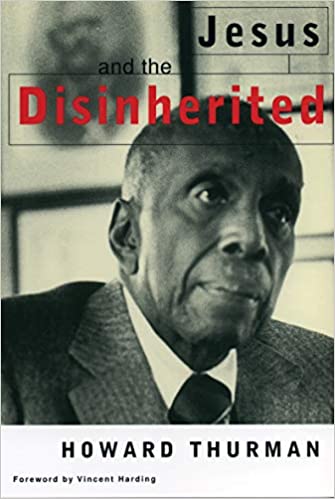
Jesus and the Disinherited | Howard Thurman
His days were nurtured in great hostilities
Focused upon his kind, the sons of Israel.
There was no moment in all his years
When he was free.

Poem fragment quoted on p. 34 of Jesus and the Disinherited. From Thurman’s privately published volume of poems, The Greatest of These, p. 3.

This summer I’ve been reading Howard Thurman’s relatively short book (less than 100 pages), Jesus and the Disinherited. It’s more relevant today than ever before. A sad commentary on our nation’s untenable situation, past and present.

Thurman’s book describes

  • What happens inside the disinherited
  • What their most difficult struggles are about, daily
  • And why Jesus (not Paul) is the person to whom they are drawn when it comes to real life as they know it.

Like the disinherited of today, Jesus faced fear, deception, hate, and the command to love one’s neighbor as oneself. This didn’t happen one challenge at a time, but every day, no matter the circumstances. In addition, Jesus was one of the disinherited. He was not a Roman citizen, or an official religious leader of Judaism.

It’s one thing to study our history as a nation (which we must), or the history of slavery in this country (which we must), or our individual backgrounds that led to the prejudices and blindness that shape our lives today. All of this is important.

Still, one thing has eluded me. I’m finding it in Howard Thurman’s book, even though he didn’t write the book for me or other white people. He’s clear about this: This book is for people who are black and disinherited, every day of their lives. What white people will do or think when it comes to the disinherited of today is up to them.

I highly recommend Thurman’s book as a way of recognizing everyday racial realities from the inside out. For me, it makes crystal clear what I’ve lived with all my life. This isn’t just about different approaches to life. It’s about the disinherited, and what it takes for them to survive in this country.

I hope you’ll consider reading it. It won’t change everything overnight. It can, however, strengthen our understanding of what our black and brown citizens and church members are up against every day of their lives. It also shows the importance of listening. Silently. Without attempts to explain or justify ourselves.

Elouise

© Elouise Renich Fraser, 27 August 2020
Photo of book cover found at amazon.com

A million distractions

A million distractions
rise daily from fertile ground
I close my eyes
trying to concentrate on Now

Now laughs at me
wonders whether I’m alive

Focus is for the birds
not for live human beings
swept up and along in
warped boats struggling
to stay afloat long enough
to be appreciated if not loved

The crowd roars its approval
begs for more showers of poison
from tongues wed to never-never land
coming your way today
unless you’d rather be
a bird

Just a few thoughts that reflect my desire to be over and done with the 2020 Election for our next POTUS. Why? Because  we have unfinished business. It isn’t about one thing. It’s about our entire history as a nation. We’re in a national ‘come-to-Jesus’ moment, invited to light a candle deep inside the hidden yet not-so-hidden history of this nation. Put another way, we’re invited yet again to stop walking over our history in Trance mode.

So yes, today I’d rather be a bird! Focused on what matters most.

This morning a couple of cardinals visited our recently-hung bird feeder. Clearly focused on food! Hoping this day offers food for our souls, and that we’re alert enough to accept it.

Happy Tuesday!
Elouise

© Elouise Renich Fraser, 25 August 2020
Photo found at kaytee.com

By hook or by crook

No river runs through it
No sounds of mercy or grace
Pierce neglect and screaming injustice
Writ deep and wide through the heart
Of God bless America

Look the other way my children
Fence it in and hold your tongues
There is no sweet by and by
When the clock strikes twelve
And one more soul is taken

Now open your textbooks and read
With me the unbeatable story of
America’s Great Success
Betrayal heaped on betrayal
By hook or by crook

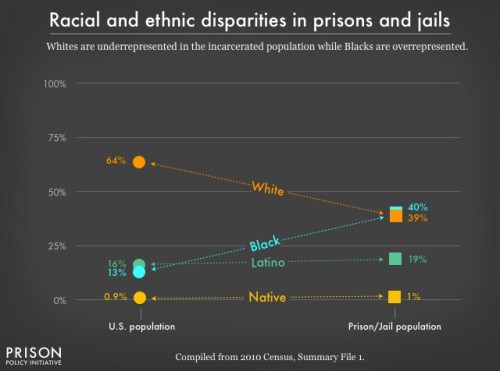
No, I haven’t given up hope. However, unless I examine the sad and sorry facts of our history with slavery, so-called post-slavery, lynching, and mass incarceration, I won’t get it. Ever.

Even though I’d rather live in my supposedly safe small world, I can’t. It doesn’t help when I avoid hard data. Especially the kind that shows the systemic costs of our nation’s failed approach to slavery and its perpetually reinvented substitutes.

We NEVER got rid of slavery. We just changed the way we thought about it–especially the costs of being black or brown in the USA. Worse, if we have white skin we might even get away with not thinking about it at all. Not my problem?

For the last two weeks I’ve been working in An American Lament about Slavery and so-called ‘Post-Slavery’ in the USA. Not fun. Depressing sometimes. Even tempting me to despair. But facts are facts, especially when they’re in my face.

Check out the 2010 graph at the top. Right now we’re in the midst of a ten-year census count. I wonder how the 2010 chart at the top will change?

Praying for courage to do what I’m able to do, one day at a time. Especially when it comes to changing my well-worn ways of coping in a nation built on too many lies.

Elouise

© Elouise Renich Fraser, 22 August 2022
Graphic image found at prisonpolicy.org

Happy Happy Happy! | Longwood Meadow Photos

One of my favorite visits to Longwood Gardens. Enjoy!

This afternoon (August 2017) I’m happy and relieved. D and I took off right after breakfast to drive to Longwood Gardens. The weather was picture perfect.

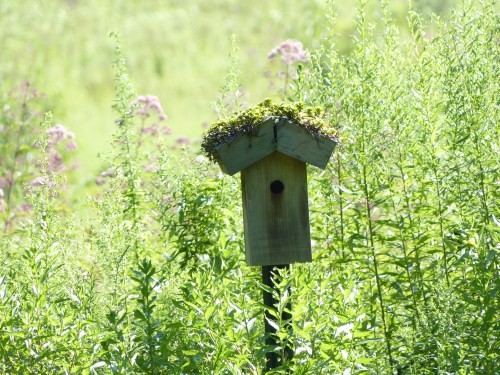
Why so happy? Because this was my first attempt at (slow!) hiking in the meadow since before I broke my jaw and lost all my energy. I was hesitant about doing it, but decided I’d never know until I tried. Here’s a lightning quick look.

Butterflies, bees and dragonflies were out in droves
on this side of the meadow.
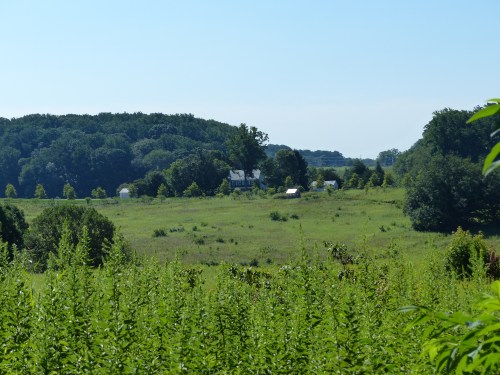
We walked to the top, sat in the shade a bit,
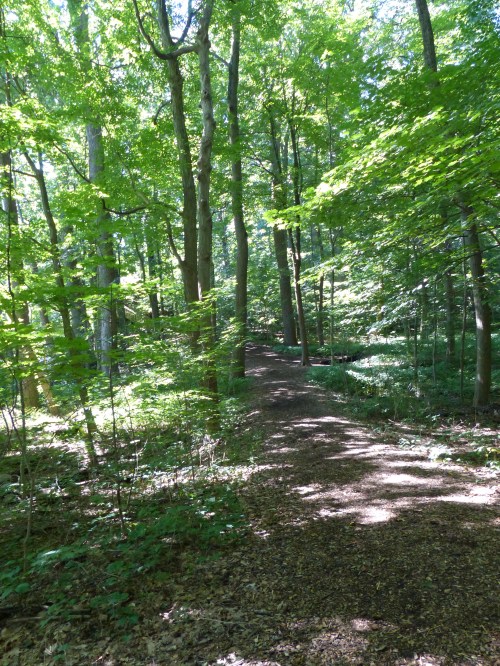
then returned and exited via the forest path.


Next we walked over to the café for a little lunch. I had a mildly spicy vegetarian chili and a cup of fresh fruit. D settled for a turkey sandwich. Then we walked through part of the conservatory, did a short visit to the flower walk, and headed home.

Good health news: Yesterday I saw my Lucy (pacemaker) cardiologist and his wonderful assistant who makes sure Lucy is working properly. She’s doing an outstanding job, I’m happy to say!

I’m eager to try a few more external activities, in addition to daily walks here in our neighborhood. No big social events, just lovely strolls outside that let nature do its work renewing me for whatever comes next.

Cheers!
Elouise 

© Elouise Renich Fraser, 9 August 2017; reposted 20 August 2020
Photo credit: DAFraser, 9 August 2017, Longwood Gardens Meadow

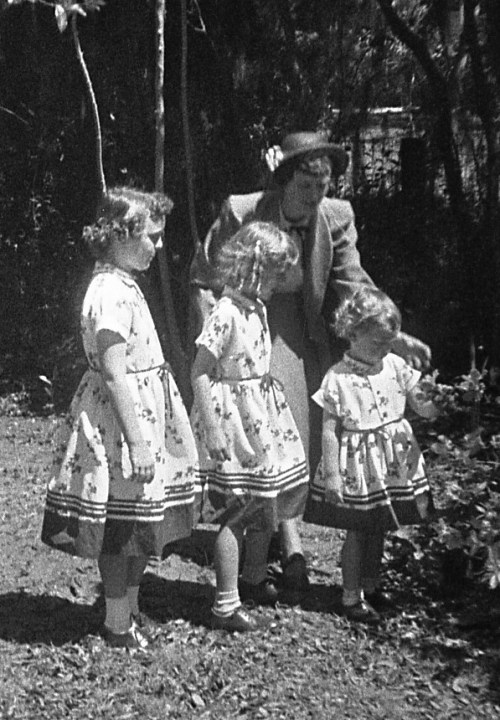
Mom and Auntie T | 1950s

Mom with first three daughters; dresses and hair by Mom, 1950s 

It’s 1951. Our ‘new’ house on the Vernon River feels like a fairy tale. Fireplaces on both floors, huge pieces of heavy dark furniture, woven cane mats covering dark wooden floors—often with rugs on top of the mats.

Both floors facing the river had screened-in porches, with rocking chairs on the first floor porch. They also had tall French windows that opened onto the porches facing the Vernon River.

The old frame house stood on stilts so water didn’t leak into the first floor. Almost every room in the house had an old steam radiator plus a fireplace.

I felt like I’d died and gone to heaven. Even better, this was now (sort of) ‘our’ house. Including the dark brown oiled pine slats covering the living room and dining room walls. Heaven for sure.

Until it wasn’t.

Looking back, I can’t imagine what Mom went through. The house didn’t come with a house-cleaner. Mom could do it all, with her three daughters (soon to be four). Surely that would do for servant-power. With Mom in charge of course.

Except she wasn’t.

Auntie T and her husband Dr. T lived in the old slave quarters just behind the big house. Too small for Auntie T’s fancy furniture. So there most of it sat for us to use—and keep clean. Not according to Mom’s already high standards, but according to Auntie T’s higher standards. The kind that got reviewed every time Auntie T dropped by to see how things were going.

Mold grew on the lovely dark pine walls, on books and on dark wood furniture. Dust and pollen accumulated on the porch, and on the linoleum covered grand hallway from the back to the front of the house. Auntie T’s clean white handkerchief found every speck! No matter what Mom did, there was always something she needed to do better.

I think Auntie T was trying to turn Mom into a respectable White Southern Lady. I didn’t often hear Mom complaining. She knew who buttered her bread. Still, in my eyes Mom was the most efficient, organized person in the world.

Looking back, I’m chagrined. We moved to Georgia because Mom was recovering from a serious case of polio. Our California mission house (with 4 to 5 families, and constant guests from abroad) was like a circus. Mom needed to rest and recuperate.

In Savannah, she frequently rested in the middle of the day, sometimes crying softly to herself. Maybe the money was running out, or there wasn’t enough food for supper, or Dad still wanted a son. Or maybe she felt trapped by Auntie T’s expectations and intrusiveness.

Bottom line: Mom didn’t know how to tell us why we weren’t to play with our new black friend. I’m guessing Auntie T’s helper didn’t hesitate to report this to her eldest daughter. Even so, I can’t prove it.

© Elouise Renich Fraser, 18 August 2020
Photo taken by JERenich at Montgomery house, near Savannah, Georgia, 1950s.

A Lesson in Deep South Manners | 1950s

Sister #2 and I hanging onto the front-yard Mimosa tree, 1950s

I don’t remember her name. Her mother was the cook and household helper for Dr. and Mrs. Turner.  Her father took care of yard work and repairs to the Turner’s house.

Dr. Turner was a retired physician. Auntie Turner had worked as his nurse. Once upon a time they owned and lived in the big house. Then they gave it to the mission organization my parents served, and moved out. Now they lived in the old servants’ quarters. The simple wood frame two-story structure sat behind the big house. No one lived on the second floor anymore.

One day the Turner’s cook brought her oldest daughter to work. She was my age. After polite introductions, she and I ran off to play in the front yard by the river. She came several times. When Sister #2 played with us it was even better. That meant we could run races, play dodge ball, hide and seek, or Simon-says.

Our front yard stretched into the neighbor’s front yard which stretched into the next neighbor’s front yard and beyond. All the back yards (where the driveways and garages were) had fences. Most front yards didn’t.

The front yards were beautiful. The river, marsh grass and docks were right there next to us. Our next-door neighbors were often at their main house in the city. They told us we could play in their front yard any time we wanted to. So we did. They were very friendly.

We didn’t dare go beyond their yard, though, because the man in the next big house was mean. He shot Bambi one night with his rifle and Bambi died. Bambi was our new puppy. Sometimes Bambi barked little puppy barks. Mr. S didn’t like barking dogs, even though his great big guard dog barked and even snarled. Mr. S also gave rowdy drinking parties on his dock. We stayed away from Mr. S.

But we didn’t stay away from the huge water oak in our neighbor’s yard. We also had one in our yard. The two oaks became our start and finish lines for all kinds of races and made-up games.

One morning we had great fun racing back and forth between the oaks and then seeing who could twirl around the longest before collapsing on the ground.

The next day Mother quietly told us we weren’t to play with our new friend anymore. In fact, she wasn’t coming back. Ever. Mother looked uncomfortable. I was shocked.

I could tell she wasn’t giving us the full story. She said something like ‘It will be better for all of you if you don’t play together anymore.’ Furthermore, we were to say nothing to anyone else about this and ask no questions. Just do as we’re told.

I still don’t know the full truth. It was clearly about skin color. Our friend was colored; we were white.

I don’t think Mother came up with that by herself. I also don’t think our mean neighbor said anything. But the fact that he was unpredictable, white and rowdy with lots of money probably entered in.

And then there was Auntie Turner. She was never shy about telling us (especially Mother) how things are and how they must remain. Especially when it came to the way Mother took care of the big house, and our manners.

This was my low-key, ice-cold introduction to the social politics of race in the Deep South. My first lesson in Deep South manners and morals. Always ‘for my own good.’

No mixing of coloreds with whites.
Don’t tell the full truth.
Keep your mouth shut.
Don’t ask questions.
Just do as you’re told.
It’s dangerous if you don’t.
You can’t be too careful.

I wonder what Auntie Turner told my friend’s mother, and what she then said to her daughter. I wish I knew.

© Elouise Renich Fraser, 18 February 2015, lightly edited and reposted 17 August 2020
Photo taken by JERenich in the 1950s; Sister #2 and I hanging onto the Mimosa tree in the front yard.

Betrayal

This week a study guide in An American Lament made painfully clear how much I don’t remember. Thanks to Rev. Darryl Ford for pulling key data together. I’ve outlined major turning points below, with a brief comment (mine) at the end regarding churches.

April 9, 1865, Close of the Civil War. U.S. Congress takes steps to level the scales of racial injustice.
1866, Fourteenth Amendment passed – full citizenship for slaves
1869, Fifteenth Amendment passed – racial discrimination in voting banned (men only)
1870 to 1875, Reconstruction policies passed between 1870 and 1875, protecting legal rights of African Americans: voting, holding office, serving on juries, receiving equal protection; plus Federal troops ready to send South to enforce these laws and protect African Americans from harassment at voting booths by white supremacist groups

Early results encouraging, especially in southern states with larger African American populations.

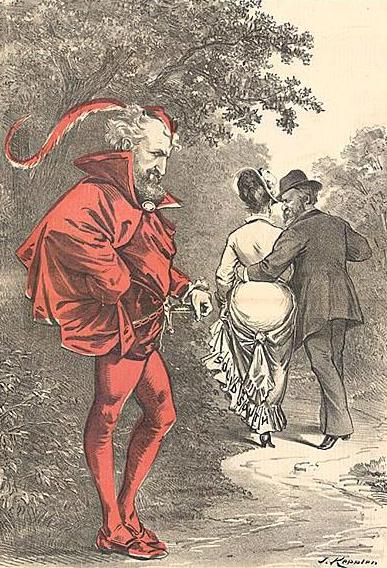
1876, Presidential election subverted. The Hayes Compromise of 1877 (informal): federal troops sent to southern states (to enforce new freedoms for African Americans) will be removed in return for electoral votes needed by Rutherford B. Hayes. See political cartoon above.

1877, Reconstruction era buried; Jim Crow era begins, putting ex-slaves at the mercy of former masters. Laws regarding equality were now seen as absurd or un-Christian.
1883, The Supreme Court agreed, and the Civil Rights Act of 1875 was deemed unconstitutional.
• No further civil rights legislation was signed until 1957.

Jim Crow era
• Discriminatory laws passed for every area of life including towns and spaces in which black people were not allowed to live.
• Segregation took over every area of life – prisons, hospitals, schools, hospitals, orphanages; textbooks used in schools; books for black students stored apart from books for white students; two Bibles in the Atlanta courts—one for black witnesses; one for white witnesses

Where were American churches? Largely silent and complicit, too often delivering sermons supporting segregation.

Where are American churches today? Too often defined by identity politics, or by the importance of being ‘good people’

Being racist isn’t only about burning crosses or participating in lynchings. It’s also about closeting oneself as an individual, reducing the problem to “bad actors” seen in the news. Or desiring political favors/power more than integrity.

By looking the other way, or offering heartfelt exhortations about being good and generous individuals, we muddy the water. We fail to look into the mirror and acknowledge that we, too, are part of what’s still wrong in the USA. Put another way, we turn this social problem into a personal issue regarding individual choices, rather than seeing it for the centuries-long systemic issue it has been from the beginning.

Thanks for visiting, reading, and doing what you can where you are.
Elouise

© Elouise Renich Fraser, 15 August 2020
Political cartoon found at en.wikipedia.org

Sursum Corda | G. A. Studdert Kennedy

What kind of day did you have so far? Mine was productive, though not the way I thought it would be. Here’s one of my favorite Studdert Kennedy poems. It seemed appropriate, given the state of things today.

*Sursum Corda

There are cowslips in the clearing,
With God’s green and gold ablaze,
And the distant hills are nearing,
Through a sun-kissed sea of haze.

There’s a lilt of silver laughter
In the brook upon its way,
With the sunbeams stumbling after
Like the children at their play.

There’s a distant cuckoo calling
To the lark up in the sky
As his song comes falling, falling
To his nest—a happy sigh.

Sursum Corda! How the song swells
From the woods that smile and nod.
Sursum Corda! Ring the bluebells
Lift ye up your hearts to God.

From The Unutterable Beauty: The Collected Poetry of G. A. Studdert Kennedy, pp. 95-96
First published by Hodder and Stoughton Limited (London, 1927)
Published in 2017 by Pendlebury Press (Manchester, U.K., August 2017)

*Sursum Corda -“Lift up your hearts.” The opening phrase of a traditional Christian liturgy dating back to the 3rd century. Normally used before celebrating the Eucharist.

Can there be beauty in a warzone? Especially with people dying all around, often in prolonged agony.

Studdert Kennedy, also known as Woodbine Willie, wrote this poem during World War I. He served as a chaplain, witnessing and participating in the laments, loneliness, pain and deaths of British soldiers. He dealt with the horror of war by writing poetry.

Many of his poems are heartbreaking. They deal with harsh realities of early 20th century warfare on the ground, and the daily struggles of human beings separated from their families. They also include some reality talk with God. This poem, like a number of others, found something to celebrate. A reason to hope, despite the daily suffering and dying that surrounded everyone.

Even though nature can’t solve all our problems, it’s there for the taking. A gift. Just look around. Lift up the eyes of your heart! In your memory, listen to the birds and admire the bluebells. They’re sending us an invitation to look and listen to the larger picture of nature, not just to our own small worlds.

Elouise

© Elouise Renich Fraser, 13 August 2020
Image of cowslips found at first-nature.com

Half truths + Half lies = Lies

From a 1950s Texas textbook for school children.

And what about real life?

Half-truths
Half-lies
Does it really matter?

Yes means ‘Yes…but’
Not now means ‘maybe
In the sweet by and by’

Mind your manners
Sweeten your voice
Remember who you are not

You do care
About your children
Don’t you?

Or your job
Or your good reputation
Or your life

Sly words
Strung like pearl
Bullets

If you flee
They will find you
In the end

Now….
What did you want
To say?

It’s difficult to convey the slyness of slavery. It happened on both sides, though for different reasons. The scales were, of course, heavily weighted in support of sly masters and mistresses.

Words are indispensable. Easily twisted by the powerful into lies. Or toned down and prettied up in American History textbooks of the 1950s and 60s. (See photo at the top)

We may say we’ve moved ‘beyond slavery,’ yet the record shows we have not. As a nation, we haven’t begun to recognize, much less take seriously its legacy in our lives today. No matter where we are or what we’re doing.

Pointing to heroes and heroines is important, yet it isn’t enough. What about exploring the unsung courage, strength and ingenuity embodied in unnumbered black lives that mattered then, and matter now? Or looking into some of those textbooks and pictures that tried to make us one happy family?

Praying for courage to face the past as part of facing our future.
Elouise

© Elouise Renich Fraser, 12 August 2020
Image found at kut.org

weak as water

weak as water
the old woman bends
bowing to the floor
intent on finding
her lost coin

so quickly ages
drift just beyond sight
daring us to recall
or recoil from truth
about the past

Two sides warring with each other. Wanting to know and not wanting to know. Looking and looking away. Betrothed to truth and living in half-truth which is falsehood.

I don’t know any other way to describe what’s happening in me as I work through An American Lament. Yes I knew and I didn’t know about the history of slavery and racism in this country. Yes I want to know more, and please clear the table now. I’ve had enough.

Do I regret beginning this journey? No. Yet the internal duel shines a spotlight on what’s at stake, and challenges me. Not as a reader or leader, but as a white follower of Jesus of Nazareth. Jesus, a Jew, son of Mary and Joseph, on his way to die as a criminal would die.

Is this really what I want (with all my heart) to do with my one precious life?

Prayers for wisdom, courage and grace in these troubled times,
Elouise

© Elouise Renich Fraser, 10 August 2020
Image found at freebibleimages.org