Telling the Truth

connecting the dots of my life

Tag: Vulnerability

Conversations that matter

On 21 April 2016, I broke my jaw and my wings were clipped. Not just by the broken jaw, but by a string of unanticipated health events that followed. Today it takes time to attend to my aging body.

So I often wonder what the meaning of my life is now. Why am I here? I know I’m going to die. So what about the meantime, in whatever time I have left on this earth? Is blogging it? I love blogging, but….

A couple of weeks ago I got an email from a friend and former colleague at the seminary. Would I be willing to interview a seminarian working on her MA degree? The answer was Yes! Of course! Big smiles and happiness! A high point in my life!

So this last week I spent time on the phone with her. Lots of time. We didn’t talk about the fine points of my life as a pastor (which I am not). Instead, we talked about the not-so-fine points of my life as a survivor of childhood abuse. Especially what it took in my late 40s to begin the long process of healing while I was professor and then dean at the seminary.

Why was this conversation a high point for me? Because it let me know I still have something to say. Especially, but not only to women and men preparing for ministry in churches, or for leadership in religious organizations.

Blogging about my experience has been and still is part of my healing. Yet nothing beats a one-on-one conversation, or a small group discussion in which I’m able to talk about what it took for me to begin healing.

We’re all dealt cards we didn’t ask for, even before the moment we’re born. Going into a professional position or a new job doesn’t magically make all that disappear. In fact, it often triggers it. Understanding how trauma shaped and still shapes us is worthy of our best efforts. Not alone, but together.

I don’t know how this will play out. Nonetheless, I’m hoping for more informal opportunities in which my personal and professional experiences come together in surprising ways.

Cheers!
Elouise

© Elouise Renich Fraser, 14 October 2018

Inconvenient truth

Bad timing
The look on your face
The tone of your voice
Your choice of words
What you said
How you said it
And a thousand other
Inconveniences
Called upon as evidence
Against you and your kind
Will never withstand
The strength of truth
Spoken out loud
By just one survivor
With nothing to gain
And everything to lose
Including false shame

If I had to name my greatest achievements in life they are, in order:

  1. Seeking help from a psychotherapist for unrelenting IBS, depression, shame, anxiety attacks and more. I was in my late 40s.
  2. Setting up a meeting with my parents and reading to my father my two-page statement. In short, I did not deserve to be shamed, humiliated or silenced by his beatings. This meeting took place on the eve of my 50th birthday.

The poem acknowledges the excruciating reality that there will never be just the right moment to tell inconvenient truth. Or just the right way. Or with just the right looks on our faces.

I applaud survivors of life-changing events, endured at the hands of others, who do their ‘homework’ and then speak out. As many times as needed.

We are an inconvenient truth in this nation.

We’re everywhere, in sight and out of sight. We want freedom from false shame, debilitating depression, anxiety attacks, and lies we tell ourselves about ourselves.

Many of us were violated as children or babies, before we were old enough to know what was being done to us. Often violation against us preceded our own violation of others. That doesn’t get us off the hook. It just clarifies the lay of the land and what we must do to make sense of what seems senseless.

We can’t change the people who victimized us. We can, however, give ourselves the gift of facing what happened to us, getting professional help, and learning to do what we think we can’t do to make amends to ourselves and others. No matter what the consequences.

A liberated voice doesn’t come cheap.

© Elouise Renich Fraser, 10 Oct 2018

What next?

Standing alone
Holding what’s left
Of a lovely old body
Weary and dependent
She now begs for mercy
And justice from me
Her semi-absent keeper
Of too many years

What now?
Where now?
What next?
I haven’t a clue.
Have you?

The dilemma of each day. I don’t feel sorry; I feel sad. Last night I had a plan. Then I woke up this morning and my body begged for mercy and justice. My plan changed.

I want to save the world. Or at least what’s left of it. Now. Not later. My body stands there staring at me in the mirror. And what about me? Don’t I count for something?

The responsibility to take care of myself, not the rest of the world, weighs heavy. Not because I don’t know what to do, but because I’d rather be out there fighting for justice and mercy!

How ironic. Looking back, I see patterns that drove me. I also see the high cost my body is paying. Then I think of all the students and friends I’ve exhorted over the years to ‘take care of themselves.’

The title of a book I read in the last year or so comes back to haunt me: The Body Keeps the Score. Indeed it does keep the score. Mercilessly, yet mercifully when I’m willing to pay attention. This is now. Not then. I have choices.

So this morning I cancelled my plan and am listening to my body. Keenly aware that my new baby doll stand-in for me, 10-month old Marie, knows exactly what it means to be abused and taken for granted by someone who claims to love her. Sadly, I have sometimes been my complicit enemy, especially as an adult driven by ghosts from my past.

The sun is out; fall is almost in the air; it looks like a good day for a walk in the neighborhood! And a long look at that lovely photo at the top–a dock that reminds me of my favorite childhood getaway.

Happy Thursday!
Elouise

© Elouise Renich Fraser, 4 October 2018
Photo found at pinterest
Dock on the Skidaway River, Isle of Hope, Georgia

chilled blood huddles

chilled blood huddles
beneath waves of hot anger
shot from unchecked mouths
with deadly accuracy
the clock ticks down to nothing

I wrote these words on Friday evening, the day after last week’s Senate Judiciary Committee hearings of Dr. Christine Ford and Judge Kavanaugh. The poem attempts to capture in words the look, sound and feel of time running out.

But for whom is it running out? I don’t think we’ll know that for a while, no matter how this plays out.

In the meantime, I understand this about myself as an adult survivor of violence toward women:

My responsibility is to take care of myself,
not to change the culture of violence toward women

I didn’t think this up by myself. I heard it in a public radio interview with a woman working on behalf of sexually assaulted persons. Her comment rang true, given my sense of despair and hopelessness.

I need to keep the focus on my sanity and health. Take care of myself.

The images and words I saw and heard during the Judiciary Committee hearings took me right back to the meeting with my parents in 1993. When I left that meeting I knew I couldn’t change my father’s attitude toward me, or my mother’s loyalty to him as her husband.

Yet perhaps I might make a difference for other survivors, or even for a few perpetrators. I still think that’s possible.

Most difficult is the high level of commitment I need just to take care of myself. Daily. Especially as I age. And then there are those unpredictable bombshells that keep hitting the news.

So here I am, still committed to telling the truth about myself. Not simply as a survivor, but as a thriving adult woman given an opportunity to make a difference, beginning with herself.

Thanks again for listening.
Elouise

© Elouise Renich Fraser, 2 October 2018

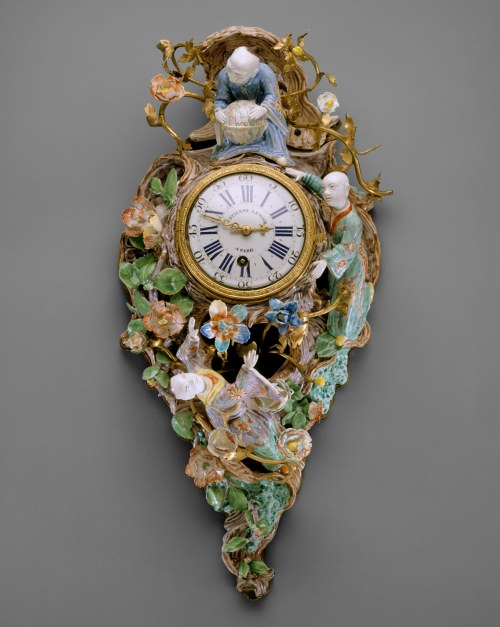
Chilly nights

Chilly nights
Warmish days
Clock ticking
Daylight fading
Mind numbs
Heart beats
Seconds down
End game
Winning score
Closed door
No exit
Straight ahead
Bells chime
Midnight falls

I’m just back from another round of blood-letting. Mine, that is. Seventeen vials again. Peanuts next to what the Red Cross takes (from others, not from me)—100 vials give or take a few.

Nonetheless, after every blood draw I feel like a survivor when I stand up on my own two feet, put my jacket on and walk out the door fully conscious of who I am and where I am. Last time it was a beautiful picture in a well-lit room across the hall that kept me focused.

This time the lights were off across the hall, so I closed my eyes and reverted to my old standby—Psalm 23. I silently repeated this Psalm to myself as a child when I felt anxious or afraid.

I’m not sure what to make of the words at the top. They came dropping into my mind when I sat down to write. Nonetheless, they likely reflect my current focus on the last chapter of my life, now ticking away one minute, one short line, one day at a time.

I also hear an acknowledgement that death is inevitable. I’d rather talk about it than keep it in one of my closets. They’re already full of other stuff I can’t take with me.

© Elouise Renich Fraser, 1 October 2018
Image found at metmuseum.org; European clock about 1735-40

The Ring of Truth

Yesterday morning I brainstormed themes and titles for a post—all over the page of my spiral notebook. The page got more crowded by the minute. So I gave up, and began writing my Memo to White Women in the USA.

Today our national controversy is even greater than it was yesterday. For some it’s all about party politics and the next Supreme Court Justice.

For others, it’s about the need to take seriously what Dr. Anita Hill and Dr. Christine Ford talked about. Right now, everyday women and their supporters are coming out of the woodwork. Galvanized. Ready to insist on truth no matter how much it may cost them personally.

So I’m back to my page of unused themes and titles. But first I have a challenge. If you’ve never written out your story, at least for yourself, I challenge you to do that now, not later. Not just what happened to you, but how it made you feel.

There’s power in the act of writing your story down. Making it visible. Word by word. Line upon line. As it comes out, unedited and raw. It doesn’t matter whether it’s poetry or prose. Just so it rings true to you. You don’t have to show it to anyone at all. Especially if they’re people you don’t trust.

I wept gallons working on what became some of my early posts. I also had a trusted professional who worked with me when my writing raised things I had to deal with. Sometimes they were about unfinished business. Other times they were about how to take care of myself. I highly recommend seeking trustworthy professional help. Especially when past experiences keep spilling over into the present.

So here are several titles without stories. Maybe they’ll get you thinking, or coming up with your own better titles for your story. They might even prompt you to begin a list of things you remember and wish you could forget.

The Ring of Truth
Against All Odds
Marked for Life
Strength in Weakness
This Woman’s Burden
Broken not Bent
No Prize for a Good Performance
I Dared Say No
At Great Cost
Free at Last
Daddy’s Little Girl
I Married a Predator
I Thought He Loved Me

Perhaps you don’t think this is all that important. Well….You’re important, and that’s enough all by itself.

© Elouise Renich Fraser, 29 September 2018
Image found at India.com

Memo to White Women in the USA

While the iron is still hot, I have a few things to say.

Yesterday I watched most of Dr. Ford’s and Judge Kavanaugh’s testimonies before the Senate Judiciary Committee. Like Dr. Anita Hill years ago, Dr. Christine Ford stepped up to the microphone and told her truth. I couldn’t help thinking about my experience giving my ‘testimony’ before my father and my mother. Then, as now, it didn’t seem to end well.

Nonetheless, as white women, we have work to do with each other and with men and other women of good will. However, we must immediately consider NOT doing at least one or more of the following:

  • covering for white men who abuse us to our faces and behind our backs
  • believing lies about ourselves as incapable, weak, over-emotional or intruders
  • endorsing candidates for political office because it will keep the family ‘peace’
  • playing our childish popularity playground games
  • settling for lives put on hold until it’s too late
  • looking the other way or shading the truth to protect ourselves
  • going along to get along in politically or emotionally charged situations

Instead, we might try one of these instead:

  • Pick up the phone and dial 911 for ourselves, not just for others
  • Begin describing what life is and is not like for us as white women in the USA
  • Consider who really benefits from our white male loyalty
  • Speak for ourselves, especially when we hope someone else will say it first
  • Refuse to go along to get along in politically or emotionally charged situations

I wonder why, in this age of so-called ‘liberation’, many white women in the USA are still in bondage to the need for White Male Approval? What do we fear? Perhaps we’re so hooked on the power and prestige we get standing by our man that we can’t even imagine living without them.

The demographics of our country have changed dramatically, yet we’re still governed at the highest levels by a huge majority of white men, with occasional token ‘others’ that include white women.

I wonder what might happen if more of us step up to the microphone and begin telling the truth about our white female lives? Or, even more miraculous, when more white men in positions of power begin listening to white women, black women, tan women, mixed-race women, Jewish women, Muslim women, refugee women, little girls and big girls, teenage women and elderly women. To name just a few possibilities.

I don’t think most men know what they’re missing. More’s the pity, since women have things that need to be both said AND heard. Not with a dismissive nod or a patronizing pat on the back, but with resolve to become partners in change for the good of this country and those who inherit the messes we’ve made.

© Elouise Renich Fraser, 28 September 2018

And what of those sinned against?

And what of those sinned against –
Bathsheba and Tamar,
The concubine cut up into pieces
By her Levite priest owner,
The two virgin daughters of Lot,
And millions of wounded women and men
Sitting in yet another dock wondering
How long their nightmares will last?

How can we beg God for forgiveness
And enjoy the fruits of mercy
Without even a nod to our victims
Who daily carry within and upon
Their embodied souls a lifetime
Of self-punishment as though they
Could ever atone for their broken selves?

They sit beside us in the pews (or not)
Afraid to tell their unwelcome truths
Terrified of whispers and innuendo
Choking on heaped-up tamped-down shame
And fear that they are indeed to blame
For predatory practices wielded skillfully
By church-going men or even women
Who now worship God freely and
Joyously believing all has been forgiven
When they haven’t begun to make amends
To those they harmed including themselves

I don’t have answers. Just questions this morning.

1. What does it mean to go to church carrying shame in a body meant to be loved and set free?
2. How do we begin to notice and reach out to listen and learn, not to fix what we may quickly decide is the true ‘problem’ when it isn’t?
3. Indeed, how do we come clean about our own unhealed wounds that will surely be exposed when we’re telling our truth?

The poem above comes from multiple experiences of being turned into ‘the problem’ I was not. Too often this was about my femaleness, which supposedly justified problems and attitudes that originated with others, usually men.

To all such people, including members of my family plus some pastors, employers and work or church-related colleagues:

Your problems are not rooted in my body,
my soul, my mind, my emotions,
my mouth, the look on my face,
or what I happened to be wearing that day.

On the other hand, I could learn from you if you’re interested and I’m not scared shitless. Otherwise, we’ll just keep soldiering on in our walled-off worlds, teetering precariously from time to time until it’s too late.

© Elouise Renich Fraser, 24 September 2018

The purpose of my life today

Yesterday I visited a new blogging friend. He’d asked me to stop by and comment on his post. I don’t always get carried away when giving a comment. But this was different.

The post conveyed why it’s increasingly difficult to believe in deities. All religions take part in the madness of history, including present-day versions of old wars and massacres. Each in the name of its particular god, gods or God.

Here’s my response to the post, with minor changes and corrections, no additions. It helps me describe what it means today for me to live as a follower of Jesus who, after all, had no ‘Jesus’ to follow.

My journey has given me the gift of acknowledging a power greater than I, and I have chosen this way of living. I’ve also, thanks to my higher power and friends who supported me, discovered many new ways of naming and thinking about this being we call God. There are many gods and many Gods. I fear more from the human gods who, as I have done so often in my life, think they know what is best for me, for my country and for your country. I leave the other Gods to those who have studied them more than I.

Your post is very well written. I appreciate your openness to dialogue. Also, as you can see above, I like SS’s comment. There are many small, known and unknown women, men and children who make a difference in the name of God every day. I want to be part of their number. Not because I have to, but because I want to and choose to do that.

One day I will die. Sooner, not later. What’s the purpose of my life? It’s to die well. That doesn’t mean there’s a script. It just means that every day of my life I show in some concrete way that I know my days are numbered. I also have faith and hope that my higher power who shapes my life today (it’s not easy) will welcome me home. No matter what God looks like.

Being a ‘professional’ theologian of the Protestant Christian tradition, I’ve been humbled many times when reading about the atrocities of the Christian church (no matter which branch). I’ve also felt like vomiting when I’ve read some theologians’ writings about women and other ‘less human’ beings. There is, however, nothing so powerful as truth. So I attempt each day to live as fully and freely as possible in the light of the truth I’ve received. It saved my life, and I want to pass it on before I die.

Blessings to you and on your blogging life. If you allow it to do so, it will find and change you in ways you never thought possible.

Today is Yom Kippur, a Day of Atonement. The Jewish synagogue across the street is already filled with members. A good day for each of us to accept God’s forgiveness, and pass it along to ourselves and others as needed.

© Elouise Renich Fraser, 18 September 2018

Emily Brontë – Start not….

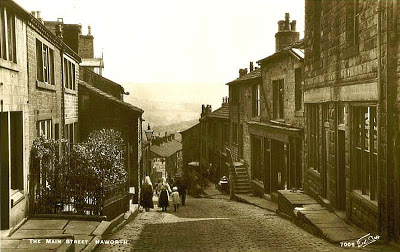
Death is on my mind. Especially since I’m in the last chapter of my life—however long or short it may be. The photo above shows the Haworth churchyard as it may have looked in Emily B’s time. Note the flat-stone grave markers, like beds. My comments follow Emily’s poem and a second photo.

Start not upon the minster wall
Sunshine is shed in holy calm
And lonely though my footsteps fall
The saints shall shelter thee from harm

Shrink not if it be summer noon
This shadow should right welcome be
These stairs are steep but landed soon
We’ll rest us long and quietly

What though our path be o’er the dead
They slumber soundly in the tomb
And why should mortals fear to tread
The pathway to their future home?

Emily Brontë, from Brontë Poems, p. 33
Published by Alfred A. Knopf 1996
© 1996 by David Campbell Publishers Ltd.

Emily Brontë was born on 30 July 1818, and died on 19 December 1848, one month after her younger brother Bramwell’s death. She lived most of her adult life in Haworth, Yorkshire, where her father was the parson. The photo above shows the main street in the 1800s. The parsonage and churchyard were near the top of the steep climb uphill. The major things missing from the photo are horses, garbage of all kinds flowing downhill, and the stench.

When I read this poem, I imagine Emily B walking up the steep hill beside me, coaching and encouraging me.

First Stanza
Don’t flinch or turn aside! Don’t be startled when you ‘come upon’ the path leading to the churchyard wall, looming at the end. Don’t swerve with dread, like horses in the heat of battle. Stay calm. Trust you’re in the best of hands. It will warm and brighten your way.

Yes, it’s uncanny and even frightening to hear your own footsteps on the stony path up this particular hill. Just remember all the saints who went this way before you. You can’t see them, but they’re cheering you on, encouraging you to stay the course instead of breaking away as though you could escape harm, pain or death.

Second Stanza
Yes, the noonday sun is blazing hot right now. Don’t try to hide from it. Look up ahead! There’s a shadow that will welcome you sooner, not later. It probably feels steeper now than it did at the beginning. It’s normal to be weary of the uphill grind. Still, your goal is just ahead. It won’t be long now. Then we can rest for a long time in utter quiet.

Third Stanza
It doesn’t matter that this path might have us walking on resting places of the dead. They’re already sleeping soundly beneath the ground in the churchyard. Besides….

…why should mortals fear to tread
The pathway to their future home?

Something like that, I think.

Thanks for visiting and reading, even though the topic isn’t everyone’s favorite.
Elouise

© Elouise Renich Fraser, 17 September 2018
Photos found at kleurrijkbrontesisters.blogspot.com