Telling the Truth

connecting the dots of my life

Unsorted

The feeling I get
Standing before an audience
Knowing all I must do is
Read the words on the page
With grace and clarity

The feeling I got
Sitting in church yesterday
Listening to a young woman
Fill the air with a Brahms Intermezzo
Evoking unexpected grief

Friday’s open mic night was great. I read 5 short poems, saving my favorite two (of the five) for the end. So why did I feel unsorted, out of control and uncertain I was on solid ground? Because of the last two poems. Though different in tone, each was about aging.

One was Life flew south last winter; the second was Feeling pretty. I admire the way George MacDonald writes poems about being an ‘old soul.’ Sometimes I think I’ve been just that all my life.

I’m used to hearing people my age and older describe unexpected aches, pain and grief. Usually health issues, but also loss of friends and family members.

I’m not, however, accustomed to hearing older women and men describing in poetic form their feelings of living with loss and unexpected health issues. Perhaps I’m not looking in the right places.

At any rate, I find writing about this time in my life is comforting and rewarding. Especially when it’s in poetic form. Reading a few of my poems Friday evening was icing on the cake. A vulnerable, somewhat scripted way of sharing pieces of my life with a mixed audience of children, young people and adults.

Then, on Sunday morning the offertory was Brahms Intermezzo in A Major Opus 118. A young woman performed it on the piano, from her heart and memory. She’s a member of our church and studies at Curtis Institute of Music in Philadelphia.

I know this piece. I’ve played it many times, though not in the last few years. Her performance was magnificent, and I burst into sobs as others around me applauded. It wasn’t just the beauty of her playing. It was knowing that I’ll likely never again play the piano with that kind of freedom and confidence.

I’ve gained much in the last few years. Still, the losses sometimes undo me. Especially when they arrive unexpectedly in beautiful packages such as poems and music that evoke tears of grief and gratitude.

Happy Monday! I pray you’ll be surprised this week by gifts that undo you in a good way.
Elouise

©Elouise Renich Fraser, 16 July 2018
Photo found at dancearchives.net
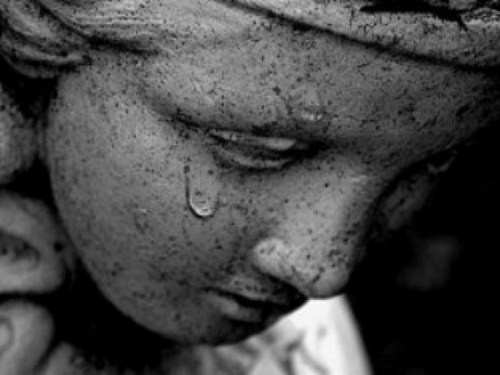
An everyday lament

For dying orchids, catbirds
and other occupants —

Paper-thin creamy petals
of an orchid blossom fold
and bow in death

Scattered feathers and small entrails
of a gray catbird litter the road this morning

Prisoners in and out of cells hang on
by spider-thin threads of hope

Children lost and abandoned
have no get-out-of-jail cards

Women and men found wandering
find few if any life-sustaining options

And that little mouse is now gone
except for its small helpless head

Written after my morning walk, and after discovering the first orchid blossom expired in my kitchen during the night. Likewise the little mouse a few days ago, set upon by a determined predator. You’ll find the rest in the news and in our neighborhoods any day or night of the week.

Not very likable, I admit. Yet our tears for losses great and small are invaluable connections to ourselves, to others, and to our Creator. We are, after all, living on borrowed time within a growing breakdown of human kindness and decency. We don’t have to be persons of a certain faith or even age to see, understand and grieve these daily realities.

Sabbath rest gives time to think not simply about the glories of creation, but about how much we’ve lost and how sad it all is. Our Creator honors our tears and, I believe, weeps with us. Tears of lament aren’t signs of weakness, but signs and sometimes celebrations of small connections we must renew if we want to thrive together.

©Elouise Renich Fraser, 14 July 2018
Image found at blogs.covchurch.org

Open Mic Night!

I woke up this morning already excited about this evening. I get to read some of my poems again! Out loud! In front of a friendly audience of children, young people, parents and friends of all ages. In the gym at the church. A fundraiser to help support our young people’s summer project in Philadelphia.

Despite my heavy-duty awesome age, I still feel like a little kid when I share bits of my life by way of my poetry.

I’ve never been one for writing or telling stories. I know a good storyteller when I hear or read one. That means I know I’m not One of Them. Though happy accidents do happen now and then.

Prose has been my main thing for most of my life. Yet I’m more than ready to let it take a back seat to poetry. In fact, when I reread some of my prose, I hear the poet in me already sneaking a poetic spirit into my prose.

I can’t help thinking about Emily Dickinson’s lovely poem, “They shut me up in Prose.” None of that flighty poetry stuff! We want to hear a story or a well-reasoned argument. Something we can take apart, piece by piece. Or at least keep under control. To keep you under control, of course.

The ability to write prose with an ear for cadence and choice of words got me where I am today. Not just as a student, educator and administrator, but as an adult woman whose childhood and youth were ruled by a relentlessly letter-of-the law father. Flights of poetic fancy were frowned upon. As were overt emotions spontaneously expressed. With the occasional exception of Christmas and birthdays.

When I read through early posts about my childhood and youth, I’m grateful for the ability to write prose. Yet even there I hear the cadences of poetry. Though it isn’t direct, it’s a persistent sign of life already aching for attention.

So tonight I get to revel in the poet I’m becoming. One step closer to the little girl and woman I am and have always been on the inside.

Am I going to give up prose? No way. I’m not locked up in anything–not in poetry and not in prose. Still, you can expect more poetry. A delightfully underground way of getting just about anywhere.

Cheers!
Elouise

©Elouise Renich Fraser, 13 July 2018
Image found at resetco.org

distant voices | Mom

distant voices
ride waves of morning air
cicadas drone

Today is the anniversary of my mother’s birthday. Born in 1921, she died in 1999. Today would have been her 97th birthday. Though I’ve done a lot of work on my relationship with her, I’m still finding words to describe the impact she had on my life.

My mother’s main task in life was to raise four daughters and to be unquestioningly obedient to one husband. Though not in that order. For most of her life, loyalty to him came first, not her daughters.

In her last years of life, for reasons I don’t understand, something clicked on for her. More than once she became unusually feisty with Dad, letting him know (with witnesses present) exactly where he stood and didn’t stand with her. She didn’t shut him out completely. She did, however, shut him out and down on more than one occasion. As though she’d reached her last straw.

It’s difficult to imagine Mom as a role model for me in my marriage to D. I don’t have memories of her being particularly affectionate with my father (or with me). Obedient? Absolutely. Quiet and industrious? Absolutely. On his side when he was discouraged? Absolutely. Modest and unassuming? Absolutely.

But not an equal partner given to overt affection. No matter how you describe it. When she married Dad in 1942, she abandoned huge pieces of her one-and-only life. It was part of the deal.

Today I applaud and love her for her courage, persistence, creativity, love of making music, intelligence, resourcefulness, and ability to run circles around my father intellectually without putting herself at risk. She was a survivor whose physical voice and body were impaired by polio from the time she was 28 years old. Yet she rode the waves and storms of life gracefully until she just couldn’t do it anymore.

My one huge regret is that she didn’t advocate on my behalf, or question my father’s beatings of me. I know she knew. Everyone in the house knew. Perhaps she also knew what that would mean for her, and the cost was too high to bear. The lives of women are fraught with life-endangering choices. She made hers, and to her credit, never stopped loving me, even though she didn’t know how to come to my defense.

If she were here today, I, ever the introvert, would take her for a lovely stroll in her wheelchair around our neighborhood, and let her meet and greet some of my wonderfully extroverted neighbors. Then we would go through the neighborhood park, enjoying this lovely summer day together, listening to the birds, and meeting and greeting every friendly dog along the way. Plus their owners, of course.

And I would hug her close, giving her what I can.

©Elouise Renich Fraser, 12 July 2018
Photo found at mybrownnewfies.com

friendly inhumanity

not large but small things
echo in hollow chambers
the sound of life denied
drips from human souls
into ground saturated
with the life-blood of refugees
halted at the border
of the promised land
of plenty caught in webs
of grief and disbelief
the latest casualties
of friendly inhumanity

Yes, I’m still at it. Why? Because our national inability to govern wisely is breaking down in front of our eyes. Most of us have to get up and go to work. I don’t.

This is my work: to keep in front of my eyes the tragedy of national leaders who seem to have lost the will to govern wisely and solely on behalf of the most needy among us. From the ground up, not from the heights of make-believe trickle down theory.

When I was working at the seminary, I experienced up close the chaos one ill-placed leader could wreak within a community. The scramble was on, not just among staff who desperately needed their jobs, but within the hearts of every member of the organization.

What do we do now? Do we shut up and pretend we’re doing business as usual? To what extent do we voice our concerns? And how?

Things that were straightforward, or at least manageable, became fraught with nuances and consequences to be avoided. Telling the truth was dangerous, even when supported by clear data and research.

And yet we stayed on. Not because we were cowards, but because we believed in the greater good of our students and of each other as trusted colleagues. We did what we could, and watched the rest being taken over by the hands of others. Not a fun way to work.

It wasn’t always that way, for which I’m grateful. Nonetheless, the last years of my tenure were fraught with conflict, uncertainty, promises that turned into something else, scoldings from time to time, and the breakdown of good will among people of good will. In the end, I chose to leave what had become punishing for my body and spirit.

Why this strange link between refugees and my work at the seminary? Because in each case a leader (dean or president) chooses to govern by creating chaos. The chaos at the seminary was somewhat controlled by those who governed differently. In the end, however, even that couldn’t save us from being exploited and taken over as an institution.

Mr. Trump governs by creating chaos within the White House and within our nation. This won’t save us from ourselves or others. Sadly, there isn’t much business ‘as usual’ anymore. Instead, we’re invited to witness and experience chaos every day.

My hope and my prayer is that I’ll be a grounded, hope-filled, prayerful neighbor, doing what I can to offer hospitality to strangers. Especially those unable to speak freely for themselves.

©Elouise Renich Fraser, 11 July 2018

framed by a doorway

framed by a doorway
reflecting evening light
the old woman smiles

caught between two worlds
long days shorten by seconds
stealing into night

distant mourning doves
serenade the close of day
twinkling stars applaud

What a strange time of life this is turning out to be. I’m torn in different directions. Not by choice, but simply because I’m here and not there, this age not that age. Though I know this is the last chapter, my get up and go instincts still want to go as though I were 40 years younger.

The most difficult word in the 3 stanzas above was ‘smile.’ My first take said the old woman ‘stands.’ Then I tried ‘smiles.’ And then I tried ‘sighs.’ Partly because I do a lot of that these days. Not sighs of sadness so much as resignation. Not quite like giving up, but an acknowledgment of limitations I would like to dismiss, erase, be done with.

This morning, however, I went back to ‘smiles.’ Why? Because I love the photo above and I love smiles. Most of all, because the best part of being an ‘old woman’ is the freedom to please no one but myself.

The myself of the poem loves standing there watching the sunset, thinking about gifts I’ve received in this life, smiling and enjoying the last bits of each day, doing things that bring me joy, and getting through the other stuff without a long list of additional duties waiting for me at work.

Hoping you’re giving and getting plenty of smiles today!
Elouise

©Elouise Renich Fraser, 10 July 2018
Photo found at cityofsacramento.org, Sacramento, California

riding the north wind

riding the north wind
a train whistle blows my way
chasing after clouds

I heard the train whistle Friday evening when D and I were out for a late evening walk. A welcome sound, since it meant we were in for priceless cool Canadian air (no tariffs involved) over the weekend. We’re just on the tail-end now, headed back toward hot and humid.

This morning I’m sorting things on my desk, littered with yesterday’s brilliant ideas and lists of things I mustn’t forget to do. I’m also anticipating this coming Friday’s open mic night at our church. I signed on to read several more of my poems. A happy prospect.

Most of all though, I’m watching myself and our world with an eye toward heaven and an eye on the ground. This morning I read Psalm 10, a cry from the heart for justice to prevail, with the wicked caught in the very traps they made and set.

I couldn’t help thinking about George MacDonald’s At the Back of the North Wind. God sends the North Wind here and there to stir things up. Not with calm, cool or pleasant outcomes for everyone, yet always for the good of this world God still loves more than we’ll ever understand.

Below are the last two verses of Psalm 10, from Today’s English Version

You will listen, O Lord, to the
prayers of the lowly;

You will give them courage.
You will hear the cries of the
oppressed and the orphans;
You will judge in their favor,
so that mortal human beings
may cause terror
no more.

This isn’t about a magic wand. It’s about us doing with our heart, hands, ears, eyes and feet the kinds of things for which we were created. And in whatever ways we’re able. A faithful, refreshing north wind of interest and engagement is just as feasible as a self-centered north wind of greed and hatred.

©Elouise Renich Fraser, 9 July 2018
Image of the North Wind carrying Diamond found at tor.com

Small things fall to the ground

Small things
Fall to the ground
Combs and toy cars
Toothpaste and tuna
Rosaries and animal crackers
The sound of life denied
Drops into ground
Reverberating
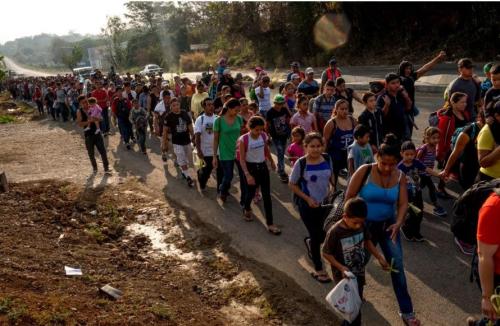
With dashed hopes of migrants
Halted at the border
Of the promised land
Caught in webs of fear
And red tape
Studiously practiced
Perfected and delivered
By bureaucratic officials
Carrying in their pockets
Items deemed unnecessary
For human life from
The south side
Of the border

It might be easier if this were an isolated event or period of in our history. However….

In one way or another, the USA has practiced the fine art of dehumanizing perceived threats from the day the fathers and mothers of this nation set foot on its soil. The trail of destruction runs wide and deep like a river of blood through the Grand Canyon of our collective history.

Like an evil tide, forces of greed, pride and fear have overtaken and eroded the beaches of our shared life, fashioning mansions of sand and wreaking environmental havoc along our eastern and western coasts, and in our interior.

So now we’ve turned our attention to the southern border. As though sealing this up will remedy what we helped break into isolated bits and pieces now destined to remain fixed in concrete for the foreseeable future.

Thankfully, unnumbered children, women and men of good will, including courageous politicians, have stepped up to help ease the wounds. Not just those we perpetrate on migrants, but on each other. These human angels have been here from the beginning. They deserve our thanks and our support, especially now.

Here’s a link to Charity Navigator with  lists of trust-worthy groups that help immigrants and refugees. Take a look. They’ve done their homework.

Praying you have a life-renewing weekend and Sabbath rest.
Elouise

©Elouise Renich Fraser, 6 July 2018
Photo found at censored.today

The art of the deal goes South

I’m not against deal-making. It can be wonderful. I also know that fruitful deal-making takes time, patience, compromise, and loads of good will and transparency between all parties involved.

It could also be good that we now have in the White House a President who claims expertise in the art of the deal. I would also guess every President I’ve had since I was born knew how to make deals. It comes with the territory.

And yet there’s more than one way to make a deal. Though I’m not an expert on this, it seems Mr. Trump believes in one kind only. That would be the kind in which the winner takes all or most of the ‘loot.’ So that, in the end, he or she can say “I won!” And the other party will know that she or he lost, or came out with less than they had going in.

Sidebar: Mr. Trump’s imposing of tariffs on countries that don’t please him for various reasons seems to be backfiring. Witness their refusal to cave in and give him the victory he seeks.

Now I’m going to make a leap here and suggest that the pattern of Mr. Trump’s most recent tariff pronouncements look like the I win/You lose logic that’s driving our treatment of migrants along the Southern border. It may also help us understand our current treatment of immigrants who are not citizens of the USA.

Think of a tug-of-war. Clear winner; clear loser. I’m great! You’re not.

Yet there’s more than one way of making a deal. The best deals often end up with winners on all sides. We may not get everything we thought we wanted or needed. Nonetheless, we may get some beneficial things we’d never anticipated.

The Chinese Exclusion Act is a sad and sorry example of the I win/You lose style of making a deal. So are housing and employment laws and processes put in place or twisted around to keep certain groups of people in their places. Not overrunning ‘our’ protected places. We win/You lose.

I’m no historian and I’m not a financial expert. I just know that what I see isn’t adding up to success on the Southern border OR success for our country. Not here and not abroad.

The images I posted yesterday suggest an ill-conceived I win/You lose setup for migrants and for all of us. The first moves have already been made at the border. Appropriate quality of life and family supports have all but vanished. Plans for what comes next are vague or nonexistent. And there’s an air of secrecy about what’s happening now with migrants, and what will happen next.

Tom Kiefer’s remarkable photographs have given my eyes something else to look at and ponder, without looking away. Which is another way of saying I’ll be doing at least one more post on this topic.

What about you? Have you found ways to engage?

©Elouise Renich Fraser, 5 July 2018
Photo of toy cars found at the New York Times and on Tom Kiefer’s website
Toy cars are sometimes carried as mementos or gifts for loved ones; considered non-essential and discarded at the border

Images I can’t get out of my mind

It’s July 4th. Our nation’s great big birthday party day. Yet as much as there is to love about our nation, right now there’s way too much of the other stuff happening. Whatever happened to the American dream?

On 2 July 2018, The New York Times featured an article by Laura M. Holson about Tom Kiefer and his collection of photographs, “El Sueño Americano” (The American Dream). Now retired, Mr. Kiefer worked as a janitor at a border crossing between Mexico and the USA. Holson writes,

There, he collected tens of thousands of items that were confiscated and thrown in the trash by Border Patrol agents from undocumented migrants crossing the border from Mexico into the United States. He began photographing the items in 2007.

“I couldn’t leave them,” he said.

Below is a small selection from his collection of over 600 photographs. Each photo includes Kiefer’s explanation about why these items were routinely confiscated. On one level, they document the stripping away of life-sustaining items from women, children and men crossing the border. They also say something (what is it?) about our nation’s ongoing obsession about ‘them’ and ‘us.’

You can find scores more at Tom Kiefer’s website. I find his contribution to our current conversation about immigrants seeking asylum invaluable. Worth more than written commentaries or debates about the fine points of the law. If you live in Michigan, over 100 of Mr. Kiefer’s photos will go on exhibit in October at the Saugatuck Center for the Arts.

Each photo includes Kiefer’s brief explanation about why these items were confiscated. The small toothpaste tubes and toothbrushes at the top were considered potentially lethal non-essential personal property, and disposed of during intake. Mr. Kiefer notes that “while in custody, most migrants will not have access to toothpaste and toothbrushes.”

Here are four other examples. The first two were considered personal items and non-essential. In addition, the combs and brushes were considered potentially lethal.

Next we have cans of tuna. Along with other food items confiscated such as beef jerky, granola bars, dehydrated soup and powdered milk, they were considered contraband and disposed of during intake. Mr. Kiefer notes that tuna is an efficient, compact source of protein, and that this particular brand had a pull-top lid.

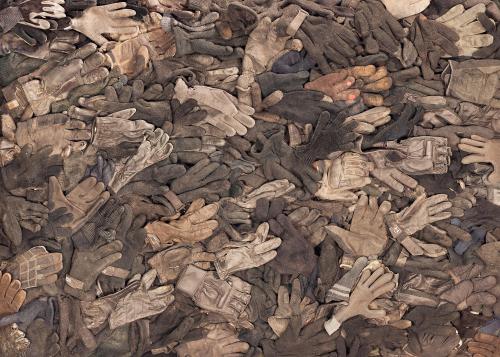
Next we have heavy-duty gloves used for many purposes. However, given the desert and mountain terrain of the border, plus sometimes below-freezing winter temperatures, they were invaluable. Yet they, too, were considered non-essential personal property and discarded at intake.

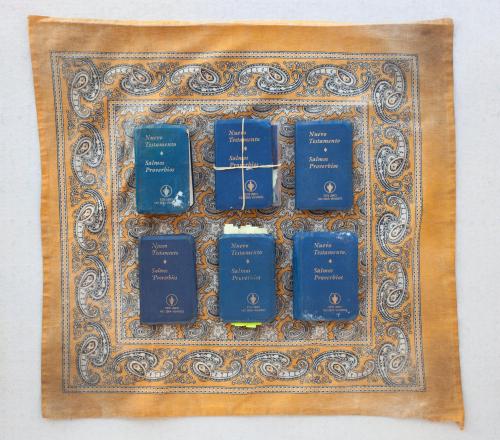
Finally, a photo of an item migrants carried in their bandanas. Non-essential personal property. Discarded.

What’s going on here? I don’t know. But I’ll make my comments in another post, and would love to hear from you as well.

©Elouise Renich Fraser, 4 July 2018
Photos found at the New York Times and on Tom Kiefer’s website (see links above)