Telling the Truth

connecting the dots of my life

Category: Mary Oliver

Love Sorrow | Mary Oliver

This poem from Mary Oliver struck a chord in me. Partly due to the current pandemic, with its waves of sorrow. But also because of my personal history. My comments follow.

Love sorrow. She is yours now, and you must
take care of what has been
given. Brush her hair, help her
into her little coat, hold her hand,
especially when crossing a street. For, think,

what if you should lose her? Then you would be
sorrow yourself; her drawn face, her sleeplessness
would be yours. Take care, touch
her forehead that she feel herself not so

utterly alone. And smile, that she does not
altogether forget the world before the lesson.
Have patience in abundance. And do not
ever lie or ever leave her even for a moment

by herself, which is to say, possibly, again,
abandoned. She is strange, mute, difficult,
sometimes unmanageable but, remember, she is a child.
And amazing things can happen. And you may see,

as the two of you go
walking together in the morning light, how
little by little she relaxes; she looks about her;
she begins to grow.

© 2008 by Mary Oliver
Published by Beacon Press in Red Bird, a collection of poems
“Love Sorrow” is on p. 64

Dear Mary,

Your poem about loving sorrow brought back memories of my childhood and adult life. Especially things taken or withheld from me before I understood they were mine. Plus bits and pieces I lost or gave away throughout my life.

Sorrow, especially if it showed, was an indulgence I needed to give up. Or get over. What’s done is done. It won’t do to make my friends uneasy, or get into trouble with adults who wanted me to be someone else. I learned early to swallow or deny sorrow. Especially in public.

I think you would be horrified though not surprised at the world as it is today. We’re drowning in sorrow and anger, trying to figure out how this tsunami pandemic caught us so unprepared for death and dying, as well as living mindfully.

I don’t want to drown. I want to live and grow, especially now as time is running out.

Thank you for showing me how to befriend my sorrow. How to welcome her into my life, and learn to live with her as the child she is. And how to watch her begin to relax and grow into a strangely wonderful companion.

With gratitude and admiration,
Elouise

© Elouise Renich Fraser, 7 May 2020
Image found at 123rf.com

Of The Empire | Mary Oliver

This morning, in response to my post yesterday, I had an email from a friend. She sent a link to an essay by Susan M. Shaw, I’ll get to hope. For now, I need to sit in the ashes and mourn.  Dr. Shaw doesn’t spare our feelings. Nor does she minimize Mr. Trump’s role. Instead, she focuses on how we’ve colluded to bring ourselves to this point in history. I highly recommend it.

In her essay, Dr, Shaw includes a prose poem by Mary Oliver. It was new to me, and right on target. I found it helpful as a roll call of how we in this nation got from there to here.

Of The Empire

We will be known as a culture that feared death
and adored power, that tried to vanquish insecurity
for the few and cared little for the penury of the
many. We will be known as a culture that taught
and rewarded the amassing of things, that spoke
little if at all about the quality of life for
people (other people), for dogs, for rivers. All
the world, in our eyes, they will say, was a
commodity. And they will say that this structure
was held together politically, which it was, and
they will say also that our politics was no more
than an apparatus to accommodate the feelings of
the heart, and that the heart, in those days,
was small, and hard, and full of meanness.

© 2008 by Mary Oliver
From her 2008 collection, Red Bird, p. 46
Published by Beacon Press 2008

I wonder what Mary Oliver would say to us today. Wishing for you some reasonably quiet time today to mourn, and ponder our culpability in this mess.

Elouise

© Elouise Renich Fraser, 30 April 2020
Image found at onthecommons.org

Heavy | Mary Oliver

Here’s a lovely, if difficult poem from Mary Oliver. It’s about death. It’s also about learning to be a survivor. I’m posting the poem as a tribute to Diane (Sister #3), born on this day, Easter Sunday 1949 (leap year). Diane died in February 2006 after living more than ten years with ALS. My comments follow.

Heavy

That time
I thought I could not
go any closer to grief
without dying

I went closer,
and I did not die.
Surely God
had His hand in this,

as well as friends.
Still, I was bent,
and my laughter,
as the poet said,

was nowhere to be found.
Then said my friend Daniel
(brave even among lions),
“It’s not the weight you carry

but how you carry it—
books, bricks, grief—
it’s all in the way
you embrace it, balance it, carry it

when you cannot, and would not,
put it down.”
So I went practicing.
Have you noticed?

Have you heard
the laughter
that comes, now and again,
out of my startled mouth?

How I linger to admire, admire, admire
The things of this world
That are kind, and maybe

also troubled—
roses in the wind,
the sea geese on the steep waves,
a love
to which there is no reply?

© 2006 by Mary Oliver
Thirst, pp.53-54
Published by Beacon Press

Dying isn’t for the weak; neither is surviving. Not as victims of cruel fate or the current pandemic.

In the end, we often don’t have any choice but to live with what we’ve been given. True, we might prefer to die. But Mary challenges us to welcome grief and the opportunity to let it shape our lives for the better, without destroying them.

I also hear Mary inviting us to give ourselves time. Enough time to be surprised at ourselves when laughter and joy sneak in unannounced.

In her case, Mary unexpectedly discovers herself seeing nature differently. Not just as shows of beauty, but as survivors. Like us, the roses and sea geese also live out their love of life in the midst of harsh winds or steep waves.

What could be more invitational and healing that that? Not as a pill we take, but a possibility we choose to embrace.

Elouise

© Elouise Renich Fraser, 17 April 2020
Roses in the Wind painted by Anne Costello
Found at saatchiart.com

The Beautiful, Striped Sparrow | Mary Oliver

Here’s a thought-provoking poem from Mary Oliver about loneliness. My comments follow.

In the afternoons,
in the almost empty fields,
I hum the hymns
I used to sing

in church.
They could not tame me,
so they would not keep me,
alas,

and how that feels,
the weight of it,
I will not tell
any of you,

not ever.
Still, as they promised,
God, once he is in your heart,
is everywhere—

so even here
among the weeds
and the brisk trees.
How long does it take

to hum a hymn? Strolling
one or two acres
of the sweetness
of the world,

not counting
a lapse, now and again,
of sheer emptiness.
Once a deer

stood quietly at my side.
And sometimes the wind
has touched my cheek
like a spirit.

Am I lonely?
The beautiful, striped sparrow,
serenely, on the tallest weed in his kingdom,
also sings without words.

© 2006 by Mary Oliver
Thirst, pp.29-30
Published by Beacon Press

I don’t mind being alone. I do mind the loneliness that sometimes comes with this pandemic. Instead of “almost empty fields” to roam, I have a smallish neighborhood full of children, parents, and senior citizens. Quite wonderful, actually.

It’s a short walk from our house to temporarily quiet spaces. The soccer field and playground area behind the elementary school is almost deserted. As is the church parking lot and cemetery directly across the street.

Then there’s our small, beautiful village park full of large old trees. The little kid playground and big kid tennis courts have been closed for now. But the softball/soccer field is wide open. A few families are out with their children and/or dogs burning off energy. And best of all, the trees and shrubs are sending out new growth and bright blossoms.

I’ve not had a deer stand “quietly at my side.” Still, I’ve felt the wind and bits of rain on my face, and heard the music of robins, woodpeckers and Carolina wrens welcoming spring. All topped off by relatively quiet air space, with a small trickle of commercial flights passing over to land at the Philly airport.

Wishing you a not-so-lonely Monday!
Elouise

© Elouise Renich Fraser, 13 April 2020
Photo of Baird’s Sparrow found at birdsoftheworld.org

Sunrise | Mary Oliver

You can
die for it—
an idea,
or the world. People

have done so,
brilliantly,
letting
their small bodies be bound

to the stake,
creating
an unforgettable
fury of light. But

this morning,
climbing the familiar hills
in the familiar
fabric of dawn, I thought

of China,
and India,
and Europe, and I thought
how the sun

blazes
for everyone just
so joyfully
as it rises

under the lashes
of my own eyes, and I thought
I am so many!
What is my name?

What is the name
of the deep breath I would take
over and over
for all of us? Call it

whatever you want, it is
happiness, it is another one
of the ways to enter
fire.

c. 1992, Mary Oliver
New and Selected Poems, Volume One, pp. 125-126
Published by Beacon Press

Dear Mary,

The deep breath at the end of your poem got me. No, make that the repeated deep breaths you would take for all of us. Not just for yourself.

There’s a dearth of deep breaths these days. Instead we seem to prefer eruptions of hot anger, fury, disbelief and righteous indignation. They’re often carried out via Twitter.

Sadly, there’s plenty to die for these days. Things haven’t advanced that much since you left us. Still, I’m intrigued by your additional way to enter the fray. Instead of offering ourselves up as martyrs, or turning others into martyrs, we might try taking a deep breath and entering the fire by way of ‘fiery’ happiness.

There’s still something to be said for fury. Especially when we’re being deceived by many of our leaders. I fear we have a long way to go, especially here in the USA, before we’re skilled in happiness that knows how to enter the fire.

If you read this anytime soon, we would be honored to have you take some deep breaths for all of us on this planet. I think we need a jump-start on happiness that creates “an unforgettable fury of light.” The other plan, social media burnings at the stake, isn’t working for us, despite the raging fury.

With gratitude and hope,
Elouise

© Elouise Renich Fraser, 13 March 2020
Photo found at pexels.com

A note to Mary Oliver

This morning
I woke with a start
Already caught up in
The impossible tug between
Daily upkeep and writing
Now in danger of starvation
Thanks to inedible pieces
Unredeemed if not forgotten
Standing at my heart’s door
Begging for a breath of air

Yes, Mary, you found a way to live with disciplined abandon. Doing what you loved most. Though it wasn’t easy, you found a way.

I want to believe there’s a way for me. Not to be you, but to be the writer I am, the woman I am, the mother, sister, and grandmother I am.

I was happy to retire from my professional life. It wasn’t all bad. I can’t imagine myself today without it. It was, however, punishingly difficult work, sometimes even outrageous.

So here I am, wondering how I might relate to you except in some far-off never never land.

It pains me to admit this: In spite of the inspiration and insights I gain from your writing, I might be happier if I’d never discovered you. Then again, this is probably the highest compliment I could give you.

I don’t hate my life, and I have no plans to give up. It’s just that every time I read Upstream, I realize how much of life I’ve missed, and how little time is left for me.

Gratefully,
Elouise

© Elouise Renich Fraser, 5 March 2020
Photo found at labmonline.co.uk

A Visitor | Mary Oliver

This haunting poem by Mary Oliver comes from a 1986 collection called Dream Work. My comments follow.

A Visitor

My father, for example,
who was young once
and blue-eyed,
returns
on the darkest of nights
to the porch and knocks
wildly at the door,
and if I answer
I must be prepared
for his waxy face,
for his lower lip
swollen with bitterness.
And so, for a long time,
I did not answer,
but slept fitfully
between his hours of rapping.
But finally there came the night
when I rose out of my sheets
and stumbled down the hall.
The door fell open

and I knew I was saved
and could bear him,
pathetic and hollow,
with even the least of his dreams
frozen inside him,
and the meanness gone.
And I greeted him and asked him
into the house,
and lit the lamp,
and looked into his blank eyes
in which at last
I saw what a child must love,
I saw what love might have done
had we loved in time.

c. 1992, Mary Oliver
New and Selected Poems, Volume One, pp. 116-117
Published by Beacon Press

Mary Oliver left home early in life to get away from an abusive situation. Now, years later, wild knocking in the dark of night reminds her of what she ran away from. If she opens the door, she must confront the man she remembers having a “waxy face” and “a lower lip swollen with bitterness.”

She ignores the pounding on the door. The knocking persists at all hours of the night. And so she “stumbles down the hall,” and the door “falls open.”

In an instant, Mary Oliver knows she has nothing to fear. In fact, it seems she’s surprised to discover her father is “pathetic and hollow.” Even his smallest dreams have frozen, and his meanness has vanished.

She greets him, invites him to come into her house, lights a lamp, looks into his “blank eyes” and sees what was needed when she was a child, plus what might have been “had we loved in time.”

The poem isn’t about Mary Oliver’s father; it’s about Mary. In the end, It affirms her decision to leave home, and acknowledges the high cost she and her father paid. With grief, and without apology.

© Elouise Renich Fraser, 12 February 2020
Book cover image found at amazon.com

Everlasting | Mary Oliver

In this poem, Mary Oliver tells us clearly what she wants to accomplish when she writes poems. It’s a high order. Some might say impossible. My brief comments follow.

I want to make poems that say right out, plainly
what I mean, that don’t go looking for the
laces of elaboration, puffed sleeves. I want to
keep close and use often words like
heavy, heart, joy, soon, and to cherish
the question mark and her bold sister

the dash. I want to write with quiet hands. I
want to write while crossing the fields that are
fresh with daisies and everlasting and the
ordinary grass. I want to make poems while thinking of
the bread of heaven and the
cup of astonishment; let them be

songs in which nothing is neglected,
not a hope, not a promise. I want to make poems
that look into the earth and the heavens
and see the unseeable. I want them to honor
both the heart of faith, and the light of the world;
the gladness that says, without any words, everything.

© 2005 by Mary Oliver in New and Selected Poems Volume Two, p. 4
Published by Beacon Press

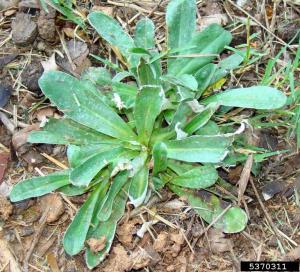
The lovely photo at the top is deceptive. It omits the everything of those fields Mary Oliver is crossing. In particular, it should include “daisies and everlasting and the ordinary grass.” What is this thing called everlasting? Think invasive pest, cudweed, or more properly, American everlasting. In case you haven’t met up with it yet, here’s the other photo I might have put at the top.

When I read this poem about writing poetry, I hear Mary’s emphasis falling on beauty. Everyday beauty that wants to be seen just as it is, not dressed up. Unfortunately, this includes beauty that doesn’t always strike us as beautiful. We prefer words like ‘invasive’ and devote time to keeping them out of our fields and gardens.

Just as creation includes everything, so Mary Oliver wants her poetry to honor everything, no matter how beautiful or invasive or downright ugly we think it is. Hope and promise, hearts of faith and the light of the world point to the unseeable, never to be underestimated or second-guessed due to our timebound, limited sight.

I wonder whether Mary Oliver knows her poem begs to be preached. She sets a high bar for herself and for us–whether we write poetry or not.

Elouise

© Elouise Renich Fraser, 29 January 2020
Top photo found at pinterest.com; invasive American everlasting photo found at http://www.invasive.org

Landscape | Mary Oliver

Mary Oliver’s daily walk around the pond offers a small sermon of sorts. My comments follow.

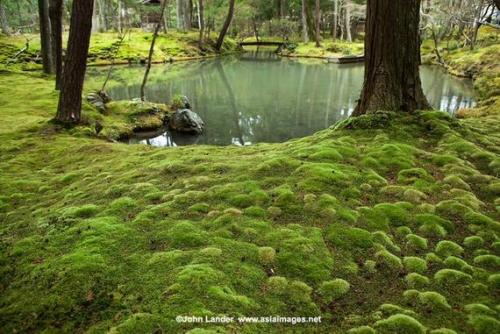
Isn’t it plain the sheets of moss, except that
they have no tongues, could lecture
all day if they wanted about

spiritual patience? Isn’t it clear
the black oaks along the path are standing
as though they were the most fragile of flowers?

Every morning I walk like this around
the pond, thinking: if the doors of my heart
ever close, I am as good as dead.

Every morning, so far, I’m alive. And now
the crows break off from the rest of the darkness
and burst up into the sky—as though

all night they had thought of what they would like
their lives to be, and imagined
their strong, thick wings.

c. 1992, Mary Oliver
New and Selected Poems, Volume One, p. 129
Published by Beacon Press

Imagine you’re part of a sheet of moss covering the ground. Often small and unassuming except to students of mosses. Some might say you’re hardly worth noticing, even though the pond and the woods wouldn’t be what they are without your patient presence. Doing what you do best.

Or maybe you’re one of those towering black oaks offering food and shelter, in life and in death, to birds and small animals. Part of an ecosystem as fragile and beautiful as spring flowers.

Does nature have a heart? Mary suggests the crows have been thinking all night about the kind of lives they would like to live. Perhaps imagining “their strong, thick wings” and then bursting into flight at daybreak. Doing with gusto what they’ve already imagined they might do.

Life isn’t simply about the way we imagine ourselves. It’s also about keeping the doors of our hearts open, and going for it every day of our lives. Welcoming each day no matter what it brings. Doing what we do best, with spiritual patience, fragile humility, and hearty gusto.

Looking to the New Year, I want the doors of my heart to be open—no matter what each day brings. I know it’s a tall order. If it weren’t, it wouldn’t be worth much, would it?

Elouise

© Elouise Renich Fraser, 30 December 2019
Photo found at etsy.com

Making the House Ready for the Lord | Mary Oliver

Mary Oliver makes it simple, true and easy. My comments follow.

Dear Lord, I have swept and I have washed but
still nothing is as shining as it should be
for you. Under the sink, for example, is an
uproar of mice—it is the season of their
many children. What shall I do? And under the eaves
and through the walls the squirrels
have gnawed their ragged entrances—but it is the season
when they need shelter, so what shall I do? And
the raccoon limps into the kitchen and opens the cupboard
while the dog snores, the cat hugs the pillow;
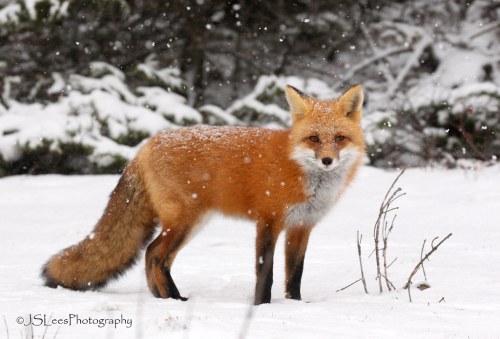
what shall I do? Beautiful is the new snow falling
in the yard and the fox who is staring boldly
up the path, to the door. And still I believe you will
come, Lord: you will, when I speak to the fox,
the sparrow, the lost dog, the shivering sea-goose, know
that really I am speaking to you whenever I say,
as I do all morning and afternoon: Come in, Come in.

© Mary Oliver 2006
Published by Beacon Press in Thirst, p. 13

Yesterday I was bemoaning wisps of cat hair floating in every corner; cardboard boxes piled high, waiting for old give-away books; kitchen gadgets and pots looking for a new home or sitting in the sink waiting to be cleaned.

Not that I expect the Lord to visit–though that isn’t an impossibility. This is about regular people who come to our door unannounced. Why shouldn’t things be neat and tidy? After all, I’m retired, and have all the time in the world to keep up appearances!

Mary Oliver’s poem makes me laugh at myself. I’m not a collector of vagabond mice, squirrels or lost dogs. However, for years I’ve collected books, kitchen gadgets and small bits and pieces of arty stuff. Which collects its own stuff called dust.

Unannounced visitors put me to the test. Am I ready to receive the Lord? Maybe this is stretching it, but if I’m not ready to receive the Lord just as I am, I’m probably not consciously ready to receive anyone just as I am.

Even so, truth be told, I’m always ready, whether I think I am or not. In fact, when the Lord or any one of you arrives and comes into my house, it will be ready. Living proof of my priorities, my weaknesses, my loves, my memories and my hopes. All of me. What more could you, or the Lord, ask for?

Cheers!
Elouise

© Elouise Renich Fraser, 16 November 2019
Photo by JSLeesPhotography found at Flickr.com
Red Fox, Alonquin, Canada