silence descends

silence descends
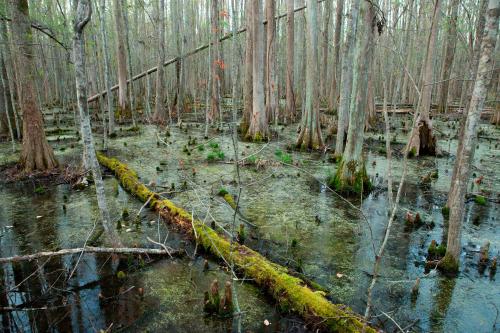
over dismal swamp –
a child weeps
© Elouise Renich Fraser, 1 December 2017
Photo of a Montana swamp found at wpnature.com
silence descends
over dismal swamp –
a child weeps
© Elouise Renich Fraser, 1 December 2017
Photo of a Montana swamp found at wpnature.com
I wonder…
Does each nation
Each country
Have an original sin
The seed of its
Particular ignominy
Running through veins
Shot full of raging
Hormones escalating
Into tragedies
Of historic proportions
Played out in
Unnumbered permutations
Of seduction and flattery
Designed to deceive
And subdue?
It isn’t just the daily revelation of predatory behavior by public figures and officials. It’s the reality that various permutations of predatory behavior undergird the earliest foundations of our nation.
I’d describe it this way: The subduing and disappearing of some in order to pursue the welfare of a select group that viewed and still view themselves as more entitled than others.
Layer upon layer. Decade after decade. And now we’ve come to this juncture in our history without a clear understanding of how we got here, and how many were and still are subdued and disappeared. Buried beneath mountains of inspiring proclamations, and promises not kept.
So what am I doing about it? Besides writing, I’m reading. Today I’m focused on books that invite me to open my mind and my heart. Not simply to what happened when our country was founded, but what’s still happening today. Unrecorded, unexamined, and unacknowledged.
My newest book is Sing, Unburied, Sing, written by Jesmyn Ward. I’m also reading Maya Angelou’s I Know Why the Caged Bird Sings. One painful chapter at a time.
© Elouise Renich Fraser, 29 November 2017
Photo of Great Dismal Swamp found at smithsonianmag.com
The swamp, located in Virginia and North Carolina, once served as a refuge for Native Americans and fugitive slaves.

clouds of dust
drift through cracks
in thirsty soil
distant thunder
rumbles
above savannas
a world wearied
by winds of war
hopes against hope
We humans aren’t the only species watching and waiting. We are, however, the only species charged with care of this planet. Much of the natural beauty and diversity we’ve taken for granted is endangered. From within and without.
Do we have the courage and stamina to change our ways? Do our politicians have the courage and stamina to do what’s right when it comes to funding environmental studies? The outlook so far is bleak. Not surprising, given our addiction to the present moment.
But could we not learn to look up, the way we look strangers in the eye, and greet these environments with more than apathy or callous disregard?
I don’t pretend to know all about it. Yet I witness what’s happening in our national politics. Or better, what’s not happening. That is, what is now being (or has already been) defunded, under-supported and written off in favor of grandiose indulgences of the present moment and ‘important’ people.
For every wealthy person who supports and funds climate change research and solutions for the future, I am deeply grateful. They do us the courtesy and favor of demonstrating solutions that can be put into practice.
In the meantime, too many of our politicians are intent on saving their own skin or turf without regard for the larger picture.
Here’s my personal take on our situation today:
Neglect and violence heaped on our planet’s ecosystems
reflects and is connected to
neglect and violence heaped on the most vulnerable among us–
citizens, immigrants, countries, religions, and those we most fear.
The shape of our national tax structure
reflects and is connected to the way we treat
our planet’s ecosystems and the most vulnerable among us.
I want to have more than memories to pass on to the next generation. Don’t you?
© Elouise Renich Fraser, 28 November 2017
Photo found at ThoughtCo.com – Savanna in the Masai Mara, Kenya, Africa

What is it
You want to change?
Your hair, your face, your body?
Why?
For God is
in love with all those things
and He might weep
when they are
gone.
—Catherine of SienaFound at Spirituality and Practice
Though not framed as a prayer, this small, poetic plea is, in fact, a prayer from Catherine of Siena to me. I imagine her sitting here with me, asking tough questions about what seems almost innocuous—my desire to change things about my hair, my face, my body. Especially, but not only, at this age.
I don’t want to be unhealthy. It isn’t wrong to do what I can to improve the way my body functions.
This prayer, however, isn’t about that. It’s about accepting my body as it looks today. On the outside. Loving it as the body my Creator loves. The graying hair, wrinkles on my face, avalanches on my body. Not looking as young or youthful as I once did.
When I was very young, I longed for more hair on my head, a smaller forehead, and skin that would tan and stay tanned for more than 24 hours. When I looked at other girls and young women, I didn’t feel ugly. I felt plain.
I longed to be less plain and less pale. Not a striking beauty who might call unwanted attention to herself, but a pleasant-looking female. Less plain and less pale.
The thought that my Creator might be in love with my hair, face and body on any given day never crossed my mind. I thought God cared about the spiritual me. And yes, of course my Creator also loved the physical me. But really? That much?
When I think about all the body issues women carry in secret, it pains me. I’m as guilty as anyone.
I’m also astonished and chagrined at the suggestion that God might weep if I tried to change all those seemingly external things about me.
This very day, am I willing and able to accept, bless and love what God loves about me? That would include my face, hair, and body, on any given day. I am, after all, one of a kind. A precious pebble on the beach, distinct, and still in process. Part of our Creator’s grand collection.
Elouise♥
© Elouise Renich Fraser, 25 November 2017
Image found at thriftynorthwestmom.com
Rialto Beach Pebbles, Olympic National Park, Washington State

Tomorrow is Thanksgiving Day; yesterday’s post is still on my mind. I’m grateful for the poem that was in me, grateful for words to tell you about this episode in my professional life, and grateful to be who I was and still am. A tough old cookie. A highly sensitive and intuitive wise woman. A thriver. A persistent woman who won’t sit down and shut up. Or stand up and perform on command.
I didn’t get here by myself. I got here thanks to scores of women and men who saw in me more than I could see in myself. I also got here thanks to my Creator, my true Parent from the beginning, walking with me and watching my back.
Following a well-earned sabbatical leave and peaceful summer break, I was on my way to the seminary for the first day of fall term. Several students who protested against me a year earlier were likely to show up in my required course.
To say I was anxious would be an understatement. Yet here’s what happened next, as described in the semi-memoir I began writing during my sabbatical.
I stopped at a traffic light and waited for it to change. Two older men, perhaps in their seventies, were coming down the sidewalk, facing me. They were out for an early-morning walk. They moved along quickly, talking and laughing. The sun was up. It was a gorgeous day.
As they came closer, I noticed they were holding hands. This seemed rather unusual. But it was also wonderful. My mind turned to friendships among older men. I wondered how long these men had known each other and whether they walked together every day.
Suddenly, without any signal and without breaking their stride, they left the sidewalk and began walking through a large parking lot. They seemed to be of one will. As they angled away from the sidewalk, I saw it for the first time—the short leather strap they were holding between them. One of them was blind.
In a flash my eyes filled with tears. I saw myself walking blindly into this class. Seeing some things, but not everything. Knowing someone with sight beyond my sight was beside me. All I had to do was follow God’s lead, keep holding on to the strap and keep putting one foot in front of the other.
Elouise Renich Fraser, excerpt from Confessions of a Beginning Theologian, p. 132, Intervarsity Press 1998
“Surely goodness and mercy shall follow me all the days of my life….”
Happy Thanksgiving, everyone!
Elouise♥
© Elouise Renich Fraser, 22 November 2017
Photo of shepherd boy playing flute to sheep found at nikisawyer.com
Daily Prompt: Mercy
Things fall apart
Perhaps on a rare day
They will fall together
Shadows sift through memories
Find her wandering alone
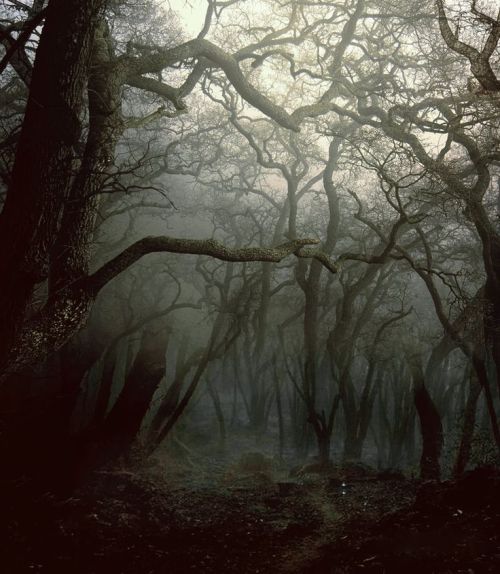
Lost in a forest of horrors
Body parts scattered around
Remains of anonymous whisperers
Still echoing through trees
There’s more than one way
To take a body apart in darkness
Her heart pounds in her chest
She wonders where this will end
All is not necessarily well that ends
Resisting the urge to run
She faces accusers now residing
Within her body of rearranged parts
That don’t remember where they belong
Or where they were going
Before tongues began wagging
Slicing their way through air
Intent on silencing her voice forever
This happened in the early 1990s. I was a tenured full professor. The course was required for all MDiv (Master of Divinity) students. It was the first course I’d taught in which women, men of color, and international students outnumbered white men.
I never saw it coming. The day after I turned in all grades for fall term, the dean asked to see me. At the meeting he gave me the news. During the semester, about half the students from this course had lodged serious concerns with him and with the president about me. More than once.
The seminary president wanted a meeting with me and with the dean to talk about these concerns. No, I could not meet with these students before or after this meeting. No, I could not have a list of names because the students feared retribution. Nor could I have a list of their concerns. Most students who signed the formal complaint were white men; some were men of color; some were women.
I agreed to the meeting only if I had time to review the list of complaints, and only if I could bring a senior colleague—an African American woman of great wisdom and experience.
My requests were resisted. Nonetheless, I persisted, and the meeting took place. It lasted one and a half hours. I felt trapped in someone else’s muck and mire.
Before the meeting, I’d studied the three pages of typed, detailed notes the dean had taken during meetings with students. According to the students, I was sadly deficient in three areas: my theology, my teaching style, and my character. Each area included excruciating detail. I did not recognize myself.
The dean and president denied my request for a meeting with at least some of the students. I was never told who they were. With the exception of a brave few, they remained nameless. Some were doubtless in my later courses.
I wasn’t disciplined. I was, however, broken in spirit, and grateful for my upcoming spring term sabbatical. I was also grateful for my female college who met with me following the meeting to talk about what had just happened and what I’d learned that would help me in the future.
My recent nightmare stirred all this up. The poem is about me. It’s sent out with prayers for all children, young people, adult women and men who endure daily dismemberment and humiliation, seen and unseen.
© Elouise Renich Fraser, 21 November 2017
Photo of Deep Forest found at mybligr.com
Daily Prompt: Sludge
Here’s a short version of a response to my recent nightmare, beginning with two uncomfortable facts.
In addition, I can’t ignore these realities:
Here’s what I would do differently, as of today:
I’m not sure about letting the men and even group members leave—perhaps before the authorities arrive. But I have no grounds for keeping them, and have collected their names and contact information.
Perhaps this seems morbid for Sabbath reading. Nonetheless, it puts things into perspective for me. This is about giving up my need to survive, or to change situations. It’s also about speaking truth in a clear voice. A spiritual skill each of us needs in today’s world, whether we identify ourselves as followers of Jesus Christ or not. Even a nightmare can lead to productive reflection and dialogue.
Thanks for reading and commenting if you’d like.
© Elouise Renich Fraser, 18 November 2017
Daily Prompt: Atmospheric

The key to speaking clearly and directly in situations of danger is simple, isn’t it? Forget about survival. My own, that is.
Which brings me to my recent nightmare. Here’s a short version, followed by what troubles me about this nightmare.
I’m at an event I agreed to lead. It’s late in the evening. D is with me. I’ve never been here before, and I don’t know anyone around the table. They don’t seem eager to be there.
A couple of men, black and white, come in and sit in a row of chairs facing the table, not pulled up to the table. They look unhappy, determined not to cooperate with me or with the group, which includes D, other men, and women.
I begin the rehearsal. Of what? I don’t know. It’s supposed to be a musical production. The group’s energy is low. We’re doing all right until a man at the table says something out of order. I call him on it. He backs down, unhappy.
Two or three more men walk in to join the men not sitting around the table. They’re all glaring at me. One becomes even more disruptive with comments and threats.
Before and during this time, I walk around the house. Body parts are lying here and there. After the entrance of more men I take a break and walk out on the back porch. I feel uneasy. I look around and see the partially dismembered body of a woman lying there. Fully clothed, no arms, and I can’t see her head.
I adjourn the meeting and leave immediately with D, who is driving the car. We’re on a deserted road with few street lights. We’re going to our overnight accommodations, at the end of a long driveway. D misses the driveway and quickly pulls off the road.
The car behind us zooms by and comes to a screeching halt just in front of us. The driver gets out. There are other men in the car.
The driver walks back toward the driver’s side. I recognize his face (one of the men not at the table) and tell D not to put the window down, and to sit on the car horn. Just as he does this I wake up, my heart pounding, afraid for my life.
Things I don’t like about this nightmare:
Creative rewrite coming next!
© Elouise Renich Fraser, 16 November 2017
Image found at pinterest.com

This morning I poured creative energy into rewriting a nightmare I had over a week ago. In the dream I was in charge, and found myself suddenly in a situation of growing danger. Yet I couldn’t speak directly and clearly to the danger. Not just danger to me, but to others.
This inability to speak clearly and directly in situations of danger is the most difficult damage I carried into my adult life. I don’t like the physical, spiritual and health fallout from being abused in body and spirit, but I can handle it.
Yet when it comes to my voice, whether written or spoken, I sometimes flinch when dealing with difficult issues. Or I speak out, followed too often by loss of confidence and the urge to sit down and shut up. Or stop being so emotional.
We live in a shrinking world tormented by personal, familial, national and global horror. It stares us in the face every day. Almost like a nightmarish taunt that won’t go away.
So I had this nightmare that began badly, became even worse, and finally woke me with my heart pounding, afraid for my life. It was all about threatening men, or so it seemed.
Since then, I’ve thought about a nightmare I had back in the 1990s, after I’d begun working with my psychotherapist. In it I’m running for my life from two or three men carrying loaded rifles, determined to silence me. I’m carrying a large umbrella. Hardly a match for loaded rifles.
I run into a room with an exit door at the top of concrete steps. The men are close behind me. There’s no way I can fight them off or stop them physically. I race up the stairs to exit the room and discover to my horror that the door is locked.
Of course I wake up with my heart pounding, afraid for my life.
Back then (as now), my psychotherapist encouraged me to rewrite the nightmare. Creatively, using only the material I have in the nightmare. Which includes my voice.
I’ll never forget how excited I was when I figured out what to do. I was at the top of the steps. Suddenly I turned around and pressed the button on my large umbrella. It flew open immediately, and I danced and, as I recall, sang my way back down the stairs and into the small room. The more I danced, the happier I was. I even invited my pursuers to dance with me!
The men were so flabbergasted they didn’t know what to do next, and I was suddenly in charge of my voice and the situation.
That’s the kind of ending I want for this nightmare. And I think I’ve got it! Which is for another post.
©Elouise Renich Fraser, 15 November 2017
Image found at bgartshop.com

I wonder—
Do breathless trees
dusky skies
and lengthening shadows
remember what they see
beneath fading twilight
swathed in heavy garments
unsure of her destination
Is this a woman? I think so. She seems to be taking the long walk home. Which may or may not be that dark cottage hovering in the background, watching as she makes her way.
Is she alone? I think not. The trees, skies and passing shadows reveal more than what’s happening on the ground or in the background. If this world is God’s poem (thank you, Mary Oliver), we have reason to hope. Not because of the play of light in the trees, on the ground or in the background, but because of the Light that shines even in our darkest hours.
Sometimes, perhaps always, we must leave home to find our true home. Or better, to be found by God’s everyday angels in this world that belongs not to us, but to God.
©Elouise Renich Fraser, 14 November 2017
Autumn Landscape at Dusk, 1885, by Vincent van Gogh found at Wikiart.com
Daily Prompt: Dubious
 Telling the Truth