Telling the Truth

connecting the dots of my life

Tag: Relationships

For Horace O. Russell
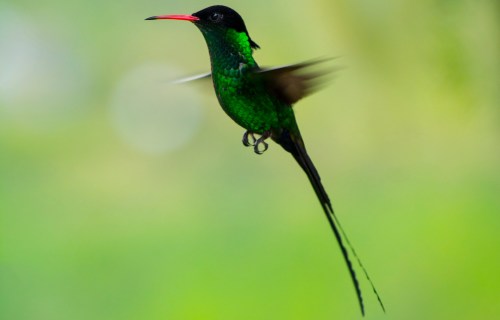
National Bird of Jamaica – the ‘Doctor Bird’ found only in Jamaica

Grief arrived last night
on the other end of a phone call
from a dear friend

Grief not just for us and the family
but for the world our friend knew and loved
from the bottom of his generous heart

Colleague, Brother, Church Historian
Master of all things Jamaican
Wise and Eternally Optimistic

I hang up the phone
and weep for us and for this world
made better by your faithful presence

It’s impossible to capture in words the worldwide reach of our colleague’s life.

Horace O. Russell served the seminary as Dean of the Chapel, and Professor of Historical Theology. I worked with him as a teaching colleague and as an administrator. He was also the retired Senior Pastor of Saints Memorial Baptist Church in the Greater Philadelphia area.

Dr. Russell was Jamaican by birth, and world citizen by choice. He and his gifted British wife made their mark not just on the seminary, but on the church worldwide. Thankfully, his wife and another family member were with him when he left this world.

Today I’ve been thinking about Dr. Russell’s generous, optimistic support for me, and about the senior seminar we co-led more than once.

During these seminars, Dr. Russell sometimes shared case histories he’d written about his pastoral work in Jamaica. They sometimes made life in these United States seem a bit dull.

The actual outcome of each case wasn’t revealed until each student worked with it and shared what she or he would do next, and why. Never a dull moment, and always plenty of surprises at the end. His ability to enlarge our vision was one of his many gifts to the seminary.

Fortunately or unfortunately, Dr. Russell carried a small camera at all times (so it seemed to me). Usually he didn’t wait for people to pose. Informal was the way to go. No matter what we looked like in the photos, he was generous with prints of these historical records. Here’s where we were on this date; this is what we were doing; and this is what we looked like.

Today I’ve been going through my collection of his photos, torn between gratitude and grief. Grateful to know his suffering has ended, and that he was not and is not now alone.

Elouise

© Elouise Renich Fraser, 6 April 2021
Photo of Jamaica’s national bird found at jamaicanconsulate.rs


What’s a senior citizen to do?

Wheels rush downhill
Splashing through
Early Spring water

My mind travels
Backward through time
Now gone forever

Last night our cat
Conquered and ate
Yet another mouse

All except his head
And tail and a few entrails
Yet to be identified

It’s downhill all the way
No chance to return
To the beginning

I thought I would fear
This end of life scenario
Hurtling toward me

And yet…

I’m caught between the joys and agonies of this life.
Right now the agonies seem to be outpacing the joys.
Even so, I want to live forever, joys and sorrows included.

So what’s a senior citizen to do?

Keep my head above water and my eyes wide open; support the next generations; and have my pen ready to capture truth in words I didn’t know were in me.

On balance, after removing D from the equation, blogging saved my life. It gave me a life I never dreamed I would have, and friends I never thought I would meet.

Thanks for stopping by. Your visits and comments give me hope for this tired old world. The same world for which Jesus of Nazareth lived and died.

Elouise

© Elouise Renich Fraser, 24 March 2021
Image found at steemit.com

The Fist | Mary Oliver

Thank you, Mary Oliver, for yet another challenging poem. I imagine you watching us, willing us to do better. My comments follow your poem.

The Fist

There are days
when the sun goes down
like a fist,
though of course

if you see anything
in the heavens
in this way
you had better get

your eyes checked
or, better still,
your diminished spirit.
The heavens

have no fist,
or wouldn’t they have been
shaking it
for a thousand years now,

and even
longer than that,
at the dull, brutish
ways of mankind—

heaven’s own
creation?
Instead: such patience!
Such willingness

to let us continue!
To hear,
little by little,
the voices—

only, so far, in
pockets of the world—
suggesting
the possibilities

of peace?
Keep looking.
Behold, how the fist opens
with invitation.

© 2006 by Mary Oliver, poem found on pp. 46-47 of Thirst,
Published by Beacon Press

Dear Mary Oliver,

I don’t know where to begin. Things are such a mess down here since you left. And still the sun goes down, often in blazes of glory that fade and then, right on time, return the next day.

Never resting, really. Just moving on to circle this war-weary earth every 24 hours so everyone knows we haven’t been left to our own devices, or shut down due to human failure.

As if it weren’t amazing enough to see the sun setting, songbirds join in the morning sunrise chorus. Especially in spring when their hormones seem to go wild with passion. Or at least the urge to procreate.

This morning I watched with disbelief as a fat red robin jumped into a pan of freezing cold water and splashed away before running off to pursue a female robin. Just two minutes later, a small gray junco did the same thing even though, as you know, they don’t procreate here in Pennsylvania. Are they crazy? Do they know something I don’t know, sitting behind my kitchen window, shivering?

There’s so much we don’t know right now. Why did this person got Covid and die while that person didn’t? Or why did my friend die who didn’t have Covid at all?

When I was growing up, they said most brutish behaviors were about lack of self-control. Today I’d say most of our crazy choices seem to be about fear. Not fear of Covid, but fear of having our “rights” taken away. I’m sorry to say we don’t seem to be softening as a nation, cleaning up our brutish ways, or finding our places in this strange world.

Wouldn’t it be wonderful if we could all accept the sun’s invitation? I imagine us jumping into the cold water together to clean our tired bodies and revive our aching souls.

I hope you’re doing well today. And please, pray for us as you’re able.

Your admirer,
Elouise

© Elouise Renich Fraser, 22 March 2021
Sun setting over a city found at wallpaperaccess.com


Haunted by fear

Forcing my eyes away
From today’s headlines
I catch myself also avoiding
What’s already captured
In our history and multi-media

It begs me not to forget
And not to believe the lie
That by solving this one
Crime we will solve all
Crimes against humanity
Or prove ourselves more
Committed to human rights
Than other countries that
Never seem to get it right
In our self-righteous eyes

Daily distractions
Continue unabated
Headlines and reports
boldly steal attention
from what’s happening
in our back yards and streets
now haunted by fear
of unannounced annihilation

Is this our pro-USA reflex action kicking in? The one that doesn’t want to acknowledge the truth about our nation? Many news reports seem determined to focus on the perpetrator at the expense of victims. Especially when the so-called ‘lone’ perpetrator is a white male.

The most recent killing targeted mainly Asian women. Much news coverage went into various profiles of the perpetrator, though not the significance of his victims’ race and gender. I applaud news organizations that chose to investigate connections between our nation’s history, and our past and current treatment of Asian citizens and immigrants.

Another lone white male gunman? I don’t believe it. I see it in large part as the result of coddling white boys and men of all ages and ranks in life when they ‘misbehave.’ And then, adding insult to injury, refusing to pursue justice for their victims.

On top of that, there’s this. Many life-denying behaviors have deep roots in family histories and wartime experiences. We haven’t dealt adequately with this reality. It seems we prefer looking the other way because it’s easier than facing reality, and our own unintended collusion.

Elouise

© Elouise Renich Fraser, 19 March 2021
Photo found at democracynow.org

Third Sunday in Lent | Teresa of Avila

Yesterday an email from a friend sent me looking for prayers by Teresa of Avila. The prayer below is for anyone who’s growing older. Especially those of us closer to the senior citizen bracket.

Even if you’re not yet a senior, I urge you to read on. Without being morbid, the prayer below lays bare in a delightful way (is this possible?) the challenges and difficulties of being a senior citizen.

On Growing Older – a prayer from Teresa of Avila

Lord, You know better than I myself
that I am growing older and will someday be old.
Keep me from the fatal habit of thinking
I must say something on every subject and on every occasion.

Release me from craving to
straighten out everybody’s affairs.
Make me thoughtful but not moody;
helpful but not bossy.

With my vast store of wisdom,
it seems a pity not to use it all;
but You know, Lord,
that I want a few friends at the end.
Keep my mind free from the recital of endless details;
give me wings to get to the point.

Seal my lips on my aches and pains;
they are increasing, and love of rehearsing them
is becoming sweeter as the years go by.

I dare not ask for improved memory,
but for a growing humility and a lessening cock-sureness
when my memory seems to clash with the memories of others.
Teach me the glorious lesson that occasionally I may be mistaken.

Keep me reasonably sweet, for a sour old person
is one of the crowning works of the devil.
Give me the ability to see good things in unexpected places
and talents in unexpected people;
and give, O Lord, the grace to tell them so. Amen.

To read this online, click here.

Recently I posted a prayer for Lent. This prayer from Teresa of Avila fills out in painful detail what that prayer means.

May God grant each of us grace to age well. And for those already well along in years, grace to offer the next generations the kind of attention we longed for when we were very young.

Elouise

© Elouise Renich Fraser, 13 March 2021
Peter Paul Rubens’ painting of Teresa Avila found at wikimedia.org

misaligned | Int’l Women’s Day

Claude Monet, Poppy Fields near Argenteuil

I posted this three years ago. Sadly, things haven’t changed for the better. If anything, Covid-19 and four years of growing neglect, abuse, and animosity toward women have made things worse. Not just in the USA, but worldwide. This is for women everywhere, and the men who support and care about them:

in the waiting room
perfectly aligned paintings
greet the misaligned

I’m back at the physical therapy center, sitting in the waiting room. Directly across from me, above a row of chairs, hang two huge paintings. Doubtless chosen for their ability to calm and reassure patients bearing all kinds of physical misalignments. Most patients are women.

The paintings are meticulously hung and feature lovely outdoor scenes. Expansive, bucolic and natural without being overly sentimental. Unobtrusive  gentle colors and bright sunshiny days.

Nothing to rattle our nerves or make us wonder about untold stories or what might happen next. No storms brewing in the background. No signs of aging structures or broken-down bridges. All is serene.

The haiku, written several weeks ago, came to mind this morning as I scrolled through photos celebrating International Women’s Day. If even a few of these photos were hung on walls in our public spaces, what would happen? Here are three that caught my eye.

Bhubaneswar, India – Sand Sculpture by Manas Sahoo

Thane, India – Fashion Show by Acid Attack Survivors
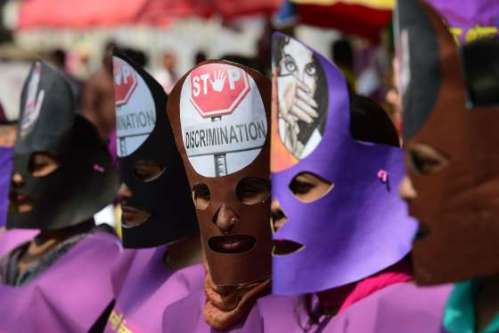
Dhaka, Bangladesh – March in support of Int’l Women’s Day 

Never underestimate the power of women. Especially when we’re in one accord on just one thing we need. Equal status as human beings.

This means equal status in a society that honors each woman and girl as a full human being, regardless of color, country of origin, economic or social class, religion, or marital status. Not a fraction of a human being, but 100 percent human. Welcomed into every room in the house without having to wear masks, special clothes, smiles or makeup on our faces, or anything that signals we are less valued than men or boys.

© Elouise Renich Fraser, 8 March 2018, reposted 8 March 2021
Monet painting found at quadrosetelas.com.br
International Women’s Day photos found at Getty Images

Living with loss

It’s always in my face
until it isn’t anymore
With a smirk and a sigh
energy slides to the floor
of my waning ambitions

Time races by
without much effort
as I sit watching birds
and freezing rain
drift through the air

It’s time for lavender crocus
to push their sweet petals
through layers of packed snow
now coating the back yard
like a fake movie set

I sit at the kitchen table
reluctant to move
taking in the calm of
a day just begun
despite my growing lassitude

I must admit to a case of weariness. Physical, mental, emotional weariness.

I don’t mind messes. In fact, I’m challenged by them. I used to enjoy sorting things out into neat piles. Not for my own pleasure, but because things go better when they’re arranged in a sensible way. So we know who’s who and where things are and how to access truth.

We seem to have less sense than usual about us these days. Not as individuals, but as citizens of these weary, mostly disunited states. It isn’t too much to say we’re in a hunkered down war-like posture. We’ve been there for decades, growing wearier by the day.

No one has declared open warfare, though we’ve come close. On a regular day, those who feel the heat most often are our best barometers. Women, children, the unemployed, prisoners, immigrants, and sometimes anyone who lingers too long to watch the sunset.

It feels as though our government has become the new war zone that guarantees we’ll not cross over to the ‘enemy.’

And yet, for this and much more, Jesus of Nazareth turned his face toward his enemies and toward death. One wearying day after another.

I pray we’ll find reason to hope not in ourselves, but in a power greater than we are. Even though it means learning to die.

Elouise

© Elouise Renich Fraser, 6 March 2021
Photo found at gardeningknowhow.com

What we don’t have

In the opening pages of his Journal of an Ordinary Grief, Mahmoud Darwish writes these haunting words:

What are you doing, father?

I’m searching for my heart, which fell away that night.

Do you think you’ll find it here?

Where else am I going to find it? I bend to the ground and pick it up piece by piece just as the women of the fellahin pick up olives in October, one olive at a time.

But you’re picking up pebbles!

Doing that is a good exercise for memory and perception. Who knows? Maybe these pebbles are petrified pieces of my heart. And even if they’re not, I would still have gotten used to the effort of searching on my own for something that made me feel lost when it was lost. The mere act of searching is proof that I refuse to get lost in my loss. The other side of this effort is the proof that I am in fact lost as long as I have not found what I have lost.

Mahmoud Darwish, Journal of an Ordinary Grief, pp 3-4. Translated from Arabic, with a foreword by Ibrahim Muhawi. Archipelago Books, English translation published in 2010; first published in Beirut in 1973.

When I read these words I can’t help thinking about our national crisis. Not Covid-19, or even political wars waging night and day in cities and towns everywhere.

Our most pressing crisis is our identity. Who are we as a nation?

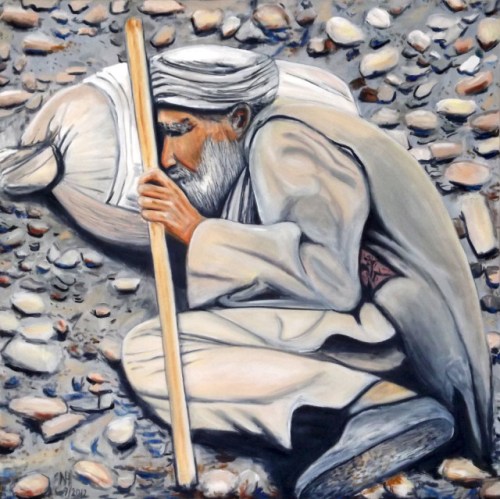
Mahmoud Darwish’s father struggles with an “ordinary grief.” Ordinary because the grief never goes away. It’s the grief of a Palestinian whose heart has been broken. The grief of an old man without a country. Grief that won’t let go of memories because they’re the last link to what once home. The place where hearts were nourished and cherished. Memories now represented by pebbles. Bits and pieces of stone standing in for what was lost.

The USA is no paradise. Those brought here or captured against their will have already attested to this.

They and their descendants are still looking for something. Dare we join them in their search? Stone by stone, bullet by bullet, bone by bone. Small connections to the past, and reminders of what they and we still don’t have: liberty and justice for all.

© Elouise Renich Fraser, 3 March 2021
Painting of old man found at lettalkknowledge.wordpress.com

I want to go back

They say memories are
what really matter
But I want to go back

to classrooms shaped by
women and men from afar
Places I’ve never visited

How narrow we’ve become today
in our virtually segregated schools and
neighborhoods overflowing

with unfamiliar cuisines or clothes
and customs that give us away as strangers
not friends or even neighbors

Years of serving seminarians in
multinational multiethnic classrooms
turned my small world upside down

You helped make me the woman
I now am sitting here at home
wishing for just one more class

So you can show up and teach me
What I need to know today
Before it’s too late to dream

I’m feeling a bit nostalgic these days. Also heavy-hearted about what we’re becoming as a nation. It seems curiosity about the world and about people who don’t look, act or vote the way we do isn’t as interesting as it used to be. In fact, it seems easier to ignore each other. Look the other way.

When I was still teaching at seminary, diversity made everything more exciting. Granted, it wasn’t always easy for any of us.

Nonetheless, it opened up opportunities to re-examine our assumptions and broaden our knowledge. Not just about the subject matter, but about the way we dealt with each other.

Are we losing touch with our humanity? Is that possible?

I don’t want to be a robot, or a puppet on strings controlled by other human beings. Or by the ups and downs of the stock market, or the latest headlines in scandal magazines.  Nor do I want to be locked into my own small world because of fear or unexamined assumptions.

This morning I received my second Covid-19 shot. The room was filled with people who didn’t look or act like me. I wonder. Would they be interested in an informal discussion group? There’s so much I wish I understood better…..

Elouise

© Elouise Renich Fraser, 1 March 2021
Image found at ceu.edu

When Death Comes | Mary Oliver

Death is on my mind. Not just because we’re in the season of Lent, but because it’s impossible to escape death. Here’s Mary Oliver’s take on death. My brief comments follow.

When Death Comes

When death comes
like the hungry bear in autumn;
when death comes and takes all the bright coins from his purse

to buy me, and snaps the purse shut;
when death comes
like the measle-pox

when death comes
like an iceberg between the shoulder blades,

I want to step through the door full of curiosity, wondering:
what is it going to be like, that cottage of darkness?

And therefore I look upon everything
as a brotherhood and a sisterhood,
and I look upon time as no more than an idea,
and I consider eternity as another possibility,

and I think of each life as a flower, as common
as a field daisy, and as singular,

and each name a comfortable music in the mouth,
tending, as all music does, toward silence,

and each body a lion of courage, and something
precious to the earth.

When it’s over, I want to say all my life
I was a bride married to amazement.
I was the bridegroom, taking the world into my arms.

When it’s over, I don’t want to wonder
if I have made of my life something particular, and real.

I don’t want to find myself sighing and frightened,
or full of argument.

I don’t want to end up simply having visited this world.

© 1992 by Mary Oliver, published by Beacon Press
From New and Selected Poems, Volume One (pub. 1992), pp. 10-11

It’s impossible to get through Lent without pondering death. Not just the death of Jesus of Nazareth, but my own death. How do I prepare to die?

Writing about death helps. So does revisiting deaths of family members and friends. Also, acknowledging holes in my life that will never be filled. And my own fear of dying before I think I’m ready.

So what does it mean to live each day as potentially my last day on this earth? Mary suggests I pay attention to the now of this world. Become more than a visitor. Become amazed at this world and its inhabitants. Especially those flowers of the field that have put up with the likes of us from the very beginning.

As for going through what Mary calls the “the door” of death, yes, I’m curious. Though not as curious as Mary. Still, the focus is today, the only way to prepare for tomorrow.

Elouise

© Elouise Renich Fraser, 25 February 2021
Image found at wwwreligionlac.net