Telling the Truth

connecting the dots of my life

Tag: Vulnerability

Thirst

This August 2017 post caught my heart today. Perhaps it will catch yours. We seem to be running out of our hoarded resources. 

Thirst
consumes me
parches my soul
throttles energy
makes me wary
cautious
lest I lose
one precious drop

Hoarding
sets in like drought
grows and multiplies
invades every
vein in my body
sucks me dry
prepares me
for death

Gasping
I refuse
to relinquish
what is mine
by right and law
wrung from
this earth by
my own hands

Heedless
I rush headlong
into a desert
of my making

No one
looks my way
or offers
one precious drop

***

Here’s another option from the prophet Isaiah:

Come, all you who are thirsty,
come to the waters;
and you who have no money,
come, buy and eat!
Come, buy wine and milk
without money and without cost.

Why spend money on what is not bread,
your labor on what does not satisfy?
Listen, listen to me,
and eat what is good,

and you will delight in the richest of fare.

Isaiah 55:1-2 (New International Version)

I’ve been thinking about the way we seem to be turning inward. Supposedly protecting ourselves and our own, lest something terrible happens and we’re left high, dry and more vulnerable than ever. But I wonder.

Ironically, the best way to ensure disaster may well be to shut down our hearts and hang onto our assets, however meager they may be.

This isn’t about political parties, racial identity or religious beliefs. It’s about our common humanity. The capacity in each of us that’s capable of welcoming and providing hospitality to strangers. And the capacity to receive hospitality from others.

It isn’t easy. We’re never promised success, safety or survival for ourselves or others. We are, however, promised the satisfaction of receiving and passing on small bits of grace and gratitude. Some of those tiny drought-proof seeds that grow only when they’re given away.

© Elouise Renich Fraser, 5 August 2017; reposted on 15 March 2021
Image found at feelgrafix.com

misaligned | Int’l Women’s Day

Claude Monet, Poppy Fields near Argenteuil

I posted this three years ago. Sadly, things haven’t changed for the better. If anything, Covid-19 and four years of growing neglect, abuse, and animosity toward women have made things worse. Not just in the USA, but worldwide. This is for women everywhere, and the men who support and care about them:

in the waiting room
perfectly aligned paintings
greet the misaligned

I’m back at the physical therapy center, sitting in the waiting room. Directly across from me, above a row of chairs, hang two huge paintings. Doubtless chosen for their ability to calm and reassure patients bearing all kinds of physical misalignments. Most patients are women.

The paintings are meticulously hung and feature lovely outdoor scenes. Expansive, bucolic and natural without being overly sentimental. Unobtrusive  gentle colors and bright sunshiny days.

Nothing to rattle our nerves or make us wonder about untold stories or what might happen next. No storms brewing in the background. No signs of aging structures or broken-down bridges. All is serene.

The haiku, written several weeks ago, came to mind this morning as I scrolled through photos celebrating International Women’s Day. If even a few of these photos were hung on walls in our public spaces, what would happen? Here are three that caught my eye.

Bhubaneswar, India – Sand Sculpture by Manas Sahoo

Thane, India – Fashion Show by Acid Attack Survivors
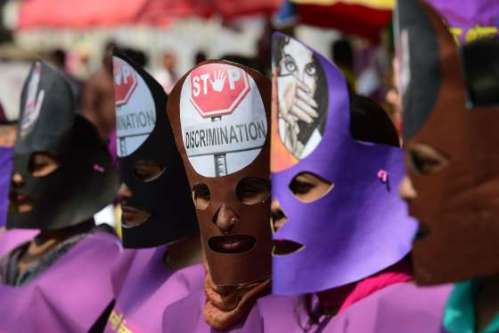
Dhaka, Bangladesh – March in support of Int’l Women’s Day 

Never underestimate the power of women. Especially when we’re in one accord on just one thing we need. Equal status as human beings.

This means equal status in a society that honors each woman and girl as a full human being, regardless of color, country of origin, economic or social class, religion, or marital status. Not a fraction of a human being, but 100 percent human. Welcomed into every room in the house without having to wear masks, special clothes, smiles or makeup on our faces, or anything that signals we are less valued than men or boys.

© Elouise Renich Fraser, 8 March 2018, reposted 8 March 2021
Monet painting found at quadrosetelas.com.br
International Women’s Day photos found at Getty Images

Living with loss

It’s always in my face
until it isn’t anymore
With a smirk and a sigh
energy slides to the floor
of my waning ambitions

Time races by
without much effort
as I sit watching birds
and freezing rain
drift through the air

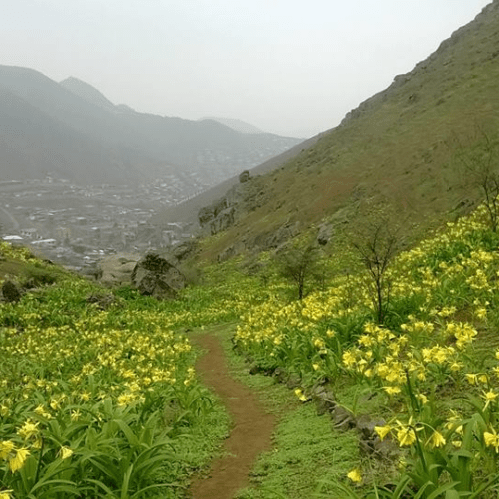
It’s time for lavender crocus
to push their sweet petals
through layers of packed snow
now coating the back yard
like a fake movie set

I sit at the kitchen table
reluctant to move
taking in the calm of
a day just begun
despite my growing lassitude

I must admit to a case of weariness. Physical, mental, emotional weariness.

I don’t mind messes. In fact, I’m challenged by them. I used to enjoy sorting things out into neat piles. Not for my own pleasure, but because things go better when they’re arranged in a sensible way. So we know who’s who and where things are and how to access truth.

We seem to have less sense than usual about us these days. Not as individuals, but as citizens of these weary, mostly disunited states. It isn’t too much to say we’re in a hunkered down war-like posture. We’ve been there for decades, growing wearier by the day.

No one has declared open warfare, though we’ve come close. On a regular day, those who feel the heat most often are our best barometers. Women, children, the unemployed, prisoners, immigrants, and sometimes anyone who lingers too long to watch the sunset.

It feels as though our government has become the new war zone that guarantees we’ll not cross over to the ‘enemy.’

And yet, for this and much more, Jesus of Nazareth turned his face toward his enemies and toward death. One wearying day after another.

I pray we’ll find reason to hope not in ourselves, but in a power greater than we are. Even though it means learning to die.

Elouise

© Elouise Renich Fraser, 6 March 2021
Photo found at gardeningknowhow.com

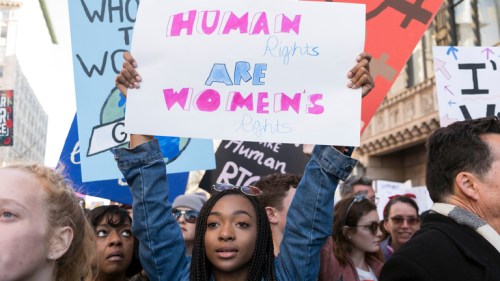
Human rights and Women’s rights

Days of disorientation verging on despair
Parade in and out of my life
Uninvited

Meanwhile Trumpian unrealities
Sink ever deeper roots
into the great swamp of male privilege

I don’t know how to document this. I’m sure there’s a way, and that it’s already being done. I just want to know why all the uproar about human rights seems blind to the rights of all women in the USA.

This isn’t just about color. It isn’t even about income or educational status.

It’s about backbreaking expectations that women of all colors can and will do all things all the time with or without children, with or without a fair, steady income, and with or without adequate representation in every branch of our government and our judicial system. Yes, it feels like a run-on sentence because it’s already a run-on recipe for disaster.

The laundry list of virtual slaps in the faces of women and girls continues to grow. Comments and so-called jokes; growing numbers of men feeding the MeToo movement; the rapid disappearance of adequate medical support for women and girls; unequal pay for women doing the same work men do.

None of this is new. What’s distressing is the obvious, in-your-face deconstruction of equal support for females of any color.

Yes, we have a huge race issue here in the USA. And yes, the color of our female skin matters wherever we go, whether we like it or not.

Still, women living in poverty or hand-to-mouth are as likely to be white as black or brown. The current argument over our non-living wage (in most states) is disheartening, though being female in the USA is about more than a living wage.

We deserve politicians and judges that include women and men of all colors, fully representative of females as well as males, united by their opposition to outrages committed against women and girls every day of the week. Is this too much to expect?

This is also an issue for our churches and neighborhoods. Yes, people might get tired of hearing about the same thing over and over. Then again, perhaps our silence is asking women and girls of all colors to get used to living with the same thing over and over.

© Elouise Renich Fraser, 5 March 2021
Photo found at pewresearch.org

I want to go back

They say memories are
what really matter
But I want to go back

to classrooms shaped by
women and men from afar
Places I’ve never visited

How narrow we’ve become today
in our virtually segregated schools and
neighborhoods overflowing

with unfamiliar cuisines or clothes
and customs that give us away as strangers
not friends or even neighbors

Years of serving seminarians in
multinational multiethnic classrooms
turned my small world upside down

You helped make me the woman
I now am sitting here at home
wishing for just one more class

So you can show up and teach me
What I need to know today
Before it’s too late to dream

I’m feeling a bit nostalgic these days. Also heavy-hearted about what we’re becoming as a nation. It seems curiosity about the world and about people who don’t look, act or vote the way we do isn’t as interesting as it used to be. In fact, it seems easier to ignore each other. Look the other way.

When I was still teaching at seminary, diversity made everything more exciting. Granted, it wasn’t always easy for any of us.

Nonetheless, it opened up opportunities to re-examine our assumptions and broaden our knowledge. Not just about the subject matter, but about the way we dealt with each other.

Are we losing touch with our humanity? Is that possible?

I don’t want to be a robot, or a puppet on strings controlled by other human beings. Or by the ups and downs of the stock market, or the latest headlines in scandal magazines.  Nor do I want to be locked into my own small world because of fear or unexamined assumptions.

This morning I received my second Covid-19 shot. The room was filled with people who didn’t look or act like me. I wonder. Would they be interested in an informal discussion group? There’s so much I wish I understood better…..

Elouise

© Elouise Renich Fraser, 1 March 2021
Image found at ceu.edu

Thank you, Marian Anderson


Today is the anniversary of Marian Anderson’s birth in 1897. You may remember that James DePreist, musician and poet, was her nephew. Some might even remember that she was born in Philadelphia, Pennsylvania. Ms. Anderson died on  April 8, 1993.

This morning I watched and listened to a number of YouTube videos. Most focused on Anderson’s amazing voice. After listening to more than one recording of “They Crucified My Lord,” I chose the one you see above. It isn’t dressed up, and we don’t hear or see the audience. Instead, we’re invited to hear and feel the full weight of Anderson’s interpretation. One tragic note at a time.

I hear connections between Anderson’s interpretation of this song and James Cone’s book, The Cross and the Lynching Tree.  Not just in the music itself, but in her subdued yet determined delivery of the song. Often followed by silence from the audience.

I wonder. How many white people felt pierced in their hearts, as I do now, when they heard and saw her interpretation of it? We’ll never know. However, the fact that this song was often met with silence instead of enthusiastic hand-clapping suggests the message was clear to all.

Jesus of Nazareth didn’t say a ‘mumbling word’ and was known to be innocent of charges brought against him. It follows that we dare not applaud this travesty (lynching in its changing costumes) that continues to haunt us in the USA.

© Elouise Renich Fraser, 27 February 2021
Image and song thanks to YouTube.com

o

When Death Comes | Mary Oliver

Death is on my mind. Not just because we’re in the season of Lent, but because it’s impossible to escape death. Here’s Mary Oliver’s take on death. My brief comments follow.

When Death Comes

When death comes
like the hungry bear in autumn;
when death comes and takes all the bright coins from his purse

to buy me, and snaps the purse shut;
when death comes
like the measle-pox

when death comes
like an iceberg between the shoulder blades,

I want to step through the door full of curiosity, wondering:
what is it going to be like, that cottage of darkness?

And therefore I look upon everything
as a brotherhood and a sisterhood,
and I look upon time as no more than an idea,
and I consider eternity as another possibility,

and I think of each life as a flower, as common
as a field daisy, and as singular,

and each name a comfortable music in the mouth,
tending, as all music does, toward silence,

and each body a lion of courage, and something
precious to the earth.

When it’s over, I want to say all my life
I was a bride married to amazement.
I was the bridegroom, taking the world into my arms.

When it’s over, I don’t want to wonder
if I have made of my life something particular, and real.

I don’t want to find myself sighing and frightened,
or full of argument.

I don’t want to end up simply having visited this world.

© 1992 by Mary Oliver, published by Beacon Press
From New and Selected Poems, Volume One (pub. 1992), pp. 10-11

It’s impossible to get through Lent without pondering death. Not just the death of Jesus of Nazareth, but my own death. How do I prepare to die?

Writing about death helps. So does revisiting deaths of family members and friends. Also, acknowledging holes in my life that will never be filled. And my own fear of dying before I think I’m ready.

So what does it mean to live each day as potentially my last day on this earth? Mary suggests I pay attention to the now of this world. Become more than a visitor. Become amazed at this world and its inhabitants. Especially those flowers of the field that have put up with the likes of us from the very beginning.

As for going through what Mary calls the “the door” of death, yes, I’m curious. Though not as curious as Mary. Still, the focus is today, the only way to prepare for tomorrow.

Elouise

© Elouise Renich Fraser, 25 February 2021
Image found at wwwreligionlac.net

Life shrinks daily | Lent 2021

Is it not enough
That I have survived?
That You have never
Turned away from me?

Life shrinks daily
A wrenching letting go
Of many things

Masks and pandemic protocols
Shroud me in a deathlike dream
From which I cannot wake
Before the next stanza
Takes me down

The sun is out today, though the air is still below freezing. White mounds of snow look like small mountain tops invading the back yard. The birds are basking in chilly sun, taking their turns at the birdfeeder.

I sit in my kitchen, an onlooker to life, wondering how and when things went sour.

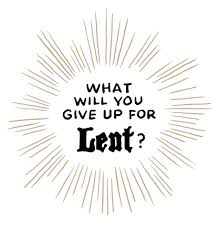
Then again, this is the first Sunday in Lent. My heart tells me it’s time review what I’m giving up yet again for Lent. No, it hasn’t gotten any easier to say this prayer. Especially the last line.

I let go my desire for security and survival.
I let go my desire for esteem and affection.
I let go my desire for power and control.
I let go my desire to change the situation.

Quoted by Cynthia Bourgeault in Centering Prayer and Inner Awakening, p. 147 (Cowley Publications 2004)

I wonder what Jesus of Nazareth felt and thought as he approached his coming death?

Praying for an accepting heart and a grateful spirit.
Elouise

© Elouise Renich Fraser, 21 February 2021
Image found on Facebook via Google search

thick roots revisited

P1040831

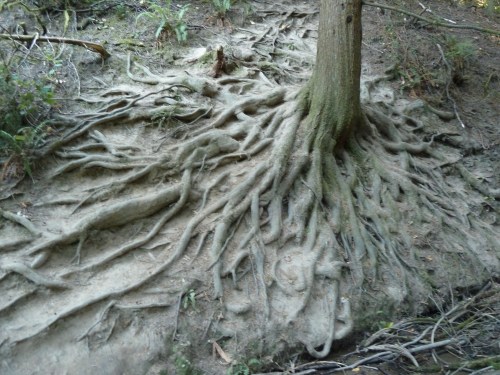
thick roots tangled knots
barely hanging onto bank
drink deep waters

The last several days have been unpredictable and sometimes discouraging. I keep reminding myself that I’m not in charge of things. The news these days isn’t great. Even so, every day offers an opportunity to look up, look back, look ahead, and take another step. I wrote the following comments in April 2017.  

 ~~~

This haiku was my third post to this blog, published on 3 January 2014. It still haunts me, though not in the same way.

I first saw these roots when D and I were walking with our daughter and her husband through Hoyt Arboretum in Portland, Oregon. I couldn’t tear my eyes away. The tangled roots were beautiful and foreboding.

It was a bit like blogging, which I’ve experienced as a formidable venture into unknown territory. Like being born and surviving. Sometimes against all odds.

Writing lets my exposed roots show, often whether I realize they’re showing or not. Writing also stakes my claim to a tiny, precarious plot of land that sits open, vulnerable and visible to passersby.

I’ve traveled a long way since my early posts, yet my roots are still my roots. Bare, and barely hanging onto precious ground that’s stronger, deeper, and more nourishing than I could have imagined.

Deep waters aren’t visible, and they don’t untangle all the knots in my life. Sometimes I wonder whether they’re drying up.

Yet even in dire circumstances, I discover more than enough to get me through each day. Sometimes with tears of sorrow and disbelief. More often with joy and sheer gratitude for the privilege of being human. Able to thrive in the forest next to redwood giants, with miniscule ferns growing around and from my feet.

© Elouise Renich Fraser, 26 April 2017, and 16 February 2021
Photo credit: DAFraser, October 2012, Hoyt Arboretum, Portland, Oregon

Sometimes I want to give up

I want to turn into a bird and
join the community at the birdfeeder
A sometimes raucous group and yet
they manage to fly in and out
without mayhem or madness
taking them down bird by bird

This little poem was in the middle of a long list of things bothering me yesterday.  They included personal health issues, life with our dear cat Smudge who vomits every now and then, the mess that passes as my desk, and our national mayhem and madness.

Early yesterday morning I was watching birds at the feeders outside our kitchen window. Even though it was freezing cold with ice and snow on the ground, I suddenly got all teary. I wanted to be a bird! Free to come and go without fear.

Thankfully, a telephone conversation with a longtime friend helped get me back on track.

There’s a reason I felt like packing it in. The real problem isn’t what’s out there, or even my health challenges. It’s my voice. My writing voice. Put simply: Writing on WordPress is about as safe as it can get. Visitors don’t have to agree with me, and I have the privilege of speaking my mind.

For several years I’ve wondered about publishing some of my writing, and have said No. I’ve already published as an academic; I don’t need to publish anything else.

And yet…I wrote my two published books while I was a professor and my father was still alive. I hedged my language, thinking he might read them. They included memories about my childhood, but not about the way things really were for me at home.

Blogging gave me an opportunity to describe my childhood and youth, come to terms with them, and move on as a writer. So here I am today wondering why, with a manuscript nearly ready to publish, I’m nervous and even fearful.

Yet the truth is simple: Though I don’t write to please or appease my father, I still have a whisper of fear in me. This may sound crazy. Still, I need to do this for myself, my mother and sisters, our children and grandchildren, and women and men who have encouraged me as the writer I now am.

More later about the book. Right now I’m back to proofreading.

Happy Friday, and a prayer that we’ll find our way through these troubled days.
Elouise

© Elouise Renich Fraser, 12 February 2021
Photo found at news.wisc.edu