Telling the Truth

connecting the dots of my life

Tag: Vulnerability

Resisting Mr. Trump


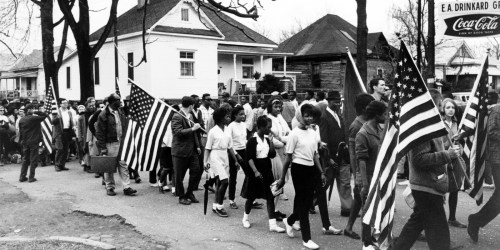
Civil Rights March from Selma to Montgomery, Alabama (1965)

What is the content of my character? The question haunts me. I’m in the golden to fading-golden years of my life. Until early this year, all my ducks (as many as I could herd) seemed to be lining up in a neat row, with plans and documents in fairly good order.

The appearance of Mr. Trump on the overtly political stage distressed me in 2016. Today it horrifies me that he’s still there.

This isn’t about who wins the next election. It isn’t even about Covid-19. It’s about resistance and the content of our character.

Mr. Trump doesn’t seem to lose sleep over the content of his character.

I wonder about myself.
Do I understand true resistance?
And what is the content of my character right now?

For decades I minimized the circumstances of my childhood. I thought that if I got on with my life as an adult, the baggage of the past would gradually fade away.

That didn’t happen. It never does. I had to resist openly. I had to open my mouth, and say what I needed to say to the people who most needed to hear from me–my parents. Which I did on the eve of my 50th birthday.

I grew up under the strict, sometimes harsh tutelage of a father who contantly reminded me that he was in control, and I was not. But power is never a sign of ‘rightness’ or even (as in my ordained father’s case) ‘righteousness.’

When I look back at my internal resistance to my father’s heavy-handed methods of control, I wonder how I did it. Stubborn? Yes. I was stubborn–though not in the way my father thought I was.

Instead, I learned to embody stubborn resistance in the face of overwhelming odds. Sometimes it worked to my advantage. Overall, however, it did not. My body paid a high price.

It would not be fair or true to say my father and Mr. Trump were cut from the same cloth. Still, there are obvious overlaps, including unhealthy narcissism. The kind that tries to eradicate healthy narcissism in others.

It doesn’t matter whether Mr. Trump wins the next election or not. He has already wreaked havoc here in the USA and abroad. It won’t do for me to hold my nose and wait for November.

© Elouise Renich Fraser, 25 May 2020
Photo of 1965 March from Selma to Birmingham, Alabama found at americanyawp.com

Small Bodies | Mary Oliver

Here’s a small parable for today. What do you think it’s about? My comments follow.

Small Bodies

It is almost summer. In the pond
The pickerel leap,
and the delicate teal have brought forth
their many charming young,
and the turtle is ravenous.
It is hard sometimes, oh Lord,
to be faithful.
I am more boldly made
than the little ducks, paddling and laughing.
But not so bold
as the turtle
with his greasy mouth.
I know you know everything—
I rely on this.
Still, there are so many small bodies in the world,
for which I am afraid.

© 2008 by Mary Oliver
From her 2008 collection, Red Bird, p. 31
Published by Beacon Press 2008

Without top-dog animal predators, the natural world would cease to function efficiently. Without judicious pruning, trees wouldn’t develop strong, healthy branches or fruit.

But what about this ravenous, bold turtle with his greasy mouth? And what small bodies does Mary have in mind? Is this only about the pickerel, young teal and little ducks?

Mary Oliver opened her heart to nature – observing, describing and pondering what it might be telling or showing her. I imagine she discerns allegories or sees mirrors of what she experiences in human nature, including herself.

Given our current situation here in the USA, Mary might make connections between our pandemic world and the pond. We, too, have ‘so many small bodies’ vulnerable to predators and greasy-mouthed turtles. So many that, like Mary, I don’t know what to do or say except this:

I know you know everything—
I rely on this.

To be small and needy today is as dangerous as being a small duck in a ravenous turtle’s pond. Predatory behavior thrives at every level of governmental, public and private life. Especially when the pond is well-stocked with small bodies unable to fend for themselves, the number of ponds is drying up, and greasy-mouthed turtles grow ever larger and more ravenous.

Mary’s poem wasn’t meant to be a sermon. Still, it asks me to consider how I’m looking out (or not) for small bodies in our USA-style shrinking pond with its ravenous turtles.

© Elouise Renich Fraser, 21 May 2020
Photo of baby Wood Ducks found at pinterest

dawn song and the daily avalanche

Lying still breathless
Lest I interrupt dawn song
I resist daylight
And the daily avalanche
of sour notes and red beets

once upon a time
the days had rhyme and reason
nonsense and outrage
held together by thick ties
of trust and loads of good will

last week’s grievances
lie steaming in a hot heap
of rotten garbage
waiting for today’s dumpster
held up by desperadoes

What holds a moment, a day or a week together? What keeps it from feeling like one slow (or fast) day after another? What gives it the feeling of real life when much of real life must be held in check, and there’s no guarantee of a proper tomorrow?

I don’t object to being held in check during this pandemic. I do, however, wonder how we now go about having what can be called a day or even a week? Perhaps it doesn’t matter anymore.

Outside I hear a resident cardinal calling from a nearby tree. The opening bars of a lovely dance?

Cheers!
Elouise

© Elouise Renich Fraser, 20 May 2020
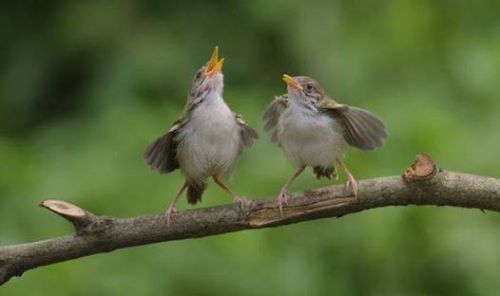
Photo of dawn song duet found at allevents.in 

Missing in action

Searching for myself
In this other-worldly place
My mind wanders
Down one path
and up another
Without a map
Or proper clothes
For a fading woman
Whose goal is
To get through today
Intact

Yesterday’s dreams
Sleep fitfully
In another time and space
Missing in action

I haven’t posted for several days, in part because of a few nagging health issues that required attention.

The biggest hurdle, though, has been coming to terms with my present reality. First, as a senior citizen with chronic pre-existing health conditions. And second, as a citizen of the USA, with the reality of Covid-19 as presided over (or not) by Mr. Trump.

The question I asked several weeks ago still nags at me. What will I do if I develop signs of Covid-19? What do I want, and what do I not want?

Last week I looked through old photos of my life with D and our family. I thought about what I want and do not want, should I need to be quarantined. I also consulted with a trusted friend who is going through a similar discernment.

In short, what I wrote in my Living Will eight years ago isn’t going to work for Covid-19. So I’m starting over.

I’ve decided to use Five Wishes as my framework this time. In large part because they offer a framework for talking about this with family members. I don’t want to be intubated, or moved to a hospital. What would that mean? Are we up for this?

In some ways, I’d rather stay lost in my old photos. They bring me laughter and joy. They remind me that I’ve lived a life I never thought I would have, and visited or lived in places I never expected to see. I want to be anchored to that reality instead of trying to figure out how I’ll stay alive for as long as possible.

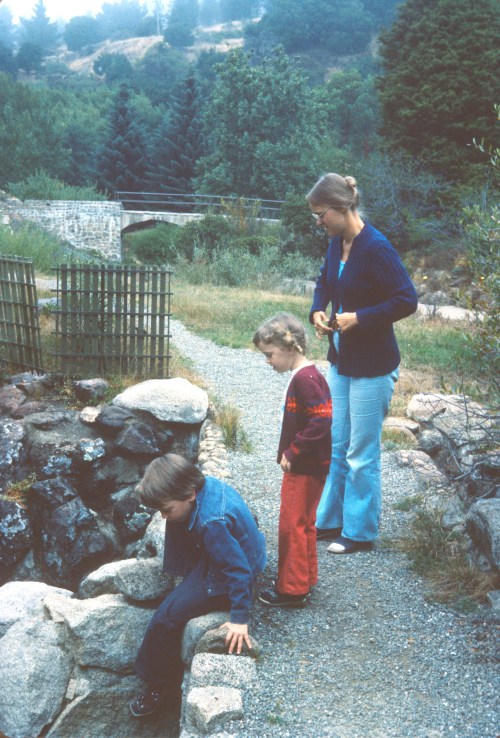
A life isn’t made up of years. It’s made up of small and large moments. A mosaic, not a graph or timeline. D took the photo above in January 1976, the year I graduated from seminary. One small piece of our mosaic.

Elouise

© Elouise Renich Fraser, 12 May 2020
Photo taken by DAFraser in southern California, January 1976
 

broken bodies

into dawn silence
the lone catbird signs softly
as earth holds its breath
remembr’ing bodies broken
released into waiting arms

Yesterday was communion Sunday–via virtual church on YouTube. “This is my body broken for you.”

We can’t turn the deaths of broken Covid-19 bodies into beautiful ceremonies. Still, there’s something to be said for the way this earth welcomes our broken bodies without judgment. Death can’t be glorified. It can, however, be seen as the beginning of something else. Often as release from what has become unbearable.

I hope a catbird sings soft songs for me when my time comes. I also pray this Monday finds you grateful to be alive, and ready for whatever comes next.

Elouise

© Elouise Renich Fraser, 4 May 2020
Photo found at birdatlas.bc.ca

Of The Empire | Mary Oliver

This morning, in response to my post yesterday, I had an email from a friend. She sent a link to an essay by Susan M. Shaw, I’ll get to hope. For now, I need to sit in the ashes and mourn.  Dr. Shaw doesn’t spare our feelings. Nor does she minimize Mr. Trump’s role. Instead, she focuses on how we’ve colluded to bring ourselves to this point in history. I highly recommend it.

In her essay, Dr, Shaw includes a prose poem by Mary Oliver. It was new to me, and right on target. I found it helpful as a roll call of how we in this nation got from there to here.

Of The Empire

We will be known as a culture that feared death
and adored power, that tried to vanquish insecurity
for the few and cared little for the penury of the
many. We will be known as a culture that taught
and rewarded the amassing of things, that spoke
little if at all about the quality of life for
people (other people), for dogs, for rivers. All
the world, in our eyes, they will say, was a
commodity. And they will say that this structure
was held together politically, which it was, and
they will say also that our politics was no more
than an apparatus to accommodate the feelings of
the heart, and that the heart, in those days,
was small, and hard, and full of meanness.

© 2008 by Mary Oliver
From her 2008 collection, Red Bird, p. 46
Published by Beacon Press 2008

I wonder what Mary Oliver would say to us today. Wishing for you some reasonably quiet time today to mourn, and ponder our culpability in this mess.

Elouise

© Elouise Renich Fraser, 30 April 2020
Image found at onthecommons.org

The Wind took up the Northern Things | Covid-19

Emily Dickinson’s poem rings eerily true, given the current pandemic. How will we pick up our pieces? What, if anything, will we have learned about ourselves? And how many of us will be present and accounted for?

Winds of change overtake us every day. Natural and unnatural disasters intrude. Emily Dickinson invites us to take a closer look. My comments follow.

The Wind took up the Northern Things
And piled them in the south –
Then gave the East unto the West
And opening his mouth

The four Divisions of the Earth
Did make as to devour
While everything to corners slunk
Behind the awful power –

The Wind – unto his Chambers went
And nature ventured out –
Her subjects scattered into place
Her systems ranged about

Again the smoke from Dwellings rose
The Day abroad was heard –
How intimate, a Tempest past
The Transport of the Bird –

c. 1868

Emily Dickinson Poems, Edited by Brenda Hillman
Shambhala Pocket Classics, Shambhala 1995

The calm before a storm is nothing compared to the calm after a storm. Wind, dust, earthquakes, locusts, famine, fire, floods. Devastating, destructive, unpredictable. Then it’s over. Deadly silent. Until nature ventures out, surveys the damage and begins reclaiming her rhythms, colors, textures and stunning beauty.

There’s nothing romantic about the destructive forces of nature. No one who has survived their fury can forget the terror. Or the people, animals, natural resources and futures gone or changed forever.

Nonetheless, I hear Emily inviting us to consider the other side of the storm. What happens following unpredictable upheaval? What happens when everything is different and nothing can be taken for granted?

Healing and rebirth don’t happen overnight. Nature will take its time just as it always has. We can count on her subjects and systems doing their thing, even though everything will be different, changed in some way.

As for us, life changes immediately in the aftermath of major upheaval. Belongings and people we took for granted or undervalued yesterday are suddenly precious. Whether missing or found against all odds, each person and each item becomes the subject of conversation, tears and thoughts shared around fireplaces. Personal and intimate.

This everyday hearth fire, unlike a firestorm, warms our hearts. We’re not alone. A bird sings. Was it blown here by the storm? I don’t know. Still, its simple song says I’m not forgotten, even though my small world just got turned upside down.

I hear in Emily’s poem an invitation to think about the value of human life as well as the value of our planet. Both seem under siege right now. Not just by politicians or corporations, but by people such as you and I. I don’t have answers. I do, however, have hope that we’ll wake up before it’s too late.

© Elouise Renich Fraser, 26 June 2017, reposted 22 April 2020
Photo of recent storm damage in the South found at washingtonpost.com

Subdued Monday

Subdued
I close my eyes
And wonder
Where and who
I really am

One day comes
And another goes
Only to begin
The same story
Yet again

The sun
Teases me with
Rays evoking
Dreams of
Carefree days

The apples
At the market
This week were
Less than I’d
Hoped for

Voices
Of commentators
And politicians
Drone on
And on

Is there is
A theme in
All this waiting
For the next shoe
to drop?

A pandemic is bad enough, all by itself. In a presidential election year, however, it’s poison. Especially when the current POTUS keeps feeding frenzies alive and well. As if COVID-19 weren’t bad enough, we now have an uncivil war on our hands, stoked and encouraged by POTUS.

Today I’m praying for responsible public servants of any political persuasion, medical personnel, organizations, businesses and citizens doing their part to support us. IF, as POTUS says, this is a “war” and he is a “wartime President,” he has a most disconcerting, disruptive, disastrous way of leading the troops. Sadly, those would be his core of faithful followers, NOT those actually on the front lines serving the public good.

Thanks for listening and doing what you can to make a difference, no matter what your political preferences are.
Elouise

© Elouise Renich Fraser, 20 April 2020
Photo of Sunny Spring Morning found at dezinerwallz.com

Heavy | Mary Oliver

Here’s a lovely, if difficult poem from Mary Oliver. It’s about death. It’s also about learning to be a survivor. I’m posting the poem as a tribute to Diane (Sister #3), born on this day, Easter Sunday 1949 (leap year). Diane died in February 2006 after living more than ten years with ALS. My comments follow.

Heavy

That time
I thought I could not
go any closer to grief
without dying

I went closer,
and I did not die.
Surely God
had His hand in this,

as well as friends.
Still, I was bent,
and my laughter,
as the poet said,

was nowhere to be found.
Then said my friend Daniel
(brave even among lions),
“It’s not the weight you carry

but how you carry it—
books, bricks, grief—
it’s all in the way
you embrace it, balance it, carry it

when you cannot, and would not,
put it down.”
So I went practicing.
Have you noticed?

Have you heard
the laughter
that comes, now and again,
out of my startled mouth?

How I linger to admire, admire, admire
The things of this world
That are kind, and maybe

also troubled—
roses in the wind,
the sea geese on the steep waves,
a love
to which there is no reply?

© 2006 by Mary Oliver
Thirst, pp.53-54
Published by Beacon Press

Dying isn’t for the weak; neither is surviving. Not as victims of cruel fate or the current pandemic.

In the end, we often don’t have any choice but to live with what we’ve been given. True, we might prefer to die. But Mary challenges us to welcome grief and the opportunity to let it shape our lives for the better, without destroying them.

I also hear Mary inviting us to give ourselves time. Enough time to be surprised at ourselves when laughter and joy sneak in unannounced.

In her case, Mary unexpectedly discovers herself seeing nature differently. Not just as shows of beauty, but as survivors. Like us, the roses and sea geese also live out their love of life in the midst of harsh winds or steep waves.

What could be more invitational and healing that that? Not as a pill we take, but a possibility we choose to embrace.

Elouise

© Elouise Renich Fraser, 17 April 2020
Roses in the Wind painted by Anne Costello
Found at saatchiart.com

Fighting Voter Suppression in the USA

One of you kindly sent me three articles in response to yesterday’s post. Even if you don’t live here in the USA, please take a look at any of them. They tell the truth about our nation’s current crisis in governance.

League of Women Voters: Fighting Voter Suppression

Common Dreams: How Advocates Are Fighting Voter Suppression

Brennan Center for Justice: How to Fight Voter Suppression Nationwide

Our nation has many visible and invisible problems to resolve. It seems only fair that we begin with the most egregious problem of all: the right of each citizen to cast and have counted his or her vote in local and national elections. Mail-in ballots for all is an option. If it’s good enough for POTUS, it’s good enough for us!

What just happened in Wisconsin was deplorable, thanks to last-minute political wrangling. Nonetheless, those who were able and willing to vote in person were uncommonly brave. Do we have the same courage?

The stakes are high. We say we’re “the land of the free and the home of the brave.” It’s time to step up and be counted on the side of freedom, courage, and justice for each qualified voter.

Yes, we’re in the middle of a pandemic. All the more reason to be alert and active on behalf of our citizen rights.

Thanks for reading, and for finding opportunities to make a difference wherever you live on our shared planet.

Elouise

© Elouise Renich Fraser, 15 April 2020
Photo of Wisconsin Primary voters found at hawaiitribune-herald.com