Telling the Truth

connecting the dots of my life

Tag: Vulnerability

A vexing situation – Sexuality 3

It’s now 1986. I’ve been an assistant professor of theology for three years. A new academic dean has just arrived, as have recent newspaper articles about one of our recent graduates. She had been one of our more conservative students, and was now an ordained pastor.

According to newspaper accounts, our graduate, happily married with two sons, left her conservative denomination to become pastor of a church for gay men and lesbian women. She had become disenchanted by her denomination’s anti-gay/lesbian rhetoric as well as concrete actions taken against homosexual women and men. I applauded her courage, as did some of my colleagues.

Our new dean circulated to the faculty a copy of the newspaper account along with a brief memo letting us know we would be talking about this. In the account, our former student identified herself as a graduate of our seminary.

Thus began a long conversation in the faculty that ended after nearly 10 years of anguished discussion about what we as a seminary should do. Not about this one graduate, but about gay men and lesbian women who might be already enrolled or applying for admission to our seminary. And about what faculty could or could not teach in the classroom.

The seminary hadn’t made attitudes or beliefs about homosexuality (or heterosexuality) an official requirement for admission in the past, so why did we need to clarify our ‘standing’ at this time? And why, given the recent history of the seminary’s heterosexual president, as well as hints of stories that might be told about one or two male professors of the past, were we suddenly consumed by angst about homosexuality? Wasn’t heterosexuality of equal weight and importance?

During my first three years at the seminary I became known, along with several colleagues, as a ‘safe’ person to talk with about matters of sexuality. Especially homosexuality. That meant I knew how to listen, how to be supportive without being directive, and how to help seminarians think about options. It didn’t take many conversations to realize I had no clue about the inner and family lives of gay and lesbian seminarians.

Some, now full adults, had never come out of the closet with their families, much less their friends. The thought of appearing before a board or session of a church to be interviewed for ordination was terrifying. Some ordination exams were public. Open to members from other congregations. Questions could be asked by anyone in the room, including questions about candidates’ personal lives.

I attended scores of these public exams. Nothing was more brutal than knowing ‘visitors’ from other churches could sway the outcome of an exam. The sessions sometimes functioned as semi-political social and theological warfare. If that sounds harsh, so be it. The possible consequences for the woman or man standing up front were harsh. Especially if the moderator wasn’t skilled and politically savvy.

Finally, in 1996, the seminary published internally a new policy on human sexuality and moral conduct. It included implications for present and future members of the seminary community and for faculty members in their responsibility as teachers.

I like clarity. I like knowing what’s expected of me. Yet this new policy sent a double message.

To be continued.

©Elouise Renich Fraser, 4 April 2018

Life flew south last winter

Life flew south last winter
Though I’m looking for its return
In vain I imagine it on
A southern beach somewhere
Soaking in rays of warmth
For this spring-starved season
Plus stories of birds and beasts
To lighten my waning energy
Sleeping day and night

Waking from a dream I search for
Resurrection of bones and sinews
With sight and sound and the mind
I used to have but find instead a
Stranger has taken up my space
Demanding attention as the radio
Drones on about life out there
Though I no longer visit
Or entertain at home

©Elouise Renich Fraser, 31 March 2018
Photo of Baltic Sea Club found at pixabay.com

On this side of death

On this side of death
Life seems far away
Cold and unforgiving
A half-remembered song
Of dreamers now turned
A certain age still pushing
The limits of what body
And soul can take without
Warning or a notice in
The mail reminding us
The deadline for renewal
Is approaching

This morning the calendar
Says Spring is in the air
Yet all I see are fog and the
Stubborn snow of Winter
Still frozen on the ground
Hanging on for dear life
Reluctant to cede even
Half an inch of space to
Birds announcing it’s time
For warmth and loveliness
In the face of barrenness
And last Fall’s rot

Cars rush by outside
Perhaps they know what
I don’t know about what’s
Happening and where to
Find it when wheels are
Greased and running smooth
No hiccups or tremors
Or faintness of muscles and
Limbs aiming to make it
From one room to the next
Without colliding into
One’s own precarious
Body and soul

© Elouise Renich Fraser, 29 March 2018
Photo of the Gazebo at Longwood Gardens found at tripadvisor.com

The underbelly of the Church

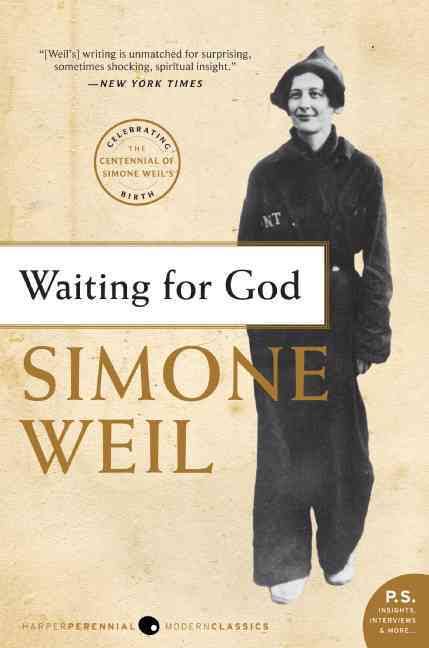
Below is a quote from Simone Weil about the social and patriotic power of the Church. Not church as we know it on Sunday mornings, but the Church as a powerful institution within a political setting.

Weil wrote during the Nazi era. Her words are troubling, given the rise of the white Evangelical church’s political influence in the USA. Sometimes on Sunday mornings, but also in public arenas where religious language virtually baptizes political figures as agents of God, up to and including Mr. Trump.

In light of the Nazi era, this turn of events is more than troubling. Many, though not all German Protestant and Catholic churches, including pastors and revered theologians, colluded in the rise of Hitler. Their open support amounted to baptizing Hitler as God’s agent sent as their Great Leader at this time. Yes, there would be some bloodshed. But in the end, life will be better for those who survive, and Germany itself will gain esteem throughout the world.

Here’s what Simone Weil had to say about herself and the Church during the Nazi era. I read this as a comment on both Protestant and Catholic churches in Germany, though she refers to the Catholic Church. Highlights are mine.

All things carefully considered, I believe they come down to this: what scares me is the Church as a social thing. Not solely because of her stains, but by the very fact that it is, among other characteristics, a social thing.

Not that I am by temperament very individualistic. I fear for the opposite reason. I have in myself a strongly gregarious spirit. I am by natural disposition extremely easily influenced in excess, and especially by collective things. I know that if in this moment I had before me twenty German youth singing Nazi songs in chorus, part of my soul would immediately become Nazi. It is a very great weakness of mine. . . .

I am afraid of the patriotism of the Church that exists in the Catholic culture. I mean ‘patriotism’ in the sense of sentiment analogous to an earthly homeland. I am afraid because I fear contracting its contagion. Not that the Church appears unworthy of inspiring such sentiment, but because I don’t want any sentiment of this kind for myself.

Simone Weil, Waiting for God
Published by Harper Perennial in 1950 to celebrate 100 years since Weil’s birth

I couldn’t agree more. I’m also troubled by the silence of many white Evangelical churches that (rightly) choose not to get on the Trump bandwagon. Silence often enables the abuse of power. I don’t want to catch the silence virus. Hence this post and others to remind me that I have a voice, it counts, and I must exercise it regularly.

©Elouise Renich Fraser, 28 March 2018
Image found at books.google.com

A vexing situation – Sexuality 2

Almost all my life I’ve been aware of sexuality, especially my own. Since my birth in 1943, I’ve been a member or participant of multiple religious communities that have talked about sexuality only when necessary. Usually when cultural pressures seemed to endanger ‘our’ young people.

I don’t remember sermons or safe conversations about everyday situations such as how to have a safe conversation with someone whose heart is aching or carrying a heavy secret. Nor have I had much training in how to watch or change my behavior so that I’m as clear and safe as possible when it comes to my sexuality.

For me, this unspoken agreement not to talk openly about sexuality made things worse. Especially after I arrived at the seminary in 1983, one of a small number of female faculty members. I felt alone and confused, left to figure things out by myself.

So here I am, a new assistant professor at a theologically conservative seminary with socially responsible roots and programs, along with a still-fresh wound from the former president. My new colleagues and students have their luggage from the past, and I have mine.

Perhaps the approach of ‘Don’t ask, don’t tell’ was the seminary’s way of allowing us to feel safe. Which, of course, many of us did not.

The first three years of my appointment I was exhausted, confused, anxious and fearful. Not because of what I knew, but because of how much I didn’t know. Not chiefly about how to teach or how to deal with classroom situations (though that was no cakewalk), but about being an academic advisor to each of my assigned advisees.

They appeared at my door, several times a year. Women and men with multiple issues about scheduling, grade point averages, work load, childcare, job requirements, immigration requirements, culture shock and yes, secrets. Heavy, untold stories about past history, realities about current history, sometimes things they’d locked away in a closet as though that would take care of it.

I think back to those three years as my Apprenticeship in Real Life. Classroom dynamics were nothing compared to the atmosphere in my office when an advisee or other student decided to tell me a secret about his or her sexuality. My job was to respond appropriately and with integrity.

Did I stumble around? Absolutely. Was I confident? NO! Did I have all the answers to life’s burning questions? No. Did I make mistakes? Yes, I did. And I learned a lot.

The most painful thing I learned was that my own sexual issues from childhood were still haunting me. Things I thought I’d left behind were suddenly right there in front of me or inside me. They demanded a hearing, even though I was there to listen and offer guidance to others.

I didn’t know it then, but I was beginning a personal curriculum that eventually humanized me. My closely guarded secrets about childhood and teenage years as well as secrets about my adult years weren’t the end of the world. They were keys to joining the human race, especially in the one area of my life I couldn’t understand no matter how much I tried to normalize it.

And I wasn’t there yet. In fact, things became more difficult after my first three years of teaching.

To be continued.

© Elouise Renich Fraser, 27 March 2018

hands clasped tight

hands clasped tight
behind Dad’s broad back
head resting face forward
on Dad’s right shoulder
the young man exits
held in Dad’s strong arms

~~seen yesterday in the beauty shop

The young teenager had just had a haircut. Both parents were there. Mom did the talking; Dad did the heavy lifting, bodies face to face; their son’s feet and legs dangled limp. The shop was full of women of all ages; huge mirrors covered nearly every inch of wall space. Multiple witnesses to courage and perseverance against all odds.

©Elouise Renich Fraser, 25 March 2018

A vexing situation – Sexuality

When I arrived at the seminary in 1983, it didn’t take long to figure this out. The seminary had an unspoken policy when it came to sexual behavior. Don’t ask, don’t tell.

This left me in a quandary. I’ve just walked into a seminary with a still-fresh wound inflicted by the former president. It wasn’t about homosexuality. It was about another sexual preference, though no one in her or his right mind would have called it that back then.

He had an arrangement with a second ‘wife’ with whom he enjoyed getaways for at least a couple of years. It seems no one knew what was going on until one of the seminary’s capable staff members noticed a strange charge to his credit card.

The well-kept secret was out, and his time at the seminary came to an abrupt end. No one was happy about it. He was a highly respected man, well spoken, still in the prime of his life, and one of ‘ours.’ Which means he was a member of the church denomination that had birthed the seminary.

When I was interviewed to become a professor at the seminary, the still-fresh wound was never mentioned.

‘Don’t ask, don’t tell’ already had a life of its own at the seminary. It seemed  to work. The seminary seemed to have good standing with constituents in the area. And if the word got out (which, of course, it did), the seminary had done the right thing. And attention quickly moved on to the bright future ahead now that this sad and unfortunate anomaly had been dealt with.

How did the seminary community process this crisis? I don’t know. I don’t recall much conversation about what had happened or how it might have changed the seminary’s thinking about sexual ethics and the abuse of power.

Doing the right thing when it comes to matters of sexuality is dicey at best. I don’t find the usual assumptions and exhortations from pulpits or other platforms helpful, though I believe we must talk about sexuality openly and honestly.

And there’s the rub. Because sexuality is complex, attempts to be open and honest can quickly devolve. Though we say we want an open conversation, we prefer a controlled environment. Many of us also arrive with our own unexamined baggage or our belief that we’ve got our own sexuality under control.

Trust, already in short supply, can quickly become nonexistent. Sometimes followed by resort to tired stereotypes and untested assumptions about people. It takes great skill and commitment to keep an open conversation open.

It seems we’re allergic to conversations that make us uncomfortable. Not simply as speakers, but as listeners. We prefer boundaries, no matter which side we’re on. Sometimes we argue about boundaries instead of talking about ourselves and our own painfully isolating secrets.

From my perspective, the seminary wasn’t skilled as a community when it came to creating safe space for open and honest dialogue about sexuality. ‘Don’t ask, don’t tell’ was the unofficial, accepted way of dealing with things. This covered the seminary’s past history as well as the past and current histories of students, faculty and staff. Unopened, unexamined pieces of luggage full of confusion and heartache.

To be continued.

©Elouise Renich Fraser, 22 March 2018

grim and determined

grim and determined
she waits outside the closed door
peering straight ahead
and leaning on her walker
hands wrapped in weathered gloves

~~observed this morning in a waiting room

© Elouise Renich Fraser, 20 March 2018

rising far above

rising far above
earth’s chilling chaos
the sun smiles warmly. . .

inviting me to bask in its light
instead of teetering on the brink
almost but not quite addicted
to insurgent adrenalin
coursing through veins and heart

chaos begets chaos of similar
proportions while inhumanity
goes for the jugular of decency
draining me of common bonds
erased by more urgent notifications

arriving by the millisecond
I emit gasps of horror about
this or that gross inhumanity
perpetrated against him or her
or us or them here or over there

breakdowns firings and hackings
poisonings fake smiles and killings
threaten to deliver our undone humanity
to the evil we deplore yet cannot
banish from titillated eyes and ears

rising far above
earth’s chilling chaos
the sun smiles warmly. . .
inviting me to bask
in its healing light

©Elouise Renich Fraser, 19 March 2018
Photo by David Henke, found at suburbanphiladelphiarealestatenews.com
Sunrise over the Delaware River on Easter Sunday 2011

Bankrupt

How oddly ordinary to see them there
Crammed into files and boxes
Waiting for one more
Chance to be adjudicated
To be declared bankrupt
Without assets to proceed
Or recover on their own

All that remains
Are tasteless survival rations
Props and half-baked substance
Dumped and stirred into a
Great stew and foamy ferment
Of yesterday’s failed efforts to
Make this world a better place
In which to die
Or live diminished

Starving youth and children
Keep calling back wanting only
A fair go at being somebody
Or helping some body and soul
Hurting in this world weary
Of waiting for what most certainly
Will not arrive on time

Only You and they know fully
The challenge the exasperation
The hurdles and setbacks of
Trying to make it to first base
Without being called out
Fired from the team or
Disappeared

©Elouise Renich Fraser, 14 March 2018